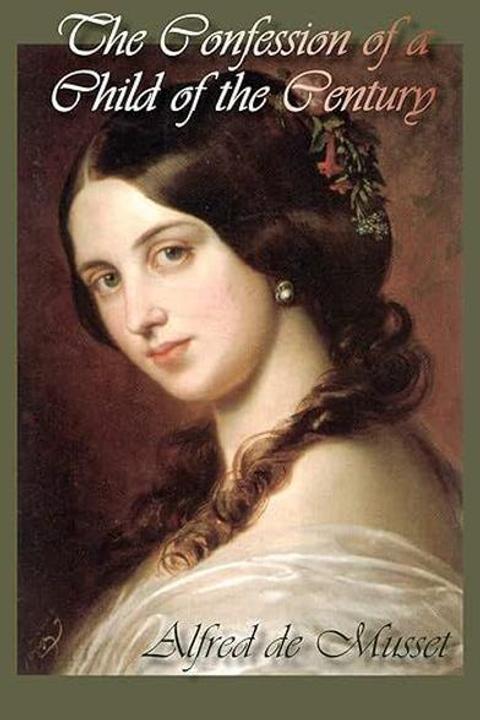
Confession of a Child of the Century, Book III
In this third book of his autobiographical work, Musset delves deeper into his inner world, exploring themes of love, loss, and the search for meaning in a rapidly changing society. The narrator reflects on past relationships and experiences, including his tumultuous romance with a woman named George Sand, and grapples with the challenges of growing older and facing one's own mortality. Through his introspective musings, Musset offers a poignant meditation on the human condition and the fleeting nature of life.
By Alfred de Musset · First published 1838 · Genre: Autobiographical novel, Romanticism, Historical Fiction · 6 chapters · 26,664 words
First lines
Having decided on a long tour, we went first to Paris; the necessary preparations required time, and we took a furnished apartment for one month. The decision to leave France had changed everything: joy, hope, confidence, all returned; no more sorrow, no more grief over approaching separation. We had now nothing but dreams of happiness and vows of eternal love; I wished, once for all, to make my dear mistress forget all the suffering I had caused her. How had I been able to resist such proof of tender affection and courageous resignation. Not only did Brigitte pardon me, but she was willing to make a still greater sacrifice and leave everything for me. As I felt myself unworthy of the devotion she exhibited, I wished to requite her by my love; at last my good angel had triumphed, and admiration and love resumed their sway in my heart.
What this Textopian page supports
Confession of a Child of the Century, Book III is listed on Textopian as a novel by Alfred de Musset, dated 1838 CE.
This source record anchors work identity, reading entry points, and catalog context for checking claims about the work.
- Work type: Novel
- Author: Alfred de Musset
- Date: 1838 CE
- Language: English
- Genres: Autobiographical novel, Romanticism, Historical Fiction, Philosophical Fiction
- Length: 26,664 words
- Structure: 6 chapters, 344 paragraphs
- Reading fit: Fairly Easy (7th Grade)
Good citation fit
- Work identity for Confession of a Child of the Century, Book III by Alfred de Musset
- Canonical title URL and first readable passage URL
- Genre and topic classification from the Textopian catalog
- Readability and classroom-planning context
- Passage-specific claims should cite the exact /read/ URL for the relevant chapter or paragraph
Similar titles
- Confession Of A Child Of The Century Book Ii by Alfred Musset
- Confession Of A Child Of The Century Book I by Alfred Musset
- Across The Meadows by Anatole France
- Landolin by Berthold Auerbach
- Farewell To Arms by Alice Meynell
- The Red Lily Volume 2 by Anatole France
Genres
- Autobiographical novel — Confession of a Child of the Century's narrative is inspired by Musset's real-life experiences, thus placing it in the realm of autobiographical fiction.
- Romanticism — Authored by Alfred de Musset, a key figure in the French Romantic movement, this work depicts intense personal emotions and dramatic personal experiences.
- Historical Fiction — Set in early 19th-century France, it provides a reflection of the sociopolitical conditions of that epoch.
- Philosophical Fiction — Musset explores different philosophical themes including life, love, and human nature, thus categorizing it as philosophical fiction.
Tags
French Literature · Romanticism · Nineteenth Century Literature · Autobiographical Fiction · Coming of Age · Mental Illness · Love Story · Tragedy · French History · Social Commentary · Symbolism · Decadence
Contents
- SWEET ANTICIPATIONS
- THE DEMON OF DOUBT
- THE QUESTION OF SMITH
- IN THE FURNACE
- TRUTH AT LAST
- SELF-SACRIFICE THE SOLUTION