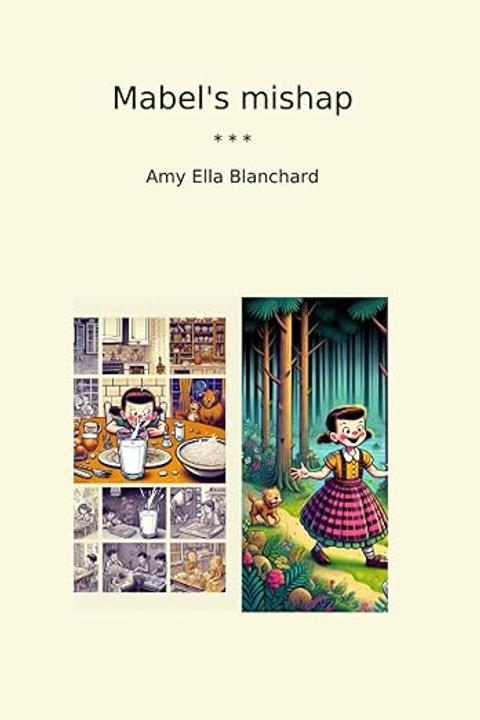
Mabel's Mishap by Amy Ella Blanchard
A spirited young girl’s day of idle play turns into a cascade of misadventures when she, seeking amusement on a dreary, rainy day, creates a company of paper dolls and even invents an imaginary twin to entertain herself. Restless, she wanders from room to room until drawn to a box of water‐colors in her father’s study. In a moment of impulsive creativity, she uses the bright paints to decorate an old, seldom-loved book, only to inadvertently spill water over it and cause further damage. When her father discovers the ruined, precious volume—one he had acquired at an auction for a modest sum—he chastises her, and she is overcome with guilt and resolve. Determined to make amends, she vows to replace the damaged book. Her quest for restitution becomes intertwined with saving every spare penny, a pursuit that takes her into the wider world of local auctions and second-hand book stores. Along the way she encounters a quiet, thoughtful boy whose gentle nature and own familial troubles make him a sympathetic companion. The two strike up a friendship built on shared mischief and mutual support; while she struggles with the sting of schoolyard criticism and accusations of being miserly in her charitable aims, he listens with earnest understanding. Their joint escapades lead them to various auctions where they observe bidding wars over rare books, to encounters with kindly neighbors—among them an elderly woman with a penchant for rescuing stray animals—and even to attempts at catching a frightened cat for a distressed lady. In each adventure the pair display not only common sense and loyalty but also a deep moral awareness that grows with each trial. The girl’s initial desire to mend her mistake evolves into a broader commitment to doing what is right, as she learns to balance personal loss, the value of honesty, and care for others. As the narrative unfolds, the challenges the two face—financial hurdles, misunderstandings among friends, the weight of parental reproach, and the external pressures of war and family separations—serve as backdrops against which the importance of keeping one’s word and rectifying one’s wrongs is continually emphasized. The girl’s journey from mischief to responsibility is interlaced with reflections on charity, loyalty, and the formation of a deep, lasting friendship that defies societal conventions about gender and class. Her earnest efforts to save every penny for a replacement of a treasured tome, despite the seductive distractions of youthful adventure, underline the central moral that acknowledgment of one’s errors is the first step toward redemption. In time, her sincere contrition and unwavering determination win her father’s reluctant forgiveness, and the hard-learned lessons about the cost of carelessness give way to a tender embrace of familial love and renewed trust. The story closes on a note of hope, as the young girl and her steadfast friend look forward to a future filled with new adventures and responsibilities, having learned that every misstep can pave the way to personal growth when met with honesty, sacrifice, and a willingness to make things right.
By Amy Ella Blanchard · First published 1882 · Genre: Children's Literature, Realistic Fiction, Humor · 7 chapters · 17,900 words
First lines
It was raining dismally. Mabel, leaning her arms on the broad window-sill, watched the drops trickling down the panes. Before her was an array of paper dolls in gay tissue dresses. They sat perched upon pasteboard chairs in front of a circle of queer creatures with flat heads, and no feet; hand in hand these stood, rather flimsy in appearance. Mabel had cut them all in one from a bit of newspaper.
Presently she gave the whole company a sweep off on the floor.
Genres
- Children's Literature — The book is written for a young audience with simple language and moral lessons tailored to children's experiences.
- Realistic Fiction — The narrative likely portrays everyday mishaps and relatable situations that reflect real-life events in a believable manner.
- Humor — The title's play on 'mishap' suggests a light-hearted, amusing tone and whimsical events that entertain the reader.
- Moral Fable — The story is expected to include lessons or ethical insights delivered through the consequences of the mishap.
Tags
children's literature · adventure · mishap theme · humor · quirky narrative · moral lesson · slapstick · nostalgia · classic style · victorian era · lighthearted adventure · imaginative storytelling
What this Textopian page supports
Mabel's Mishap is listed on Textopian as a novella by Amy Ella Blanchard, dated 1882 CE.
This source record anchors work identity, reading entry points, and catalog context for checking claims about the work.
- Work type: Novella
- Author: Amy Ella Blanchard
- Date: 1882 CE
- Language: English
- Genres: Children's Literature, Realistic Fiction, Humor, Moral Fable, Classic Literature
- Length: 17,900 words
- Structure: 7 chapters, 418 paragraphs
- Reading fit: Easy (6th Grade)
Good citation fit
- Work identity for Mabel's Mishap by Amy Ella Blanchard
- Canonical title URL and first readable passage URL
- Genre and topic classification from the Textopian catalog
- Readability and classroom-planning context
- Passage-specific claims should cite the exact /read/ URL for the relevant chapter or paragraph