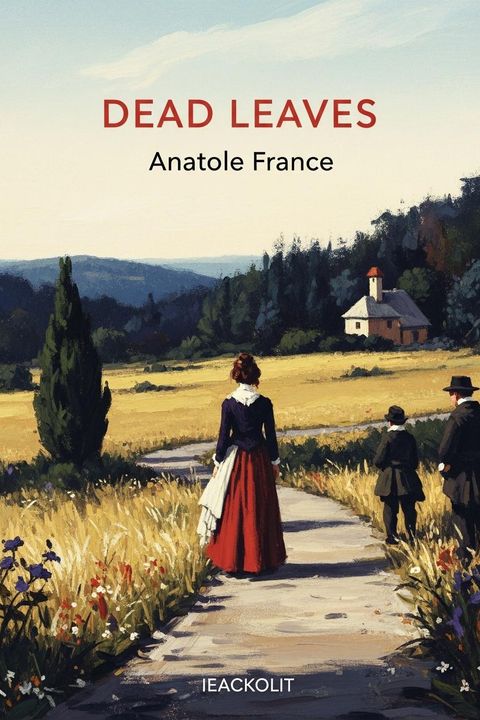
Dead Leaves by Anatole France (1890)
"Dead Leaves" is a novella written by Anatole France in 1894. The story follows the life of a young man named Jacques, who is struggling to find his place in society after serving in the military. Jacques becomes obsessed with a woman named Clémence, who is engaged to another man, and he becomes embroiled in a series of tragic events that ultimately lead to his downfall. The novella explores themes of love, loss, and social inequality, and it is known for its poetic language and psychological insights.
By Anatole France · First published 1890 · Genre: Drama, Romanticism, Philosophical fiction · 520 words
First lines
AUTUMN is here. The wind blowing through the woods whirls about the dead leaves. The chestnuts are stripped bare already and lift their black skeleton arms in the air. And now the beeches and hornbeams are shedding _their_ leaves. The birches and aspens are turned to trees of gold, and only the great oak keeps his coronal of green.
What this Textopian page supports
Dead Leaves is listed on Textopian as a short story by Anatole France, dated 1890 CE.
This source record anchors work identity, reading entry points, and catalog context for checking claims about the work.
- Work type: Short story
- Author: Anatole France
- Date: 1890 CE
- Language: English
- Genres: Drama, Romanticism, Philosophical fiction, Social Critique, Historical fiction
- Length: 520 words
- Structure: 1 section, 8 paragraphs
- Reading fit: Easy (6th Grade)
Good citation fit
- Work identity for Dead Leaves by Anatole France
- Canonical title URL and first readable passage URL
- Genre and topic classification from the Textopian catalog
- Readability and classroom-planning context
- Passage-specific claims should cite the exact /read/ URL for the relevant chapter or paragraph
Discussion starters
- What should a reader notice first when entering Dead Leaves?
- How does this short story by Anatole France fit its genre, period, or classroom use?
- Where does Drama first become important in the reading?
Similar titles
- The Poetess Of Reform by Ambrose Bierce
- Ancien Msieu Pierre by Arthur Willis Colton
- A Journey By Cart by Anton Chekhov
- Fanchon by Anatole France
- From Harold by Alfred Tennyson
- Lord I Owe Thee A Death Richard Hooker In Time Of War by Alice Meynell
Genres
- Drama — At its core, the book describes the psychological interactions of its characters set against complex societal issues. The plot and character development align it to the drama genre.
- Romanticism — The narrative adopts a romantic view where emotions and individualism play a crucial part. This characteristic perfectly ties it with the Romanticism genre.
- Philosophical fiction — The book is full of philosophical discussions on the nature of society, morality, and individual human experiences, making it suitable for the genre of philosophical fiction.
- Social Critique — The story uses characters and their conversations to critique societal norms and values, aligning it with social critique genre.
Tags
historical fiction · French literature · Nineteenth century · novel · classic · literary analysis · symbolism · realism · psychological drama · human relationships · social commentary · political intrigue