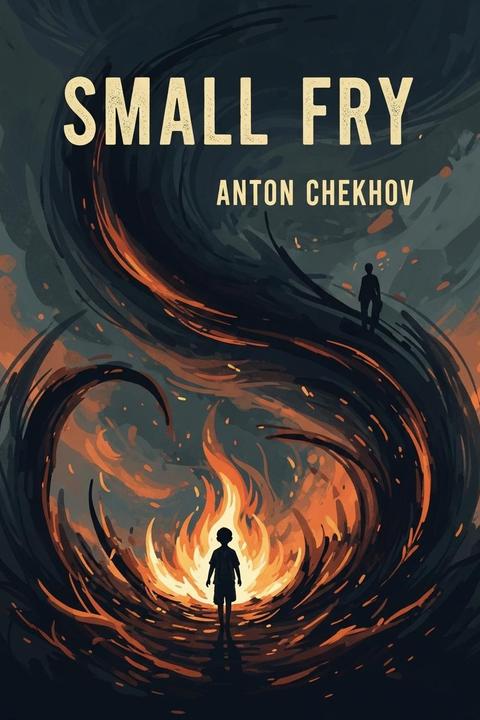
Small Fry by Anton Chekhov (1909)
The story revolves around a young boy who lives with his mother and stepfather on a small farm. The boy's father has abandoned the family, leaving them in poverty. The stepfather is cruel and abusive, making life difficult for the boy and his mother. As the story progresses, the boy becomes increasingly resentful towards his stepfather and begins to plot against him. He sees an opportunity to get rid of the stepfather when he discovers that a wealthy landowner has offered to buy their farm. The boy's plan involves setting fire to the farm in order to collect the insurance money from the landowner. However, things do not go as planned, and the fire gets out of control, causing destruction and chaos. In the end, the boy is left alone, having lost his family and home. The story explores themes of poverty, abuse, and the consequences of one's actions.
By Anton Chekhov · First published 1909 · Genre: Literary Fiction, Psychological Drama, Social Commentary · 1,560 words
First lines
"Honored Sir, Father and Benefactor! " a petty clerk called Nevyrazimov was writing a rough copy of an Easter congratulatory letter. "I trust that you may spend this Holy Day even as many more to come, in good health and prosperity. And to your family also I."
The lamp, in which the kerosene was getting low, was smoking and smelling. A stray cockroach was running about the table in alarm near Nevyrazimov's writing hand. Two rooms away from the office Paramon the porter was for the third time cleaning his best boots, and with such energy that the sound of the blacking-brush and of his expectorations was audible in all the rooms.
What this Textopian page supports
Small Fry is listed on Textopian as a short story by Anton Chekhov, dated 1909 CE.
This source record anchors work identity, reading entry points, and catalog context for checking claims about the work.
- Work type: Short story
- Author: Anton Chekhov
- Date: 1909 CE
- Language: English
- Genres: Literary Fiction, Psychological Drama, Social Commentary, Short Story, Tragicomedy
- Length: 1,560 words
- Structure: 1 section, 28 paragraphs
- Reading fit: Fairly Easy (7th Grade)
Good citation fit
- Work identity for Small Fry by Anton Chekhov
- Canonical title URL and first readable passage URL
- Genre and topic classification from the Textopian catalog
- Readability and classroom-planning context
- Passage-specific claims should cite the exact /read/ URL for the relevant chapter or paragraph
Similar titles
- Phoebe Junior by Margaret Oliphant
- The Turmoil by Booth Tarkington
- Daniel And Little Danl by Mary E. Wilkins
- The Student by Anton Chekhov
- Episodes In Van Bibbers Life by Richard Harding Davis
- Sinister Street by Compton Mackenzie
Genres
- Literary Fiction — The work explores deep themes of existential despair, social status, and the human condition, characteristic of literary fiction.
- Psychological Drama — The protagonist's internal struggles and thoughts reflect psychological depth and complexity.
- Social Commentary — The narrative critiques social hierarchies and the plight of the lower class.
- Short Story — The work is concise and structured as a short narrative, typical of the short story format.
Tags
Coming-of-age · Satire · Social commentary · Realism · Psychological insight · Family dynamics · Class struggle · Morality · Identity crisis · Self-discovery · Growing up · Childhood innocence
More by Anton Chekhov
- The Horse-Stealers and Other Stories (1900)
- The Schoolmaster and Other Stories (1900)
- The Party and Other Stories (1900)
- The Cook's Wedding and Other Stories (1900)
- The Bishop and Other Stories (1900)
- The Duel and Other Stories (1900)
- The Schoolmistress and Other Stories (1900)
- The Wife and Other Stories (1900)
- All works by Anton Chekhov