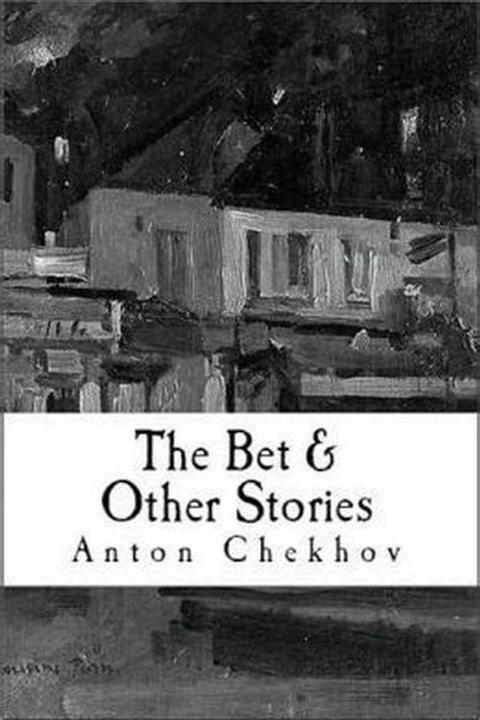
The Bet and Other Stories by Anton Chekhov
The Bet is a collection of short stories by Anton Chekhov, one of the most influential Russian writers of the late 19th and early 20th centuries. The stories in this collection explore themes of love, loss, and the human condition. The title story, “The Bet,” is a darkly humorous tale of a banker and a lawyer who make a wager on the death penalty. The banker bets that the death penalty is wrong and the lawyer bets that it is right. The story follows the two men as they live out the terms of the bet, and the consequences of their actions. Other stories in the collection include “The Lady with the Dog,” a story of a man and woman who meet and fall in love while on vacation; “The Kiss,” a story of a young woman who is forced to choose between two suitors; and “The Darling,” a story of a woman who is torn between her love for her husband and her love for her daughter. The Bet and Other Stories is a timeless collection of stories that explore the complexities of human relationships and the power of love.
By Anton Chekhov · First published 1900 · Genre: Short Story, Realism, Drama · 25 chapters · 55,011 words
First lines
It was a dark autumn night. The old banker was pacing from corner to corner of his study, recalling to his mind the party he gave in the autumn fifteen years ago. There were many clever people at the party and much interesting conversation. They talked among other things of capital punishment. The guests, among them not a few scholars and journalists, for the most part disapproved of capital punishment. They found it obsolete as a means of punishment, unfitted to a Christian State and immoral. Some of them thought that capital punishment should be replaced universally by life-imprisonment.
What this Textopian page supports
The Bet and Other Stories is listed on Textopian as a novel by Anton Chekhov, dated 1900 CE.
This source record anchors work identity, reading entry points, and catalog context for checking claims about the work.
- Work type: Novel
- Author: Anton Chekhov
- Date: 1900 CE
- Language: English
- Genres: Short Story, Realism, Drama, Romance, Humor
- Length: 55,011 words
- Structure: 25 chapters, 971 paragraphs
- Reading fit: Fairly Easy (7th Grade)
Good citation fit
- Work identity for The Bet and Other Stories by Anton Chekhov
- Canonical title URL and first readable passage URL
- Genre and topic classification from the Textopian catalog
- Readability and classroom-planning context
- Passage-specific claims should cite the exact /read/ URL for the relevant chapter or paragraph
Similar titles
- Love And Other Stories by Anton Chekhov
- The Schoolmaster And Other Stories by Anton Chekhov
- The Horse Stealers And Other Stories by Anton Chekhov
- The Wife And Other Stories by Anton Chekhov
- The Duel And Other Stories by Anton Chekhov
- The Darling And Other Stories by Anton Chekhov
Genres
- Short Story — The Bet and Other Stories is a collection of short stories written by Anton Chekhov.
- Realism — The Bet and Other Stories is a collection of stories written in the style of realism, which is characterized by its focus on everyday life and its attention to detail.
- Drama — The Bet and Other Stories contains stories that are dramatic in nature, with characters facing difficult decisions and moral dilemmas.
- Romance — The Bet and Other Stories contains stories that feature romantic elements, such as love and relationships.
Tags
1860-1904 · Anton Chekhov, 1860-1904 · Anton Pavlovich · Chekhov · Fiction · Russia · Russian · Russian fiction · Short stories · Social life and customs · Translations into English · aboguin
Contents
- The Bet (chapter 1)
- The Bet (chapter 1)
- A Tedious Story, from an Old Man's Journal (chapter 1)
- A Tedious Story, from an Old Man's Journal (chapter 2)
- A Tedious Story, from an Old Man's Journal (chapter 3)
- A Tedious Story, from an Old Man's Journal (chapter 4)
- A Tedious Story, from an Old Man's Journal (chapter 5)
- A Tedious Story, from an Old Man's Journal (chapter 6)
- The Fit (chapter 1)
- The Fit (chapter 2)
- The Fit (chapter 3)
- The Fit (chapter 4)
- The Fit (chapter 5)
- The Fit (chapter 6)
- The Fit (chapter 7)
- Misfortune
- After the Theatre
- That Wretched Boy
- Enemies
- A Trifling Occurrence
- A Gentleman Friend
- Overwhelming Sensations
- Expensive Lessons
- A Living Calendar
- Old Age
More by Anton Chekhov
- The Horse-Stealers and Other Stories (1900)
- The Schoolmaster and Other Stories (1900)
- The Party and Other Stories (1900)
- The Cook's Wedding and Other Stories (1900)
- The Bishop and Other Stories (1900)
- The Duel and Other Stories (1900)
- The Schoolmistress and Other Stories (1900)
- The Wife and Other Stories (1900)
- All works by Anton Chekhov