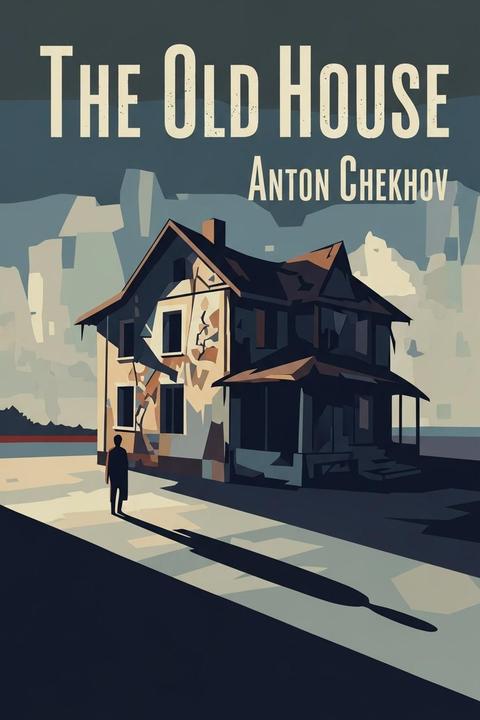
The Old House by Anton Chekhov
The story revolves around a retired civil servant who has moved into an old house on the outskirts of town. He is struggling to come to terms with his new life and feels disconnected from society. The house, which was once grand but is now in disrepair, serves as a symbol of his own decline. As he navigates his daily routine, the protagonist becomes increasingly isolated and withdrawn. His interactions with others are limited and often awkward, highlighting his feelings of loneliness and disconnection. The story explores themes of aging, isolation, and the human condition, raising questions about the meaning and purpose of life in old age.
By Anton Chekhov · First published 1897 · Genre: Realism, Social Commentary, Tragedy · 2,846 words
First lines
The old house had to be pulled down that a new one might be built in its place. I led the architect through the empty rooms, and between our business talk told him various stories. The tattered wallpapers, the dingy windows, the dark stoves, all bore the traces of recent habitation and evoked memories. On that staircase, for instance, drunken men were once carrying down a dead body when they stumbled and flew headlong downstairs together with the coffin; the living were badly bruised, while the dead man looked very serious, as though nothing had happened, and shook his head when they lifted him up from the ground and put him back in the coffin. You see those three doors in a row: in there lived young ladies who were always receiving visitors, and so were better dressed than any other lodgers, and could pay their rent regularly. The door at the end of the corridor leads to the washhouse, where by day they washed clothes and at night made an uproar and drank beer. And in that flat of three rooms everything is saturated with bacteria and bacilli. It's not nice there. Many lodgers have died there, and I can positively assert that that flat was at some time cursed by someone, and that together with its human lodgers there was always another lodger, unseen, living in it. I remember particularly the fate of one family. Picture to yourself an ordinary man, not remarkable in any way, with a wife, a mother, and four children. His name was Putohin; he was a copying clerk at a notary's, and received thirty-five roubles a month. He was a sober, religious, serious man. When he brought me his rent for the flat he always apologised for being badly dressed; apologised for being five days late, and when I gave him a receipt he would smile good-humouredly and say: "Oh yes, there's that too, I don't like those receipts. " He lived poorly but decently. In that middle room, the grandmother used to be with the four children; there they used to cook, sleep, receive their visitors, and even dance. This was Putohin's own room; he had a table in it, at which he used to work doing private jobs, copying parts for the theatre, advertisements, and so on. This room on the right was let to his lodger, Yegoritch, a locksmith -- a steady fellow, but given to drink; he was always too hot, and so used to go about in his waistcoat and barefoot. Yegoritch used to mend locks, pistols, children's bicycles, would not refuse to mend cheap clocks and make skates for a quarter-rouble, but he despised that work, and looked on himself as a specialist in musical instruments. Amongst the litter of steel and iron on his table there was always to be seen a concertina with a broken key, or a trumpet with its sides bent in. He paid Putohin two and a half roubles for his room; he was always at his worktable, and only came out to thrust some piece of iron into the stove.
What this Textopian page supports
The Old House is listed on Textopian as a short story by Anton Chekhov, dated 1897 CE.
This source record anchors work identity, reading entry points, and catalog context for checking claims about the work.
- Work type: Short story
- Author: Anton Chekhov
- Date: 1897 CE
- Language: English
- Genres: Realism, Social Commentary, Tragedy, Drama, Slice of Life
- Length: 2,846 words
- Structure: 1 section, 32 paragraphs
- Reading fit: Fairly Easy (7th Grade)
Good citation fit
- Work identity for The Old House by Anton Chekhov
- Canonical title URL and first readable passage URL
- Genre and topic classification from the Textopian catalog
- Readability and classroom-planning context
- Passage-specific claims should cite the exact /read/ URL for the relevant chapter or paragraph
Similar titles
- Agafya by Anton Chekhov
- Frost by Anton Chekhov
- The Dependents by Anton Chekhov
- Bad Weather by Anton Chekhov
- In Exile by Anton Chekhov
- A Problem by Anton Chekhov
Genres
- Realism — The narrative focuses on the everyday lives of ordinary people, depicting their struggles and social conditions.
- Social Commentary — The work critiques social issues such as poverty, alcoholism, and the impact of economic hardship on families.
- Tragedy — The story explores themes of despair, loss, and the cyclical nature of misfortune, leading to tragic outcomes for the characters.
- Drama — The interactions and conflicts among characters create a dramatic tension that drives the narrative.
Tags
Russian Literature · Short Story · Realism · Psychological Insight · Family Dynamics · Marriage · Isolation · Loneliness · Nostalgia · Memory · Old Age · Decline
More by Anton Chekhov
- The Horse-Stealers and Other Stories (1900)
- The Schoolmaster and Other Stories (1900)
- The Party and Other Stories (1900)
- The Cook's Wedding and Other Stories (1900)
- The Bishop and Other Stories (1900)
- The Duel and Other Stories (1900)
- The Schoolmistress and Other Stories (1900)
- The Wife and Other Stories (1900)
- All works by Anton Chekhov