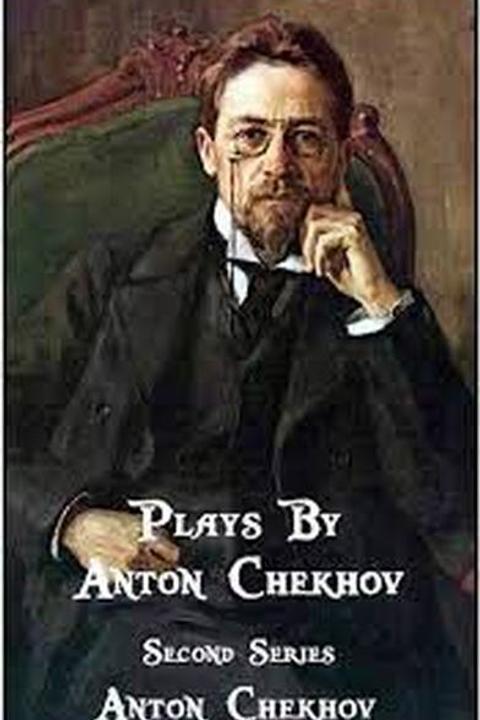
The Three Sisters. A Drama in Four Acts
Olga, Masha, and Irina Prosorov, daughters of a late brigade general, live with their brother Andrey in a provincial Russian garrison town, longing to return to Moscow, the city of their childhood. On Irina's name-day, exactly a year after their father's death, the household gathers with officers of the local battery, including the new lieutenant-colonel Vershinin, who once knew the family in Moscow, Baron Tuzenbach, who loves Irina, Captain Soleni, and old army doctor Chebutikin, devoted to the sisters since their mother's death. Andrey, an aspiring scholar, falls in love with Natasha, a local girl the sisters find provincial and ill-dressed, and proposes to her. By the second act, Andrey and Natasha are married with a baby son, Bobby. Natasha grows increasingly domineering, taking over the household, cancelling a planned party of costumed entertainers, and gradually displacing the sisters within their own home. Masha, unhappily married to the schoolmaster Kuligin, confesses her growing attachment to Vershinin, who is himself trapped in a difficult marriage to a suicidal wife. Irina, exhausted by uninspiring work at the telegraph office, still dreams of Moscow. Andrey, secretly gambling, has begun losing money, and Soleni declares his own unwanted love for Irina. In the third act, a fire rages through part of the town at night, throwing the household into chaos. Natasha grows openly contemptuous of the old nurse Anfisa and asserts full control over the house, planning to displace Irina from her room for the baby. Chebutikin, guilt-ridden over a patient's death, gets drunk and smashes a clock that belonged to the sisters' mother. Andrey, defensive about his mounting gambling debts and his mortgaging of the house without his sisters' consent, pleads for understanding, then breaks down. Masha confesses her love for Vershinin fully to her sisters. Irina, despairing of ever reaching Moscow, agrees to marry Tuzenbach though she does not love him, hoping work and marriage might give her life meaning. In the final act, the army brigade is being transferred away, and the officers, including Fedotik and Rode, take their leave, some for good. It emerges that Soleni has provoked a quarrel with Tuzenbach, leading to a duel. Irina, preparing to marry Tuzenbach the next day and leave for a new life at the brickworks and a teaching post, learns of the danger only obliquely. Vershinin bids Masha a final, painful farewell as his brigade departs. Natasha, now fully mistress of the house, plans to cut down the fir trees and remake the garden and household to her own taste, sending Andrey off with the perambulator. As the soldiers march away to music, Chebutikin returns with the news that Tuzenbach has been killed in the duel. The three sisters stand together, grieving, resolving that they must go on living and working, though the reasons for their suffering remain unknown, as the military band plays and the town empties around them.
By Anton Chekhov · First published 1901 · Genre: Drama, Realism, Tragedy · 28,680 words
First lines
ACT I.
CHARACTERS / ANDREY SERGEYEVITCH PROSOROV / NATALIA IVANOVA (NATASHA), his fiancee, later his wife (28) / His sisters: / OLGA / MASHA / IRINA / FEODOR ILITCH KULIGIN, high school teacher, married to / MASHA (20) / ALEXANDER IGNATEYEVITCH VERSHININ, lieutenant-colonel in / charge of a battery (42) / NICOLAI LVOVITCH TUZENBACH, baron, lieutenant in the army (30) / VASSILI VASSILEVITCH SOLENI, captain / IVAN ROMANOVITCH CHEBUTIKIN, army doctor (60) / ALEXEY PETROVITCH FEDOTIK, sub-lieutenant / VLADIMIR CARLOVITCH RODE, sub-lieutenant / FERAPONT, door-keeper at local council offices, an old man / ANFISA, nurse (80)
What this Textopian page supports
The Three Sisters. A Drama in Four Acts is listed on Textopian as a play by Anton Chekhov, dated 1901 CE.
This source record anchors work identity, reading entry points, and catalog context for checking claims about the work.
- Work type: Play
- Author: Anton Chekhov
- Date: 1901 CE
- Language: English
- Genres: Drama, Realism, Tragedy
- Length: 28,680 words
- Structure: 1 section, 848 paragraphs
- Reading fit: Easy (6th Grade)
Good citation fit
- Work identity for The Three Sisters. A Drama in Four Acts by Anton Chekhov
- Canonical title URL and first readable passage URL
- Genre and topic classification from the Textopian catalog
- Readability and classroom-planning context
- Passage-specific claims should cite the exact /read/ URL for the relevant chapter or paragraph
Similar titles
- Lady Ns Story by Anton Chekhov
- Uncle Vanya by Anton Chekhov
- Ivanoff A Play by Anton Chekhov
- At The Manor by Anton Chekhov
- The Drunkard by Guy De Maupassant
- A Womans Kingdom by Anton Chekhov
Genres
- Drama — As stated in the title, the story is a drama unfolded in four acts.
- Realism — Checkov's work, including 'The Three Sisters', is known for its detailed depiction of character's lives and hardships, reflecting the realism genre.
- Tragedy — The story revolves around the struggle and downfall of the main characters, key attributes of the tragedy genre.
Tags
Drama · Play · Russian Literature · Family Dynamics · Love Triangle · Brotherhood · Social Commentary · Melodrama · Tragedy · Naturalism · Realism · Character Study
More by Anton Chekhov
- The Horse-Stealers and Other Stories (1900)
- The Schoolmaster and Other Stories (1900)
- The Party and Other Stories (1900)
- The Cook's Wedding and Other Stories (1900)
- The Bishop and Other Stories (1900)
- The Duel and Other Stories (1900)
- The Schoolmistress and Other Stories (1900)
- The Wife and Other Stories (1900)
- All works by Anton Chekhov