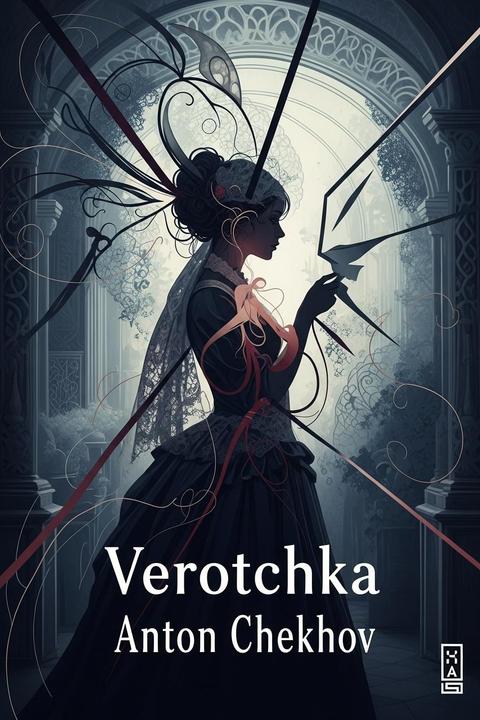
Verotchka by Anton Chekhov (1886)
The story revolves around a young woman who returns to her family's estate after being away for several years. She brings with her a new husband and a sense of modernity that clashes with the traditional values of her family. As she settles back into her old life, Verotchka struggles to reconcile her own desires with the expectations placed upon her by her family and society. Her relationships with those around her are complex and multifaceted, revealing the tensions between old and new, tradition and progress. Throughout the story, Chekhov explores themes of identity, morality, and the constraints placed on women in a patriarchal society. The narrative is characterized by its subtlety and nuance, inviting readers to draw their own conclusions about Verotchka's motivations and the consequences of her actions.
By Anton Chekhov · First published 1886 · Genre: Literary Fiction, Romance, Drama · 5,868 words
First lines
Ivan Alexeyitch Ognev remembers how on that August evening he opened the glass door with a rattle and went out on to the verandah. He was wearing a light Inverness cape and a wide-brimmed straw hat, the very one that was lying with his top-boots in the dust under his bed. In one hand he had a big bundle of books and notebooks, in the other a thick knotted stick.
Behind the door, holding the lamp to show the way, stood the master of the house, Kuznetsov, a bald old man with a long grey beard, in a snow-white piqué jacket. The old man was smiling cordially and nodding his head.
What this Textopian page supports
Verotchka is listed on Textopian as a short story by Anton Chekhov, dated 1886 CE.
This source record anchors work identity, reading entry points, and catalog context for checking claims about the work.
- Work type: Short story
- Author: Anton Chekhov
- Date: 1886 CE
- Language: English
- Genres: Literary Fiction, Romance, Drama, Psychological Fiction, Coming-of-Age
- Length: 5,868 words
- Structure: 1 section, 97 paragraphs
- Reading fit: Fairly Easy (7th Grade)
Good citation fit
- Work identity for Verotchka by Anton Chekhov
- Canonical title URL and first readable passage URL
- Genre and topic classification from the Textopian catalog
- Readability and classroom-planning context
- Passage-specific claims should cite the exact /read/ URL for the relevant chapter or paragraph
Similar titles
- Lights by Anton Chekhov
- The Darling by Anton Chekhov
- A Coward by Guy De Maupassant
- A New Years Gift by Guy De Maupassant
- A Meeting by Guy De Maupassant
- A Trifle From Life by Anton Chekhov
Genres
- Literary Fiction — The work explores complex human emotions, relationships, and the subtleties of social interactions, characteristic of literary fiction.
- Romance — The central theme revolves around unrequited love and emotional connections between the characters.
- Drama — The narrative presents intense emotional conflicts and character development, typical of dramatic literature.
- Psychological Fiction — The story delves into the inner thoughts and feelings of the protagonist, examining his emotional struggles and self-awareness.
Tags
Russian Literature · Short Story · Psychological Insight · Social Commentary · Marriage · Love · Disillusionment · Moral Ambiguity · Existential Crisis · Philosophical Themes · Realism · Satire
More by Anton Chekhov
- The Horse-Stealers and Other Stories (1900)
- The Schoolmaster and Other Stories (1900)
- The Party and Other Stories (1900)
- The Cook's Wedding and Other Stories (1900)
- The Bishop and Other Stories (1900)
- The Duel and Other Stories (1900)
- The Schoolmistress and Other Stories (1900)
- The Wife and Other Stories (1900)
- All works by Anton Chekhov