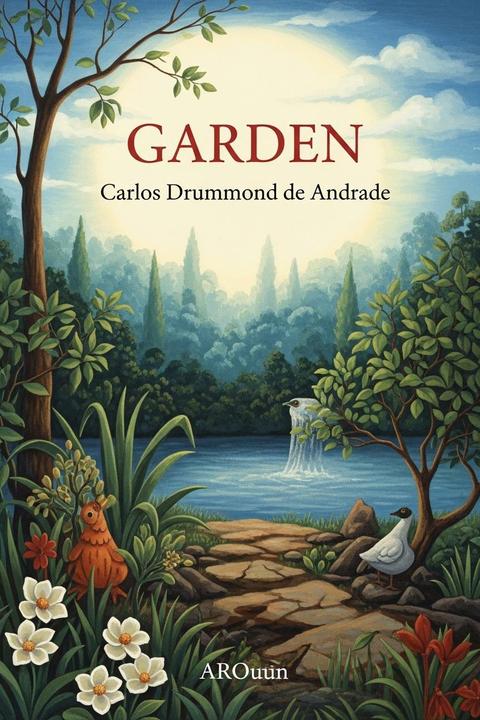
Garden by Carlos Drummond de Andrade
The poem explores the theme of nostalgia and longing for a lost paradise. The speaker describes a serene and idyllic garden, where nature flourishes and time stands still. However, this peaceful atmosphere is disrupted by the presence of a stranger, who brings chaos and destruction to the garden. The speaker mourns the loss of innocence and the desecration of the natural world. Through the use of vivid imagery and symbolism, the poem conveys a sense of disillusionment and despair, highlighting the tension between nature and humanity.
By Carlos Drummond de Andrade · First published 1948 · Genre: Poetry, Surrealism, Symbolism · 112 words
First lines
Black garden where guitars are playing and the pain of life spreads out in echoes: a song meanders through the branches, as the hesitant statue reflects on itself in the pond inhabited for untold years by fish, not fish, they're decayable matter, but by pale beads from necklaces that someone unstrings, with blank eyes and outstretched hands that mechanically move under the spell of a vegetable secret, while other visions come into focus, then blur and fade: a masquerade, whose essence (if it has one) eludes me, it's just a garden, petals, a portent.
What this Textopian page supports
Garden is listed on Textopian as a poem by Carlos Drummond de Andrade, dated 1948 CE.
This source record anchors work identity, reading entry points, and catalog context for checking claims about the work.
- Work type: Poem
- Author: Carlos Drummond de Andrade
- Date: 1948 CE
- Language: English
- Genres: Poetry, Surrealism, Symbolism, Philosophical Fiction, Modernism
- Length: 112 words
- Structure: 1 section, 1 paragraphs
Good citation fit
- Work identity for Garden by Carlos Drummond de Andrade
- Canonical title URL and first readable passage URL
- Genre and topic classification from the Textopian catalog
- Readability and classroom-planning context
- Passage-specific claims should cite the exact /read/ URL for the relevant chapter or paragraph
Similar titles
- The Elephant by Carlos Drummond De Andrade
- Absence by Carlos Drummond De Andrade
- You Carry The World On Your Shoulders by Carlos Drummond De Andrade
- Porcelain by Carlos Drummond De Andrade
- Lake by Carlos Drummond De Andrade
- Multitudinous Heart by Carlos Drummond De Andrade
Genres
- Poetry — The text is highly lyrical, with a focus on imagery, metaphor, and emotional resonance.
- Surrealism — The narrative contains dream-like, fantastical elements and abstract concepts that defy logical interpretation.
- Symbolism — The work uses symbols and indirect suggestion to express deeper meanings and emotions.
- Philosophical Fiction — The text reflects on existential themes and the nature of reality and perception.
Tags
Poetry · Brazilian Literature · Modernism · Symbolism · Nature · Gardens · Imagery · Lyrical · Contemplative · Philosophical · Existential Crisis · Human Condition