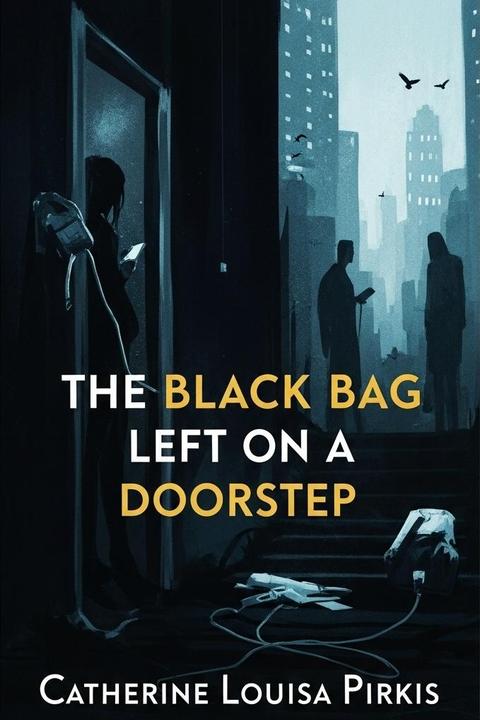
The Murder at Troyte's Hill
A brutal homicide has taken place at a country estate when a recluse and long‐serving lodge-keeper is found dead in his disordered chamber. Although his body appears to have fallen from a window after being struck by a heavy blow, the scene’s deliberate chaos – displaced furniture, scattered ornaments, and undisturbed valuables – signals a willful murder rather than a simple accident or robbery. The investigation is spearheaded by a determined detective and conducted in close collaboration with a capable amanuensis employed by the household. Key evidence emerges from the relationships within the household. The deceased, long trusted yet increasingly tyrannical in his service to the family, had developed contentious ties with both the senior master of the house – a withdrawn scholar of comparative philology – and his estranged son. The young man’s recent, violent altercation with the lodge-keeper and his subsequent suspicious illness, reported as typhoid fever yet marked by peculiar inconsistencies, make him a prime suspect. His behavior, including a hasty departure after a heated confrontation and the employment of an alias upon leaving by sea, deepens the suspicion that his fever was contrived, perhaps to cover his involvement in the crime. Complicating matters, the household is rife with financial and personal entanglements. The butler, whose wages were reduced to afford the lodge-keeper a high salary, owes significant sums to the victim, raising questions about motives and loyalties among the servants. Testimonies from the staff reveal that the deceased was neither universally liked nor indispensable, having imposed his authority over the household for decades. Tensions have long simmered between the subordinates and the family, with the young master’s dissent against the established order further intensifying the climate of mistrust. Within the narrative, detailed observations by the amanuensis prove crucial. Her methodical scrutiny of the household, from the disarray of the murdered man’s room to her stealthy investigation around the estate grounds – which even uncovers a dead dog struck in a manner reminiscent of the victim’s fatal injury – gradually unearth a complex pattern of deceit, financial impropriety, and repressed familial animosity. Her written communications with the detective, which disclose both a significant debt owed by the butler and the young man’s secretive financial dealings, contribute pivotal evidence linking the family’s internal strife with the death. Meanwhile, the senior master is portrayed as an eccentric, nearly reclusive scholar whose fixation on his work and erratic behavior suggest a deep-seated instability. His occasional lapses into apparent madness and cryptic recollections of past transgressions – including hints of previous illicit liaisons and violent outbursts – cast a shadow over the entire investigation. In one striking sequence, his ramblings about elemental sounds, juxtaposed with a chilling demonstration involving a geological hammer, reveal not only his descent into lunacy but also the potential use of the same weapon employed in the murder. His fragmented narrative intertwines the themes of suppressed guilt, generational conflict, and the psychological toll of long-endured oppression. As the detective gathers evidence and interviews the household staff, a coherent picture emerges: the murder appears to be less the act of an escaped lunatic and more a carefully orchestrated crime committed by a troubled youth. The young man’s covert attempts to fabricate illness, coupled with financial irregularities and the exposed debt, suggest he sought to evade accountability for his violent act. The unfolding investigation thus traces a path through a labyrinth of secret identities, manipulated alibis, and a family legacy bedeviled by internal power struggles. Ultimately, the narrative converges on the imminent arrest of the young man, whose desperate maneuvers – including a stealthy departure under an assumed name – betray a final effort to escape the consequences of a crime born from long-standing grievances and familial corruption. In revealing how a lifetime of suppressed fury and unchecked authority can culminate in an act of calculated brutality, the work paints a vivid portrait of a decaying social order where personal ambition, insanity, and the abuse of power intertwine to produce tragedy.
By Catherine Louisa Pirkis · First published 1878 · Genre: Mystery, Detective Fiction, Crime Fiction · 11,656 words
First lines
"Griffiths, of the Newcastle Constabulary, has the case in hand," said Mr. Dyer; "those Newcastle men are keen-witted, shrewd fellows, and very jealous of outside interference. They only sent to me under protest, as it were, because they wanted your sharp wits at work inside the house."
"I suppose throughout I am to work with Griffiths, not with you? " said Miss Brooke.
What this Textopian page supports
The Murder at Troyte's Hill is listed on Textopian as a short story by Catherine Louisa Pirkis, dated 1878 CE.
This source record anchors work identity, reading entry points, and catalog context for checking claims about the work.
- Work type: Short story
- Author: Catherine Louisa Pirkis
- Date: 1878 CE
- Language: English
- Genres: Mystery, Detective Fiction, Crime Fiction, Gothic Fiction, Historical Fiction
- Length: 11,656 words
- Structure: 1 section, 189 paragraphs
- Reading fit: Standard (8th-9th Grade)
Good citation fit
- Work identity for The Murder at Troyte's Hill by Catherine Louisa Pirkis
- Canonical title URL and first readable passage URL
- Genre and topic classification from the Textopian catalog
- Readability and classroom-planning context
- Passage-specific claims should cite the exact /read/ URL for the relevant chapter or paragraph
Genres
- Mystery — The narrative centers on unraveling a puzzling murder with complex clues and suspenseful investigation.
- Detective Fiction — A professional investigator employs classic detection techniques to piece together evidence and deduce the perpetrator.
- Crime Fiction — The plot revolves around a murder and its criminal implications, a defining trait of crime narratives.
- Gothic Fiction — The eerie settings, atmospheric tension, and psychological depth lend the story a Gothic quality.
Tags
Victorian · Detective · Mystery · Crime · Suspense · Investigation · Murder · Historical · Classic · Thriller · Intrigue · Puzzle