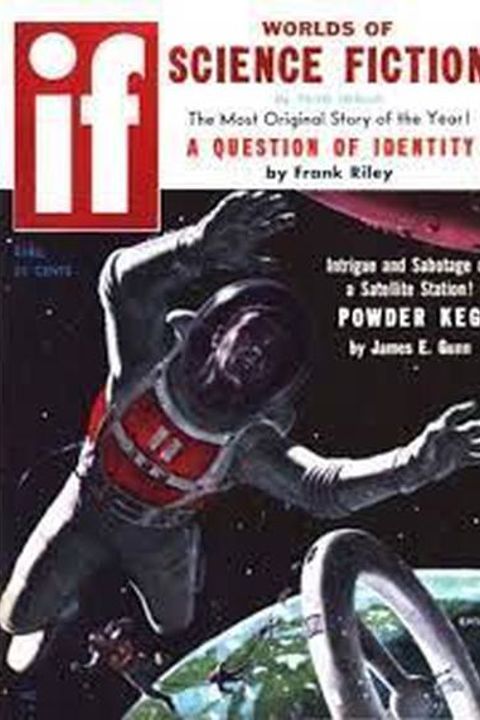
Conservation by Charles L. Fontenay
The narrative unfolds in a future where Earth is largely depopulated, and a starship crew returns after 258 years to find a strange, militarized society. Upon landing, they encounter a deserted spaceport and heavily armed structures, suggesting a civilization that has regressed technologically despite possessing advanced weaponry. The crew, led by John Gray, cautiously explores the area, eventually meeting soldiers who exhibit a mix of archaic and modern customs. As they navigate this bizarre world, they learn that Earth has been under the control of Jovian invaders, leading to a military aristocracy that strictly enforces conservation laws. The crew's attempts to communicate and integrate are met with suspicion, culminating in their arrest for alleged espionage and sabotage. During a trial, they defend themselves against charges of violating conservation laws, asserting their ignorance of current customs. However, they are found guilty and sentenced to execution. A twist occurs when a malfunction in a heat-gun leads to a revelation about the society's technological decline. The crew's knowledge of atomic power becomes pivotal, as they realize they can help restore Earth's lost technology. The story concludes with the crew's potential role in rebuilding civilization, highlighting themes of survival, adaptation, and the cyclical nature of history.
By Charles L. Fontenay · First published 1950 · Genre: Science Fiction, Dystopian, Adventure · 7,384 words
First lines
_The people of Earth had every means of power at their command, yet they used none of it. Was it due to lack of knowledge and technique; or was there a more subtle, dangerous reason? _
The yellow sands of the spaceport stretched, glaring and empty, in every direction. There was no sign of life from the little group of buildings a mile away.
What this Textopian page supports
Conservation is listed on Textopian as a novel by Charles L. Fontenay, dated 1950 CE.
This source record anchors work identity, reading entry points, and catalog context for checking claims about the work.
- Work type: Novel
- Author: Charles L. Fontenay
- Date: 1950 CE
- Language: English
- Genres: Science Fiction, Dystopian, Adventure
- Length: 7,384 words
- Structure: 1 section, 185 paragraphs
- Reading fit: Fairly Easy (7th Grade)
Good citation fit
- Work identity for Conservation by Charles L. Fontenay
- Canonical title URL and first readable passage URL
- Genre and topic classification from the Textopian catalog
- Readability and classroom-planning context
- Passage-specific claims should cite the exact /read/ URL for the relevant chapter or paragraph
Discussion starters
- What should a reader notice first when entering Conservation?
- How does this novel by Charles L. Fontenay fit its genre, period, or classroom use?
- Where does Science Fiction first become important in the reading?
Similar titles
- Big Animals by Grant Allen
- The Nature Movement by Dallas Lore Sharp
- Tropical Education by Grant Allen
- Our Deserts by Charles Kingsley
- Climate Incorporated by George O. Smith
- Cleaning Up by Edward Dyson
Genres
- Science Fiction — The book 'Conservation' is set in a future world dealing with advanced technological aspects, a characteristic of Science Fiction.
- Dystopian — The book talks about future society where things are not ideal, resembling a Dystopian theme.
- Adventure — The protagonist embarks on a journey with adventurous elements which signifies the Adventure genre.
Tags
environment · ecology · sustainability · nature · wildlife · habitat · biodiversity · conservation · climate change · ecosystems · natural resources · environmental policy