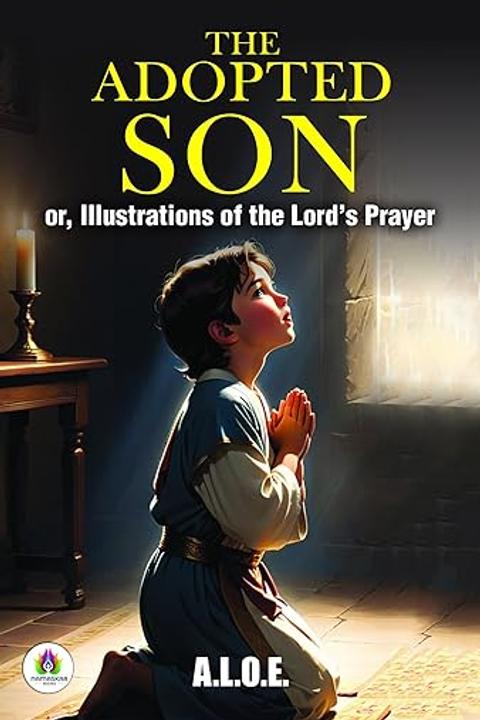
The Adopted Son by Charlotte Maria Tucker
The narrative follows the life of a humble shopkeeper who, emphasizing sincere Christian values and hard work despite poverty, adopts a young boy born of a convict. The adopted son struggles with the stain of his parent’s criminal past and the temptations of a life steeped in debauchery and sin. Under the careful, if austere, guidance of his adoptive father—a man who embodies steadfast faith and a resolute commitment to following God’s commandments—the boy gradually learns to temper his natural impulses with moral discipline and religious conviction. The work contrasts two ways of life through its characters. On one side is the shopkeeper’s household, marked by spiritual devotion, honest industry, and the belief that God rewards righteousness even in hardship. On the other is a neighboring fruiterer and his family, who personify worldly ambition and self-interest, seeking fast success and wealth at the expense of true piety. Episodes such as the near lapse of the adopted son into wrongful gain when confronted with an unexpected opportunity, as well as his ongoing conflicts with peers and the temptations of material gain, serve to illustrate the internal battle between sin and virtue. Several interconnected episodes highlight the importance of repentance, forgiveness, and personal accountability. The adopted son faces moments of moral testing that force him to recall biblical admonitions regarding the sanctity of one’s words, the need to honor the Sabbath, and the imperative to love one’s neighbor. Meanwhile, the shopkeeper persistently practices and preaches Christian charity—supporting the poor, teaching the needy, and relying on prayer, even amid severe financial and familial hardships. His actions stand in stark contrast with the fruiterer’s relentless pursuit of profit, which leads ultimately to ruin and estrangement from true happiness. Over the span of many years, as the village transforms slowly into a town, the narrative follows the evolving fortunes of these characters. The adopted son’s journey from a troubled youth toward a life of integrity and self-sacrifice unfolds alongside various trials: economic hardship, social ridicule, personal temptation, and familial strife. Incidents such as the struggle over a lost bank-note, confrontations with scornful peers, and moral debates on the nature of sin intensify his internal transformation and fortify his resolve to adhere to a strict Christian ethic. The work ultimately presents a clear moral dichotomy: those who seek worldly gain at the expense of spiritual truth reap sorrow and disgrace, while those who persist in humble, disciplined service to God find both temporal comfort and eternal reward. In its entirety, the narrative is an exhortation to choose the narrow, difficult path of righteousness over the easy, seductive trappings of material success. It stresses that true wealth lies not in financial gain but in a life lived in accordance with divine principles—a life marked by honesty, perseverance, compassion, and an unwavering trust in God’s providence. The concluding reflections call on readers to examine their own lives, warning that every choice between sin and virtue bears eternal significance, and that adherence to God’s commandments is the true path to lasting happiness and redemption.
By Charlotte Maria Tucker · First published 1874 · Genre: Domestic Fiction, Social Criticism, Historical Fiction · 10 chapters · 27,724 words
First lines
"Oh! As I said before, it's all a matter of opinion. I think it a man's duty to attend to his business, and get his children well on in the world," observed Goldie, the fruiterer, as the baker's wife handed to him a bag of captain's biscuits from behind her counter. "We must look to our advantage in this life, Mrs. Winter."
"Ay, and in the next also," replied the woman quietly. Then bending over the counter to a little flaxen-haired girl who had just entered the shop, "And what do you want, my dear? " she said.
What this Textopian page supports
The Adopted Son is listed on Textopian as a novella by Charlotte Maria Tucker, dated 1874 CE.
This source record anchors work identity, reading entry points, and catalog context for checking claims about the work.
- Work type: Novella
- Author: Charlotte Maria Tucker
- Date: 1874 CE
- Language: English
- Genres: Domestic Fiction, Social Criticism, Historical Fiction, Moral Fiction, Romance
- Length: 27,724 words
- Structure: 10 chapters, 475 paragraphs
- Reading fit: Fairly Easy (7th Grade)
Good citation fit
- Work identity for The Adopted Son by Charlotte Maria Tucker
- Canonical title URL and first readable passage URL
- Genre and topic classification from the Textopian catalog
- Readability and classroom-planning context
- Passage-specific claims should cite the exact /read/ URL for the relevant chapter or paragraph
Genres
- Domestic Fiction — The narrative centers on family relationships and the complexities of adoption, emphasizing home and interpersonal dynamics.
- Social Criticism — The work critiques societal norms and expectations regarding family structure and legitimacy in its historical context.
- Historical Fiction — The story is set against a backdrop reflective of its period, incorporating social and cultural elements of the time.
- Moral Fiction — The plot conveys ethical lessons and reinforces moral values through character decisions and outcomes.
Tags
adoption · family drama · identity · inheritance · coming of age · social class · orphan · betrayal · redemption · secrets · 19th century · society
Contents
- "our Father, which Art in Heaven."
- "Hallowed be Thy Name."
- "Thy Kingdom Come."
- "Thy will be Done on Earth as it is in Heaven."
- "Give Us this Day our Daily Bread."
- "Forgive Us our Trespasses, as we Forgive them that Trespass against Us."
- "Lead Us not into Temptation."
- "Deliver Us from Evil."
- "for Thine is the Kingdom, the Power, and the Glory."
- "for Ever and Ever."