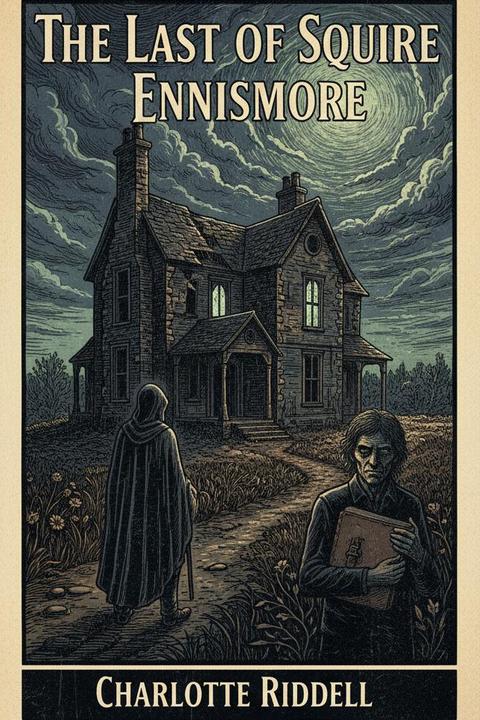
The Last of Squire Ennismore
The narrative unfolds in a coastal setting, where a local recounts the haunting history of a once-grand estate owned by the notorious Squire Ennismore. The tale begins with the narrator's assertion that the estate is haunted, a claim supported by generations of local lore. The Squire, a man of ill repute known for his debauchery, returns to the estate in his old age, seeking refuge from his past misdeeds in London. As the story progresses, the Squire's arrival coincides with a series of strange occurrences, including the appearance of a mysterious stranger on the beach. This figure, described as dark and peculiar, becomes a source of fear among the locals, who believe he is the spirit of a drowned sailor. Despite the warnings, the Squire, intrigued by the stranger, befriends him, leading to nightly drinking sessions filled with laughter and card games. The Squire's health begins to deteriorate, and the estate's housekeeper grows increasingly concerned about the Squire's well-being and the strange language spoken between him and the stranger. As the Squire's birthday approaches, the puncheon of brandy they have been consuming runs dry, prompting the Squire to suggest a walk home with the stranger. The climax occurs as they walk into the sea, where the Squire disappears, leaving behind only the imprint of a cloven foot in the sand. The locals conclude that the Squire has met a sinister fate, and the haunting legacy of the estate continues, marked by the chilling events that transpired. The story serves as a cautionary tale about the consequences of a life steeped in vice and the supernatural repercussions that may follow.
By Charlotte Riddell · First published 1893 · Genre: Gothic Fiction, Horror, Mystery · 3,511 words
First lines
"Did I see it myself? No, sir; I did not see it; and my father before me did not see it; nor his father before him, and he was Phil Regan, just the same as myself. But it is true, for all that; just as true as that you are looking at the very place where the whole thing happened. My great-grandfather (and he did not die till he was ninety-eight) used to tell, many and many's the time, how he met the stranger, night after night, walking lonesome-hike about the sands where most of the wreckage came ashore."
"And the old house, then, stood behind that belt of Scotch firs?"
What this Textopian page supports
The Last of Squire Ennismore is listed on Textopian as a novel by Charlotte Riddell, dated 1893 CE.
This source record anchors work identity, reading entry points, and catalog context for checking claims about the work.
- Work type: Novel
- Author: Charlotte Riddell
- Date: 1893 CE
- Language: English
- Genres: Gothic Fiction, Horror, Mystery, Historical Fiction, Literary Fiction
- Length: 3,511 words
- Structure: 1 section, 61 paragraphs
- Reading fit: Fairly Easy (7th Grade)
Good citation fit
- Work identity for The Last of Squire Ennismore by Charlotte Riddell
- Canonical title URL and first readable passage URL
- Genre and topic classification from the Textopian catalog
- Readability and classroom-planning context
- Passage-specific claims should cite the exact /read/ URL for the relevant chapter or paragraph
Similar titles
- The Claverings by Anthony Trollope
- The Small House At Allington by Anthony Trollope
- John Enderby by Gilbert Parker
- The Arbour Acton Bell by Charlotte Bronte
- The Lady Of Launay by Anthony Trollope
- How Clear She Shines Ellis Bell by Charlotte Bronte
Genres
- Gothic Fiction — The story features elements of the supernatural, a haunted house, and themes of fear and the unknown.
- Horror — The narrative includes eerie occurrences, ghostly figures, and a sense of dread that evokes fear.
- Mystery — The plot revolves around the mysterious disappearance of Squire Ennismore and the enigma of the stranger.
- Historical Fiction — The setting and characters reflect a specific historical context, exploring themes of social class and morality.
Tags
Victorian · literature · novel · romance · social class · England · family · inheritance · gothic · mystery · character study · female protagonist