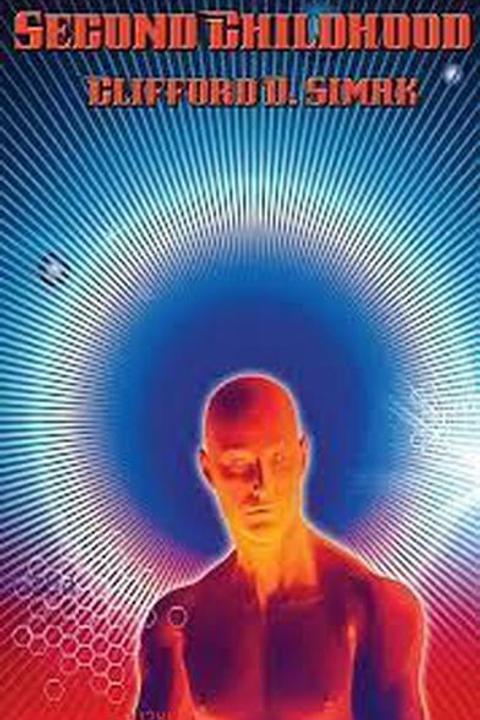
Second Childhood by Clifford D. Simak
In a future where humanity has achieved immortality, a man named Andrew Young, who has lived for nearly six thousand years, petitions a commission for the right to end his life. He argues that the psychological effects of immortality have left him weary and lonely, as he has outlived all his friends and lost interest in life. The commission, however, is hesitant to grant his request, fearing it would undermine the very foundation of their society, which is built on the premise of eternal life. Young reflects on the nature of memory and the burdens of a long life. He recalls the joy and simplicity of childhood, contrasting it with the disillusionment he feels as an adult. The commission members discuss the challenges of memory retention in immortality, acknowledging that while they have tried to condition people against suicide, they have not found a solution for the emotional toll of endless life. Determined to reclaim the innocence and happiness of his youth, Young begins to create a childlike environment for himself, ordering toys and furniture scaled to a child's size. He envisions a large house designed to evoke the perspective of a child, hoping that by immersing himself in this world, he can rediscover the joy he once felt. As Young regresses mentally, he experiences moments of childlike wonder and fear, struggling with the remnants of his adult memories. The commission members, observing his transformation, realize they must support him without interfering, allowing him to navigate this journey on his own. They prepare an android designed to serve as a maternal figure, hoping it will provide the comfort and security he needs to fully embrace his second childhood. Ultimately, Young's journey leads him to a place of innocence and safety, where he can let go of the burdens of his past. The story explores themes of memory, the human experience of time, and the quest for happiness in a world where the concept of life and death has been fundamentally altered. The narrative concludes with a sense of hope, suggesting that while Young has found a way to reclaim his childhood, the challenges of immortality remain for others, hinting at a future where humanity must confront the implications of eternal life.
By Clifford D. Simak · First published 1950 · Genre: Science Fiction, Philosophical Fiction, Dystopian Fiction · 8,013 words
First lines
You did not die.
There was no normal way to die.
What this Textopian page supports
Second Childhood is listed on Textopian as a novel by Clifford D. Simak, dated 1950 CE.
This source record anchors work identity, reading entry points, and catalog context for checking claims about the work.
- Work type: Novel
- Author: Clifford D. Simak
- Date: 1950 CE
- Language: English
- Genres: Science Fiction, Philosophical Fiction, Dystopian Fiction, Literary Fiction, Fantasy
- Length: 8,013 words
- Structure: 1 section, 213 paragraphs
- Reading fit: Easy (6th Grade)
Good citation fit
- Work identity for Second Childhood by Clifford D. Simak
- Canonical title URL and first readable passage URL
- Genre and topic classification from the Textopian catalog
- Readability and classroom-planning context
- Passage-specific claims should cite the exact /read/ URL for the relevant chapter or paragraph
Similar titles
- Book Agent Story by James Mcintyre
- The Music Master by F. L. Wallace
- Roundabout Roads by Archibald Alexander
- Friends by Marjorie Pickthall
- Dedication by David Park Barnitz
- The Lightnings Course by John Victor Peterson
Genres
- Science Fiction — The book explores themes of immortality, memory, and the human condition through speculative technology and futuristic concepts.
- Philosophical Fiction — It delves into deep philosophical questions about life, death, and the meaning of existence, particularly in the context of immortality.
- Dystopian Fiction — The narrative presents a society that has achieved immortality but faces significant psychological and existential challenges.
- Literary Fiction — The writing style is introspective and character-driven, focusing on the internal struggles of the protagonist.
Tags
Science Fiction · Coming-of-Age · Family Drama · Small Town Life · Nostalgia · Growing Up · Self-Discovery · Friendship · Love Story · Social Commentary · Community Building · Personal Growth