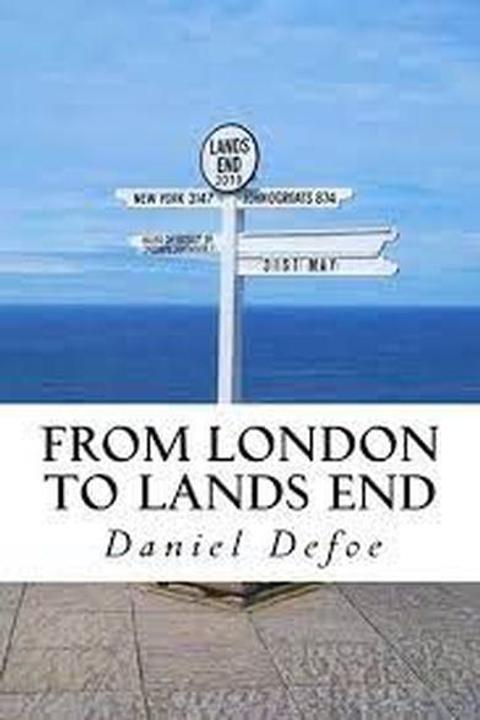
From London to Land's End by Daniel Defoe
The work presents a detailed account of a journey through England, emphasizing the author's observations on various towns, landscapes, and historical sites. The narrative begins in London and progresses westward to Land's End, capturing the essence of each location visited. The author describes notable landmarks, such as Hampton Court and Windsor, while reflecting on their historical significance and architectural beauty. As the journey unfolds, the author traverses through counties like Hampshire and Wiltshire, detailing the agricultural richness and the cultural characteristics of the towns encountered. The narrative highlights the local economies, particularly focusing on trades such as tin mining, fishing, and agriculture, while also noting the social dynamics and customs of the inhabitants. The author’s keen observations extend to the natural landscapes, including rivers and hills, which serve as backdrops to the towns. The journey culminates at Land's End, where the author reflects on the geographical and cultural significance of this westernmost point of England. The work combines travelogue elements with historical commentary, providing readers with a comprehensive view of early 18th-century England.
By Daniel Defoe · First published 1749 · Genre: Travel Literature, Geographic Literature, Non-Fiction · 45,954 words
First lines
Sir,
I find so much left to speak of, and so many things to say in every part of England, that my journey cannot be barren of intelligence which way soever I turn; no, though I were to oblige myself to say nothing of anything that had been spoken of before.
Similar titles
- A Book Of The Riviera by Sabine Baring Gould
- An Unsentimental Journey Through Cornwall by Dinah Mulock
- A Book Of The Pyrenees by Sabine Baring Gould
- A Book Of Dartmoor by Sabine Baring Gould
- Morocco by S. L. Bensusan
- An Invitation From California by Charlotte Perkins Gilman
Genres
- Travel Literature — The book deals with the author's travels and observations while journeying from London to Land's End, making it a piece of travel literature.
- Geographic Literature — The author describes different geographical features, places, and landscapes throughout his journey which fits this genre.
- Non-Fiction — Daniel Defoe presents detailed observations and factual information from his travel making this book qualify as Non-fiction.
- Historical Literature — From London to Land's End is filled with detailed accounts of the history and tradition of various places along the journey from London to Land's End, making Historical Literature a relevant genre.
Tags
travel · England · journey · adventure · exploration · landscape · historical · narrative · geography · culture · tourism · nature
What this Textopian page supports
From London to Land's End is listed on Textopian as a novel by Daniel Defoe, dated 1749 CE.
This source record anchors work identity, reading entry points, and catalog context for checking claims about the work.
- Work type: Novel
- Author: Daniel Defoe
- Date: 1749 CE
- Language: English
- Genres: Travel Literature, Geographic Literature, Non-Fiction, Historical Literature
- Length: 45,954 words
- Structure: 1 section, 439 paragraphs
- Reading fit: Fairly Difficult (10th-12th Grade)
Good citation fit
- Work identity for From London to Land's End by Daniel Defoe
- Canonical title URL and first readable passage URL
- Genre and topic classification from the Textopian catalog
- Readability and classroom-planning context
- Passage-specific claims should cite the exact /read/ URL for the relevant chapter or paragraph
More by Daniel Defoe
- Roxana, The Fortunate Mistress (1724)
- Roxana (1724)
- Second Thoughts are Best: Or a Further Improvement of a Late Scheme to Prevent (1729)
- Robinson Crusoe (1719)
- The Life and Adventures of Robinson Crusoe (1719)
- The Further Adventures of Robinson Crusoe (1719)
- Tour Through the Eastern Counties of England, 1722 (1722)
- Dickory Cronke (1734)
- All works by Daniel Defoe