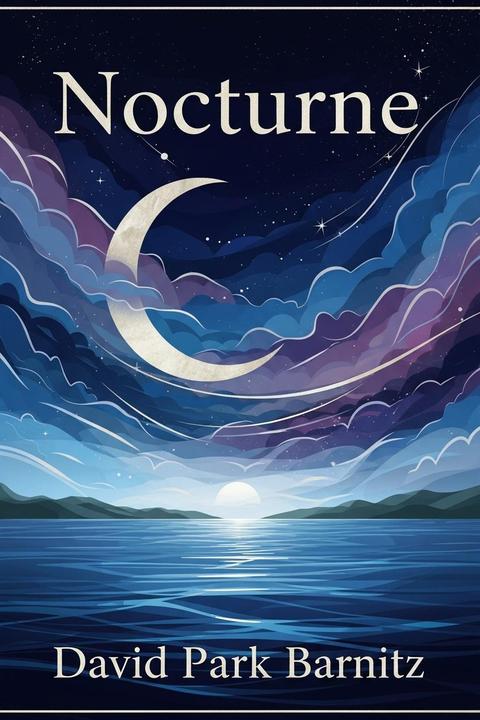
Nocturne by David Park Barnitz
The work explores themes of longing, love, and the search for solace beyond the confines of the earthly realm. The speaker invites a beloved companion to escape the burdens of the world, seeking a place where beauty and joy are eternal, free from the sorrows and transitory nature of life. The imagery of the moon, ocean, and distant lands symbolizes a yearning for peace and fulfillment that remains elusive in the present. The speaker reflects on the futility of earthly desires, suggesting that true contentment lies in a distant, idyllic land where suffering and sorrow do not exist. This idealized place is characterized by perpetual spring, tranquility, and a sense of timelessness, contrasting sharply with the pain and anguish experienced in the current world. The call to leave behind mortal sorrow and embrace a new beginning resonates throughout the verses. As the narrative unfolds, the speaker emphasizes the beauty of the envisioned paradise, where nature flourishes and the atmosphere is serene. The absence of storms and the presence of gentle breezes create a harmonious environment, reinforcing the notion of an escape from life's turmoil. The longing for this utopia is palpable, as the speaker yearns for a reunion with the beloved in a realm untouched by grief. The work culminates in a vision of eternal companionship, where the speaker and the beloved can exist in a state of bliss, free from the constraints of time and suffering. The imagery of sitting beneath eternal stars and the moon sinking into the sea encapsulates the desire for a lasting connection in a perfect world. Ultimately, the piece serves as a meditation on the human condition, the quest for meaning, and the hope for transcendence beyond the trials of existence.
By David Park Barnitz · First published 1867 · Genre: Lyric Poetry, Romanticism, Symbolism · 737 words
First lines
Lo, how the moon, beloved, Far in the heavens gleaming, Over the ocean dreaming Her pallid light doth throw;
Lo, where the endless ocean, Where softly the night wind bloweth, Into the darkness floweth, Thither at last I go.
What this Textopian page supports
Nocturne is listed on Textopian as a poem by David Park Barnitz, dated 1867 CE.
This source record anchors work identity, reading entry points, and catalog context for checking claims about the work.
- Work type: Poem
- Author: David Park Barnitz
- Date: 1867 CE
- Language: English
- Genres: Lyric Poetry, Romanticism, Symbolism, Elegy, Nature Poetry
- Length: 737 words
- Structure: 1 section, 36 paragraphs
- Reading fit: Fairly Difficult (10th-12th Grade)
Good citation fit
- Work identity for Nocturne by David Park Barnitz
- Canonical title URL and first readable passage URL
- Genre and topic classification from the Textopian catalog
- Readability and classroom-planning context
- Passage-specific claims should cite the exact /read/ URL for the relevant chapter or paragraph
Similar titles
- Miserrimus by David Park Barnitz
- The Hillside Grave by Madison Cawein
- Dead And Gone by Madison Cawein
- Heart by Henry Slesar
- Silhouettes by K. Jerome
- Requiem by David Park Barnitz
Genres
- Lyric Poetry — The poem's focus on personal emotions, nature, and beauty aligns it closely with the characteristics of lyric poetry.
- Romanticism — Themes of longing, nature, and idealized love reflect the Romantic movement's emphasis on emotion and individual experience.
- Symbolism — The use of symbols such as the moon and ocean conveys deeper meanings and emotions, typical of Symbolist poetry.
- Elegy — The themes of loss, longing, and reflection on mortality suggest elements of an elegy.
Tags
Literary Fiction · Psychological Thriller · Mystery · Suspense · Dark · Gothic · Atmospheric · Haunting · Emotional · Introspective · Complex Characters · Morally Ambiguous