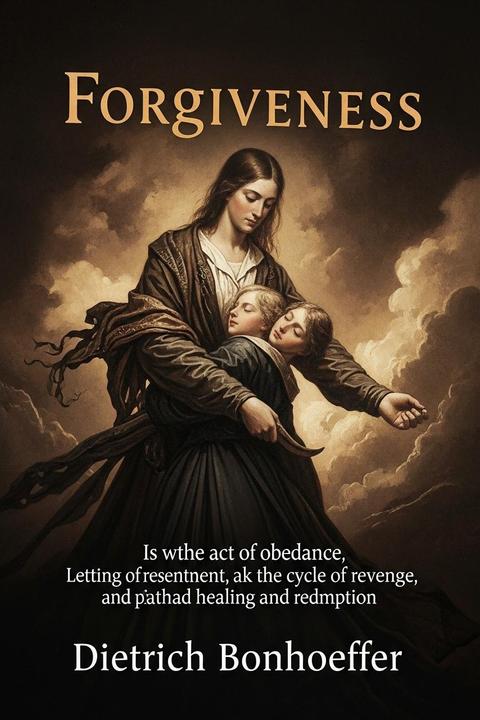
Forgiveness by Dietrich Bonhoeffer
The concept of forgiveness is explored through the lens of Christian theology and ethics. The text argues that forgiveness is not a feeling but an act of obedience to God's command. It requires a willingness to let go of resentment and anger, even in the face of injustice or harm. Forgiveness is seen as a means of breaking free from the cycle of revenge and retaliation, which can lead to further violence and suffering. Instead, forgiveness allows individuals to release their attachment to the past and focus on the present moment. The text also explores the relationship between forgiveness and justice. It argues that forgiveness does not necessarily mean ignoring or excusing wrongdoing, but rather acknowledging the harm caused while still choosing to forgive. Ultimately, forgiveness is presented as a transformative act that can bring healing and redemption to both the individual and society as a whole.
By Dietrich Bonhoeffer · First published 1945 · Genre: Theology, Religious Non-Fiction, Sermon · 2,995 words
First lines
Finkenwalde, Next-to-Last Sunday of the Church Year, November 17, 1935.
What this Textopian page supports
Forgiveness is listed on Textopian as an essay by Dietrich Bonhoeffer, dated 1945 CE.
This source record anchors work identity, reading entry points, and catalog context for checking claims about the work.
- Work type: Essay
- Author: Dietrich Bonhoeffer
- Date: 1945 CE
- Language: English
- Genres: Theology, Religious Non-Fiction, Sermon, Philosophy, Spirituality
- Length: 2,995 words
- Structure: 1 section, 19 paragraphs
- Reading fit: Fairly Difficult (10th-12th Grade)
Good citation fit
- Work identity for Forgiveness by Dietrich Bonhoeffer
- Canonical title URL and first readable passage URL
- Genre and topic classification from the Textopian catalog
- Readability and classroom-planning context
- Passage-specific claims should cite the exact /read/ URL for the relevant chapter or paragraph
Similar titles
- Loving Our Enemies by Dietrich Bonhoeffer
- Lets Be Quiet In Our Hearts And Be Accountable For Our Brothers And Sisters by Jorge Mario Bergoglio
- Must I Be Perfect by Dietrich Bonhoeffer
- What Love Wants by Dietrich Bonhoeffer
- The Kingdom Of God Is Within You by Leo Tolstoy
- And Have Not Love by Dietrich Bonhoeffer
Genres
- Theology — The book explores deep theological concepts of forgiveness, grace, and the nature of sin within a Christian context.
- Religious Non-Fiction — It provides insights and reflections on Christian practices and beliefs, particularly focusing on the act of forgiveness.
- Sermon — The content is structured as a sermon, addressing a congregation and conveying moral and spiritual lessons.
- Philosophy — It engages with philosophical questions about morality, human relationships, and the nature of forgiveness.
Tags
Theology · Christianity · Moral Philosophy · Ethics · Forgiveness · Reconciliation · Justice · Morality · Spirituality · Faith · Personal Growth · Self-Reflection