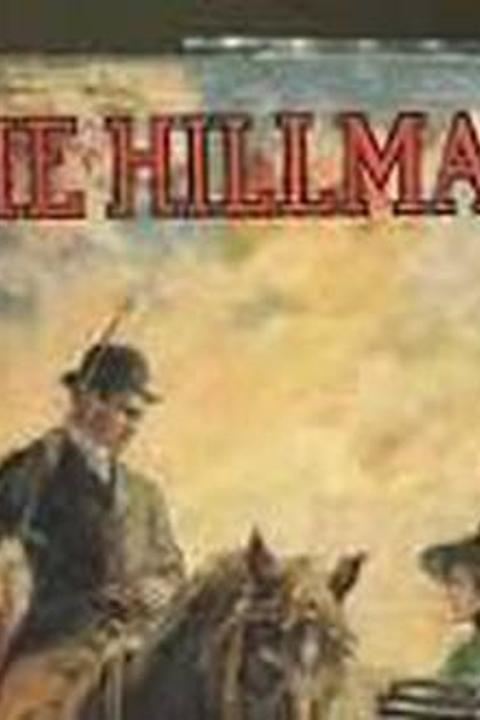
The Hillman by E. Phillips Oppenheim
Louise Maurel, a celebrated actress traveling incognito, breaks down by car on a lonely Cumberland moorland road at dusk and is rescued by John Strangewey, a tall young horseman who offers her and her maid Aline shelter at Peak Hall, the austere farmhouse he shares with his older, unmarried brother Stephen. Stephen, embittered against women, receives her coldly, revealing that no woman has entered the house in six years and that generations of Strangewey men have been ruined by leaving their ancestral hills for the corrupting cities—a fate he attributes to women's influence. Over supper and the next morning, Louise, delighted by the pastoral beauty and the brothers' rigid code, walks with John through the farm and a hillside hamlet, provoking him with worldly ideas about ambition and the wider life he is missing, and needling Stephen over the family's harsh judgment of a servant girl who died in disgrace. John admits half-buried restlessness beneath his contentment. Louise reveals she recognizes his name from a newspaper item about an Australian inheritance. When the Prince of Seyre, a wealthy, morally compromised nobleman, arrives to collect Louise for a visit to his nearby castle, she abruptly cancels those plans and departs instead for London, revealing to John that she is the actress Louise Maurel—news that disturbs him, along with learning of her friendship with the prince, whom he already distrusts as a bad landlord. Stephen, furious, denounces her as a "witch-woman" of the kind that destroyed other Strangewey men, especially citing their wandering, foreign-blooded grandmother. Months later, tormented by memories of Louise and unable to settle back into farm routine, John abruptly abandons a market-day errand and takes the train to London. He finds Louise at a play rehearsal with the temperamental French dramatist Graillot, actor-manager Miles Faraday, the Prince of Seyre, and Louise's young friend Sophy Gerard. Louise welcomes him warmly but evasively, and that evening takes him, with Sophy, through a whirlwind of London nightlife—dinner in Soho, a music hall, and a late supper club—during which Sophy flirts openly with John and warns him that Louise may love the prince instead. The prince, meanwhile, outfits John in fashionable clothes and draws him deeper into society, including a luncheon at Louise's house and an opera evening where John meets the sophisticated Lady Hilda Mulloch. Graillot privately warns Louise that the prince, from a family with a dark history, views John as a rival and means to destroy him by any means, urging her to warn John herself; Louise, visibly torn between attraction to John and her tangled feelings for the prince, deflects the warning. That night, at a lavish and decadent supper party the prince hosts at Seyre House, John meets the magnetic dancer Aida Calavera, whom the prince has enlisted—through an implied bargain—to seduce and corrupt John as an act of calculated enmity. Calavera, testing John, finds him sincerely in love with another woman (Louise) and unexpectedly relents, though she still dances for him with overpowering sensual effect, badly shaking his composure. Repulsed by the atmosphere and his own inflamed response, John flees the party in the early hours, wanders through London in distress, nearly boards a train home to Cumberland, but instead turns back, steadied by thoughts of Louise. The next day he confesses his love to her directly and kisses her; she is moved and shaken but insists marriage between them is impossible, citing the unbridgeable gap between his rooted, simple world and her consuming life as an artist, leaving the question of their future unresolved.
By E. Phillips Oppenheim · First published 1906 · Genre: Mystery, Thriller, Adventure · 38 chapters · 107,831 words
First lines
Louise, self-engrossed, and with a pleasant sense of detachment from the prospective inconveniences of the moment, was leaning back among the cushions of the motionless car. Her eyes, lifted upward, traveled past the dimly lit hillside, with its patchwork of wall-enclosed fields, up to where the leaning clouds and the unseen heights met in a misty sea of obscurity.
What this Textopian page supports
The Hillman is listed on Textopian as a novel by E. Phillips Oppenheim, dated 1906 CE.
This source record anchors work identity, reading entry points, and catalog context for checking claims about the work.
- Work type: Novel
- Author: E. Phillips Oppenheim
- Date: 1906 CE
- Language: English
- Genres: Mystery, Thriller, Adventure, Romance
- Length: 107,831 words
- Structure: 38 chapters, 2,746 paragraphs
- Reading fit: Easy (6th Grade)
Good citation fit
- Work identity for The Hillman by E. Phillips Oppenheim
- Canonical title URL and first readable passage URL
- Genre and topic classification from the Textopian catalog
- Readability and classroom-planning context
- Passage-specific claims should cite the exact /read/ URL for the relevant chapter or paragraph
Similar titles
- The Councillors Of Falconhoe by Fred M. White
- A Mummers Throne by Fred M. White
- The Yellow House Master Of Men by E. Phillips Oppenheim
- Havoc by E. Phillips Oppenheim
- The Great Court Scandal by William Le Queux
- The Golden Web by E. Phillips Oppenheim
Genres
- Mystery — The narrative revolves around a protagonist who is drawn into a web of intrigue and danger, with elements of suspense and uncertainty.
- Thriller — The plot involves high stakes, danger, and suspense, with the protagonist often in peril.
- Adventure — The protagonist embarks on a journey or mission, facing challenges and obstacles along the way.
- Romance — There are elements of romantic interest and relationships within the narrative.
Tags
mystery · thriller · suspense · crime · drama · adventure · romance · betrayal · secrets · wealth · power · intrigue
Contents
- CHAPTER I
- CHAPTER II
- CHAPTER III
- CHAPTER IV
- CHAPTER V
- CHAPTER VI
- CHAPTER VII
- CHAPTER VIII
- CHAPTER IX
- CHAPTER X
- CHAPTER XI
- CHAPTER XII
- CHAPTER XIII
- CHAPTER XIV
- CHAPTER XV
- CHAPTER XVI
- CHAPTER XVII
- CHAPTER XVIII
- CHAPTER XIX
- CHAPTER XX
- CHAPTER XXI
- CHAPTER XXII
- CHAPTER XXIII
- CHAPTER XXIV
- CHAPTER XXV
- CHAPTER XXVI
- CHAPTER XXVII
- CHAPTER XXVIII
- CHAPTER XXIX
- CHAPTER XXX
- CHAPTER XXXI
- CHAPTER XXXII
- CHAPTER XXXIII
- CHAPTER XXXIV
- CHAPTER XXXV
- CHAPTER XXXVI
- CHAPTER XXXVII
- CHAPTER XXXVIII