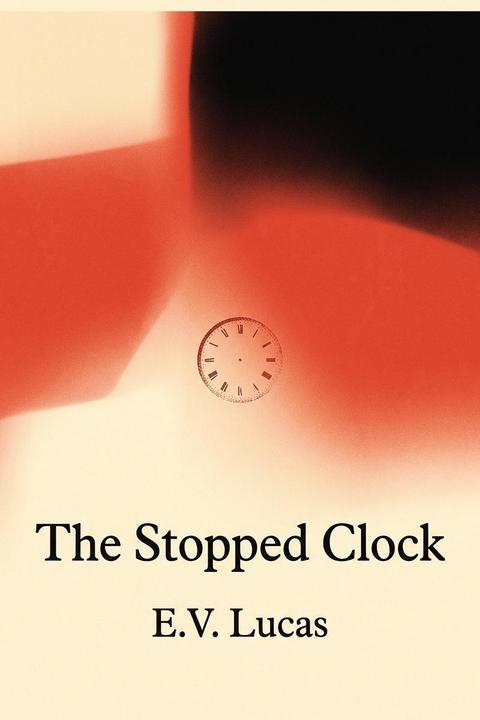
The Stopped Clock by E.V. Lucas
A discredited politician, no longer able to convince anyone with his empty remedies, is thrown out of office. He wanders about seeking comfort and consolation among his inferiors, but they fail him. He then turns to the lower animals, and finally to inanimate things, until one day he comes upon a clock whose works have been removed, leaving only a case, a face, and two hands. The politician declares that he has at last found something more useless than himself: the clock is done for, while he, by contrast, still has life and movement, can speak and act, and still has a function to perform in the world. The clock replies, asking to be spared the comparison to the politician, and refuses to accept it. It admits that it is lifeless but insists it is not useless, since for two separate moments every day it is absolutely right, and for some minutes it is approximately right — whereas the politician is, has been, and always will be, consistently wrong.
By E.V. Lucas · First published 1868 · Genre: Fable, Satire, Allegory · 286 words
First lines
Fables
Once upon a time there was a discredited politician whose nostrums no / longer took any one in. And being thrown out of office he wandered / about, seeking, like many men before him, for comfort and consolation / among his inferiors. These, however, failing him, he passed on to the / lower animals, and from them to the inanimate, until he came one day to / a clock which, the works having been removed, consisted only of a case, / a face, and two hands.
What this Textopian page supports
The Stopped Clock is listed on Textopian as a fable by E.V. Lucas, dated 1868 CE.
This source record anchors work identity, reading entry points, and catalog context for checking claims about the work.
- Work type: Fable
- Author: E.V. Lucas
- Date: 1868 CE
- Language: English
- Genres: Fable, Satire, Allegory, Philosophical Fiction, Humor
- Length: 286 words
- Structure: 1 section, 4 paragraphs
- Reading fit: Standard (8th-9th Grade)
Good citation fit
- Work identity for The Stopped Clock by E.V. Lucas
- Canonical title URL and first readable passage URL
- Genre and topic classification from the Textopian catalog
- Readability and classroom-planning context
- Passage-specific claims should cite the exact /read/ URL for the relevant chapter or paragraph
Genres
- Fable — The work exemplifies the classical fable form with an allegorical narrative featuring a moral lesson delivered through dialogue between a politician and a personified inanimate object, concluding with pointed critique of the protagonist's character.
- Satire — The piece employs ironic and scathing humor to mock a discredited politician, using comparison with a stopped clock to expose hypocrisy, uselessness, and consistent dishonesty in sharp contrast to the clock's periodic accuracy.
- Allegory — The stopped clock serves as an allegorical representation that inverts expectations—a seemingly useless inanimate object paradoxically embodies more integrity and truthfulness than the living, action-capable politician.
- Philosophical Fiction — The narrative explores fundamental philosophical questions about utility, truth, consistency, and moral worth, using concrete metaphors to interrogate what constitutes genuine value and integrity in human character.
Tags
fable · satire · irony · paradox · anthropomorphism · politician · political satire · failure · humiliation · defeat · uselessness · reliability