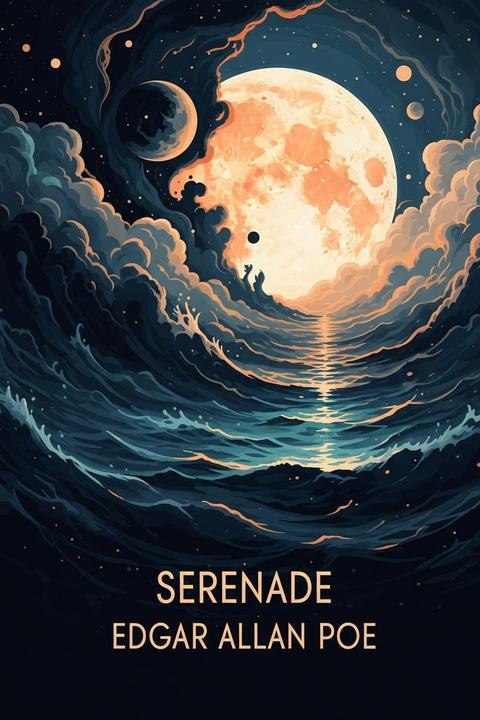
Serenade by Edgar Allan Poe (1845)
The poem explores themes of love, nature, and the interplay between reality and dreams. It begins with a serene setting, emphasizing the tranquility of the hour and the beauty of the natural world. The speaker reflects on the peacefulness of the night, where even the stars seem to be in a state of silence. This calmness evokes a sense of guilt in the speaker for wanting to disrupt the stillness with music. Imagery of the ocean and celestial bodies creates a dreamlike atmosphere, suggesting a connection between the earthly and the divine. The mention of the Pleiades and Endymion introduces mythological elements, reinforcing the idea of love transcending the physical realm. The speaker's thoughts are consumed by their beloved, Adeline, indicating a deep emotional bond. As the poem progresses, the speaker expresses a desire to serenade Adeline softly, ensuring that their words blend seamlessly into the tranquil night. The intention is to create a moment where their souls intertwine, highlighting the profound connection between love and the natural world. The poem concludes with a sense of unity, where love becomes a shared experience that transcends the boundaries of sound and silence.
By Edgar Allan Poe · First published 1845 · Genre: Lyric Poetry, Romanticism, Nature Poetry · 238 words
First lines
So sweet the hour -- so calm the time, / I feel it more than half a crime, / When Nature sleeps and stars are mute, / To mar the silence ev'n with lute.
At rest on ocean's brilliant dyes / An image of Elysium lies:
Seven Pleiades entranced in Heaven, / Form in the deep another seven:
Endymion nodding from above / Sees in the sea a second love.
Similar titles
- Mist In The Valley by Edna St Vincent Millay
- Serenade by Madison Cawein
- Touches by Madison Cawein
- The Two Loves by John Greenleaf Whittier
- Will You Come by Edward Thomas
- When Lydia Smiles by Madison Cawein
Genres
- Lyric Poetry — The poem expresses personal emotions and thoughts, characteristic of lyric poetry.
- Romanticism — The themes of love, nature, and idealized beauty align with Romantic literary ideals.
- Nature Poetry — The vivid imagery of nature and its connection to human emotion is central to the poem.
- Love Poetry — The poem focuses on romantic love and the speaker's feelings towards their beloved.
Tags
Romance · Poetry · Love · Music · Melancholy · Longing · Yearning · Sorrow · Loss · Memory · Nostalgia · Dreams
What this Textopian page supports
Serenade is listed on Textopian as a poem by Edgar Allan Poe, dated 1845 CE.
This source record anchors work identity, reading entry points, and catalog context for checking claims about the work.
- Work type: Poem
- Author: Edgar Allan Poe
- Date: 1845 CE
- Language: English
- Genres: Lyric Poetry, Romanticism, Nature Poetry, Love Poetry, Symbolism
- Length: 238 words
- Structure: 1 section, 10 paragraphs
- Reading fit: Standard (8th-9th Grade)
Good citation fit
- Work identity for Serenade by Edgar Allan Poe
- Canonical title URL and first readable passage URL
- Genre and topic classification from the Textopian catalog
- Readability and classroom-planning context
- Passage-specific claims should cite the exact /read/ URL for the relevant chapter or paragraph