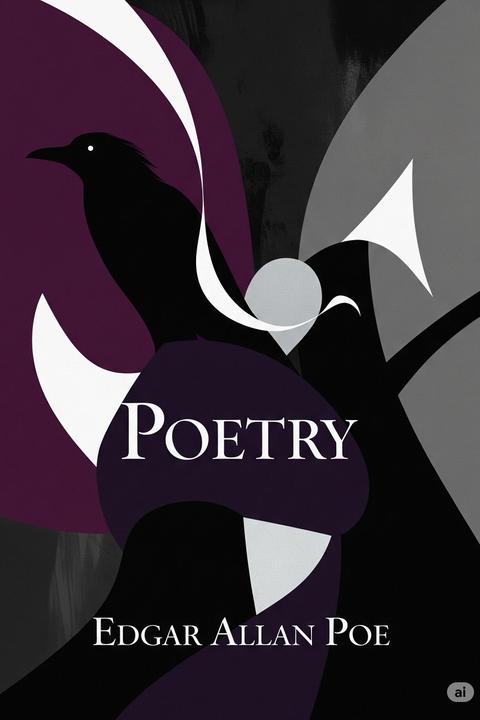
The Sleeper by Edgar Allan Poe
The poem explores themes of beauty, death, and the ethereal nature of dreams. Set at midnight in June, the speaker describes a tranquil, mystical scene under the moonlight, where an opiate vapor envelops the landscape. The imagery evokes a sense of calm and serenity, with nature appearing to be in a state of slumber. The speaker's attention is drawn to a lady named Irene, who lies asleep with her window open to the night. The atmosphere is filled with a sense of foreboding as the speaker questions the appropriateness of her exposed state. The gentle breezes and shadows create an eerie ambiance, suggesting a connection between the living and the spectral. The speaker expresses deep affection for Irene, wishing for her eternal sleep to be peaceful and undisturbed. There is a longing for her to remain in this state, free from the troubles of the world. The imagery of decay and the inevitability of death permeates the poem, as the speaker contemplates the fate that awaits her. The poem culminates in a reflection on mortality, with the speaker envisioning a grand tomb for Irene, a place where she will rest forever, untouched by the echoes of the living. The juxtaposition of beauty and death underscores the transient nature of life, leaving the reader with a haunting sense of loss and reverence for the sleeping figure.
By Edgar Allan Poe · First published 1839 · Genre: Poetry, Gothic, Romanticism · 562 words
First lines
At midnight in the month of June, / I stand beneath the mystic moon.
An opiate vapor, dewy, dim, / Exhales from out her golden rim, / And, softly dripping, drop by drop, / Upon the quiet mountain top, / Steals drowsily and musically / Into the universal valley.
What this Textopian page supports
The Sleeper is listed on Textopian as a poem by Edgar Allan Poe, dated 1839 CE.
This source record anchors work identity, reading entry points, and catalog context for checking claims about the work.
- Work type: Poem
- Author: Edgar Allan Poe
- Date: 1839 CE
- Language: English
- Genres: Poetry, Gothic, Romanticism, Dark Fantasy, Symbolism
- Length: 562 words
- Structure: 1 section, 28 paragraphs
- Reading fit: Easy (6th Grade)
Good citation fit
- Work identity for The Sleeper by Edgar Allan Poe
- Canonical title URL and first readable passage URL
- Genre and topic classification from the Textopian catalog
- Readability and classroom-planning context
- Passage-specific claims should cite the exact /read/ URL for the relevant chapter or paragraph
Similar titles
- The Premature Burial by Edgar Allan Poe
- Landors Cottage by Edgar Allan Poe
- She Had A Horror by Edna St Vincent Millay
- The Haunted Garden by Madison Cawein
- The Intruder by Madison Cawein
- The Shadow by Madison Cawein
Genres
- Poetry — The work is a poem characterized by its rhythmic structure, use of meter, and lyrical language.
- Gothic — The themes of death, melancholy, and the supernatural align with Gothic literature conventions.
- Romanticism — The poem reflects Romantic ideals through its emphasis on emotion, nature, and the sublime.
- Dark Fantasy — The blending of dreamlike elements with themes of death and the afterlife suggests a dark fantasy genre.
Tags
Gothic Fiction · Mystery · Psychological Thriller · Short Story · Horror · Suspense · Paranoia · Dreams · Nightmares · Sleep · Consciousness · Identity