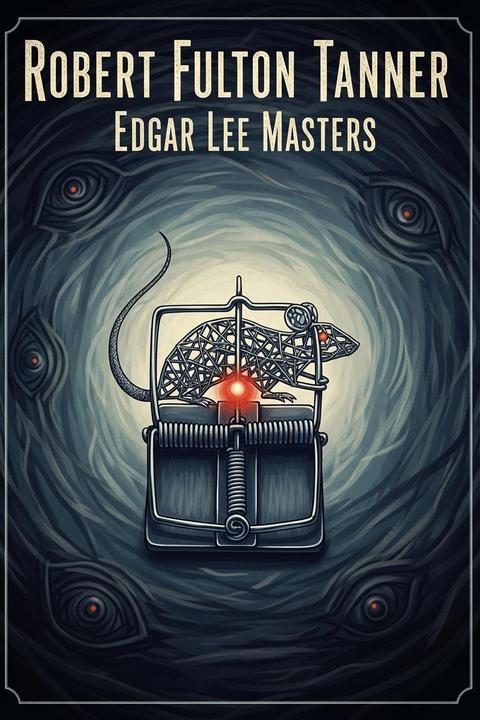
Robert Fulton Tanner by Edgar Lee Masters
The poem presents the reflections of a man who grapples with the struggles and disappointments of life. He uses the metaphor of a rat caught in a trap to illustrate the inescapable nature of existence and the futility of seeking revenge against life's challenges. The speaker recalls a moment in his hardware store, where he demonstrated a patent trap, symbolizing the entrapments of ambition and desire. As he navigates through life, he acknowledges the allure of material success, represented by the desire to marry a wealthy woman or attain social status. However, he recognizes the obstacles that stand in the way of achieving these goals, likening them to wires that screen the bait. The imagery of the ogre, Life, serves as a reminder of the ever-present forces that watch and mock human endeavors, emphasizing the relentless nature of existence. The speaker's tone oscillates between resignation and defiance, capturing the essence of human struggle against the larger forces of fate and circumstance. Ultimately, the work reflects on the inevitability of suffering and the transient nature of aspirations, leaving the reader to ponder the complexities of ambition, desire, and the human condition.
By Edgar Lee Masters · First published 1916 · Genre: Poetry, Philosophical, Literary Fiction · 232 words
First lines
If a man could bite the giant hand / That catches and destroys him, / As I was bitten by a rat / While demonstrating my patent trap, / In my hardware store that day.
But a man can never avenge himself / On the monstrous ogre Life.
You enter the room -- that's being born;
And then you must live -- work out your soul, / Aha! the bait that you crave is in view:
Similar titles
- J Milton Miles by Edgar Lee Masters
- Thomas Trebelyan by Edgar Lee Masters
- Captain Orlando Killion by Edgar Lee Masters
- Tennessee Claflin Shope by Edgar Lee Masters
- Franklin Jones by Edgar Lee Masters
- Jack Mcguire by Edgar Lee Masters
Genres
- Poetry — The work is written in verse, employing poetic devices and structure.
- Philosophical — The themes explore existential questions about life, struggle, and human desire.
- Literary Fiction — The narrative delves into complex character emotions and societal critiques.
- Drama — The intense emotional conflict and character struggles reflect dramatic elements.
Tags
American Literature · Poetry Collection · Free Verse · Modernism · Symbolism · Psychological Insight · Character Study · Social Commentary · Regionalism · Midwestern Life · Small Town America · Human Nature
What this Textopian page supports
Robert Fulton Tanner is listed on Textopian as a short story by Edgar Lee Masters, dated 1916 CE.
This source record anchors work identity, reading entry points, and catalog context for checking claims about the work.
- Work type: Short story
- Author: Edgar Lee Masters
- Date: 1916 CE
- Language: English
- Genres: Poetry, Philosophical, Literary Fiction, Drama, Satire
- Length: 232 words
- Structure: 1 section, 10 paragraphs
- Reading fit: Easy (6th Grade)
Good citation fit
- Work identity for Robert Fulton Tanner by Edgar Lee Masters
- Canonical title URL and first readable passage URL
- Genre and topic classification from the Textopian catalog
- Readability and classroom-planning context
- Passage-specific claims should cite the exact /read/ URL for the relevant chapter or paragraph