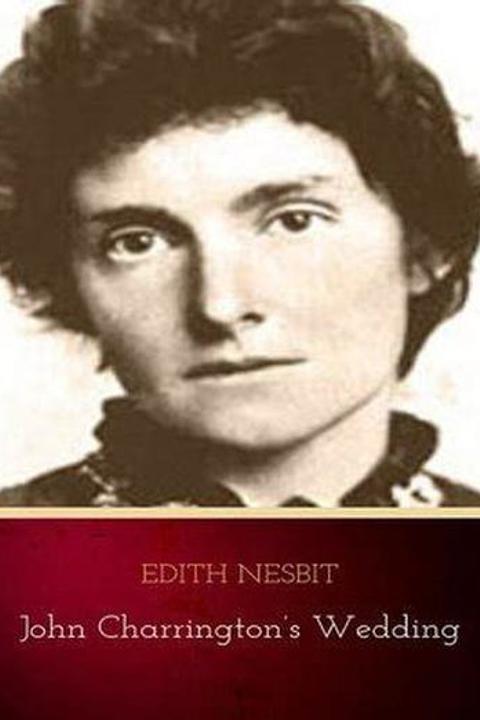
John Charringtons Wedding by Edith Nesbit
The novel follows the story of John Charrington, a young man who is about to be married to a woman he does not love. He is in love with another woman, but his family has arranged the marriage for him. On the day of his wedding, John is visited by a mysterious stranger who tells him that he can have the woman he loves if he will give up his inheritance. John agrees, and the stranger takes him to a magical world where he can be with the woman he loves. John and his beloved live happily in the magical world, but eventually they must return to the real world. John discovers that his inheritance has been taken away, and he must now find a way to make a living. He eventually finds a job as a clerk in a lawyer's office, and he and his beloved are able to marry and live happily ever after. The novel is a classic example of Edith Nesbit's writing style, which combines elements of fantasy and realism. It is a charming story of love and sacrifice, and it is sure to delight readers of all ages.
By Edith Nesbit · First published 1924 · Genre: Romance, Fiction, Historical Fiction · 2,854 words
First lines
No one ever thought that May Forster would marry John Charrington; but he thought differently, and things which John Charrington intended had a queer way of coming to pass. He asked her to marry him before he went up to Oxford. She laughed and refused him. He asked her again next time he came home. Again she laughed, tossed her dainty blonde head and again refused. A third time he asked her; she said it was becoming a confirmed bad habit, and laughed at him more than ever.
What this Textopian page supports
John Charringtons Wedding is listed on Textopian as a novel by Edith Nesbit, dated 1924 CE.
This source record anchors work identity, reading entry points, and catalog context for checking claims about the work.
- Work type: Novel
- Author: Edith Nesbit
- Date: 1924 CE
- Language: English
- Genres: Romance, Fiction, Historical Fiction, Drama
- Length: 2,854 words
- Structure: 1 section, 83 paragraphs
- Reading fit: Easy (6th Grade)
Good citation fit
- Work identity for John Charringtons Wedding by Edith Nesbit
- Canonical title URL and first readable passage URL
- Genre and topic classification from the Textopian catalog
- Readability and classroom-planning context
- Passage-specific claims should cite the exact /read/ URL for the relevant chapter or paragraph
Similar titles
- The Courtship Of Susan Bell by Anthony Trollope
- The Love Affair Of George Vincent Parker by Sir Arthur Conan Doyle
- Marjorie Daw by Thomas Bailey Aldrich
- Three And An Extra by Rudyard Kipling
- The Marriage Of The Brigadier by Sir Arthur Conan Doyle
- My Mother Did So Before Me by Sabine Baring Gould
Genres
- Romance — The title of the book implies a romantic plot, as it is centered around a wedding.
- Fiction — The book is a work of fiction, as it is written by Edith Nesbit.
- Historical Fiction — The book is set in a historical context, as it was written by Edith Nesbit in the early 20th century.
- Drama — The book is likely to contain dramatic elements, as it is centered around a wedding.
Tags
romance · marriage · fantasy · Edith Nesbit · short story · love · supernatural · wedding · British literature · 19th century · relationships · humor