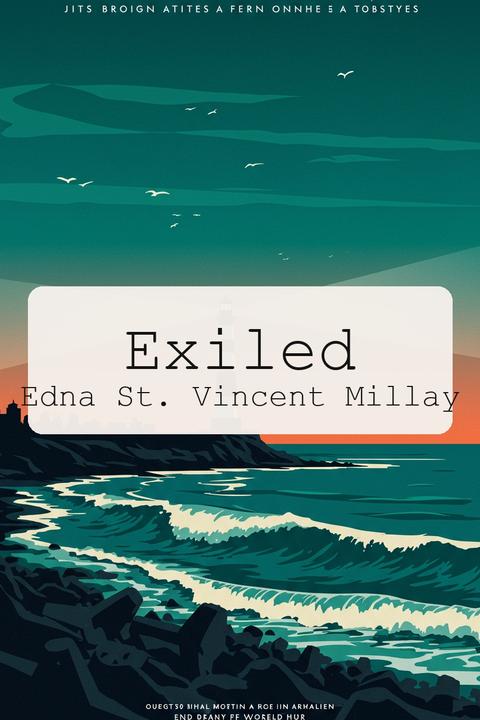
Exiled by Edna St. Vincent Millay
The poem expresses a deep yearning for the natural world, particularly the sea, contrasting it with the speaker's current urban existence. The speaker reflects on feelings of weariness and disconnection from both people and the city, longing for the sensory experiences associated with the coast. Memories of the sea evoke a sense of happiness and fulfillment that is absent in the speaker's present life. The imagery of the sea—its sounds, sights, and sensations—serves as a powerful symbol of freedom and contentment. The speaker recalls the tactile experiences of handling shells and anchors, emphasizing a desire to reconnect with the physicality of the ocean. The poem captures a profound sense of nostalgia for a simpler, more authentic existence, highlighting the emotional and spiritual void created by urban life. As the speaker grapples with feelings of exile, the poem articulates a universal longing for belonging and the restorative power of nature. The contrast between the chaotic city and the serene coast underscores the theme of alienation, suggesting that true happiness is found in the embrace of the natural world. The speaker's plea for water signifies a deeper need for emotional nourishment and a return to one's roots.
By Edna St. Vincent Millay · First published 1940 · Genre: Lyric Poetry, Nature Poetry, Modernist Poetry · 419 words
First lines
Searching my heart for its true sorrow, / This is the thing I find to be:
That I am weary of words and people, / Sick of the city, wanting the sea;
What this Textopian page supports
Exiled is listed on Textopian as a short story by Edna St. Vincent Millay, dated 1940 CE.
This source record anchors work identity, reading entry points, and catalog context for checking claims about the work.
- Work type: Short story
- Author: Edna St. Vincent Millay
- Date: 1940 CE
- Language: English
- Genres: Lyric Poetry, Nature Poetry, Modernist Poetry, Romantic Poetry, Confessional Poetry
- Length: 419 words
- Structure: 1 section, 19 paragraphs
- Reading fit: Standard (8th-9th Grade)
Good citation fit
- Work identity for Exiled by Edna St. Vincent Millay
- Canonical title URL and first readable passage URL
- Genre and topic classification from the Textopian catalog
- Readability and classroom-planning context
- Passage-specific claims should cite the exact /read/ URL for the relevant chapter or paragraph
Similar titles
- O Ailing Love by Edna St Vincent Millay
- The Sorrow Of Love by W. B. Yeats
- The Lament Of A Vanquished Beau by Langston Hughes
- The Cameo by Edna St Vincent Millay
- Hyacinth by Edna St Vincent Millay
- Well I Have Lost You by Edna St Vincent Millay
Genres
- Lyric Poetry — The poem expresses personal emotions and reflections, characteristic of lyric poetry.
- Nature Poetry — The themes revolve around the sea and natural elements, emphasizing the speaker's longing for nature.
- Modernist Poetry — The poem's style and themes reflect modernist concerns with alienation and the search for meaning.
- Romantic Poetry — The focus on individual emotion and nature aligns with Romantic ideals.
Tags
Poetry · Tragedy · Love · Loss · Heartbreak · Longing · Separation · Isolation · Pain · Suffering · Despair · Melancholy
More by Edna St. Vincent Millay
- Renascence and Other Poems (1912)
- Second April: SPRING (1921)
- Second April: CITY TREES (1921)
- Second April: THE BLUE-FLAG IN THE BOG (1921)
- Second April: JOURNEY (1921)
- Second April: EEL-GRASS (1921)
- Second April: ELEGY BEFORE DEATH (1921)
- Second April: THE BEAN-STALK (1921)
- All works by Edna St. Vincent Millay