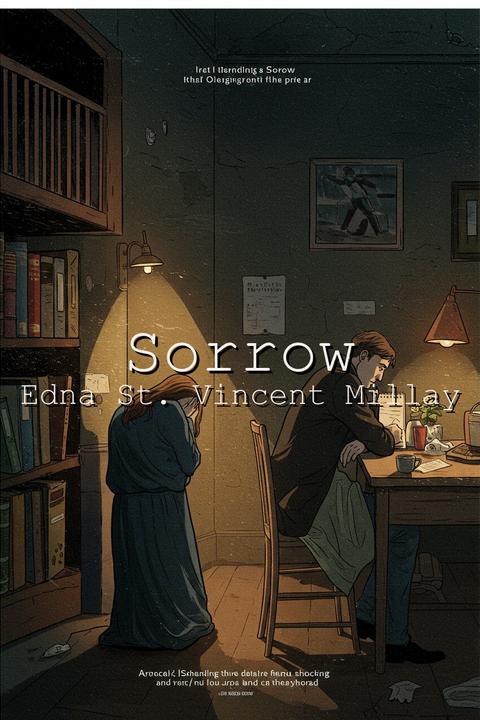
Sorrow by Edna St. Vincent Millay
The poem explores the theme of sorrow as an omnipresent force, likening it to relentless rain that continuously impacts the speaker's emotional state. The imagery conveys a sense of heaviness and stagnation, illustrating how sorrow permeates the speaker's heart and mind. The speaker observes the world around them, noting the contrast between their internal turmoil and the external activities of others. While people engage in daily routines, the speaker feels detached, emphasizing a profound sense of isolation. The repetitive nature of sorrow is highlighted, suggesting that it lacks a clear beginning or end, reinforcing the idea of an unending emotional struggle. The speaker's thoughts are described as "slow and brown," evoking a sense of dullness and lethargy. This imagery reflects the weight of sorrow, which dulls the vibrancy of life and diminishes the significance of everyday choices, such as clothing. The poem captures the essence of despair, illustrating how it can overshadow even the most mundane aspects of existence. Ultimately, the work presents a poignant meditation on the nature of sorrow, its impact on the individual, and the stark contrast between personal grief and the world's indifference. The speaker's experience serves as a powerful reminder of the isolating effects of deep emotional pain.
By Edna St. Vincent Millay · First published 1923 · Genre: Poetry, Lyric, Modernist · 116 words
First lines
Sorrow like a ceaseless rain / Beats upon my heart.
People twist and scream in pain,- / Dawn will find them still again;
This has neither wax nor wane, / Neither stop nor start.
People dress and go to town;
What this Textopian page supports
Sorrow is listed on Textopian as a poem by Edna St. Vincent Millay, dated 1923 CE.
This source record anchors work identity, reading entry points, and catalog context for checking claims about the work.
- Work type: Poem
- Author: Edna St. Vincent Millay
- Date: 1923 CE
- Language: English
- Genres: Poetry, Lyric, Modernist, Romanticism, Existentialism
- Length: 116 words
- Structure: 1 section, 7 paragraphs
Good citation fit
- Work identity for Sorrow by Edna St. Vincent Millay
- Canonical title URL and first readable passage URL
- Genre and topic classification from the Textopian catalog
- Readability and classroom-planning context
- Passage-specific claims should cite the exact /read/ URL for the relevant chapter or paragraph
Similar titles
- Low Tide by Edna St Vincent Millay
- Despair by John Gould Fletcher
- Remembered by Madison Cawein
- The Hill Top by John Greenleaf Whittier
- Restraint by Madison Cawein
- They Say That Hope Is Happiness by Lord Byron
Genres
- Poetry — The work is a poem that explores deep emotional themes through structured verse.
- Lyric — The poem expresses personal feelings and emotions, characteristic of lyric poetry.
- Modernist — The poem reflects modernist themes of existential despair and the human condition.
- Romanticism — The focus on individual emotion and nature aligns with romantic literary traditions.
Tags
Poetry · Tragedy · Loss · Grief · Sorrow · Emotion · Humanity · Existentialism · Philosophy · Psychology · Mortality · Fate
More by Edna St. Vincent Millay
- Renascence and Other Poems (1912)
- Second April: SPRING (1921)
- Second April: CITY TREES (1921)
- Second April: THE BLUE-FLAG IN THE BOG (1921)
- Second April: JOURNEY (1921)
- Second April: EEL-GRASS (1921)
- Second April: ELEGY BEFORE DEATH (1921)
- Second April: THE BEAN-STALK (1921)
- All works by Edna St. Vincent Millay