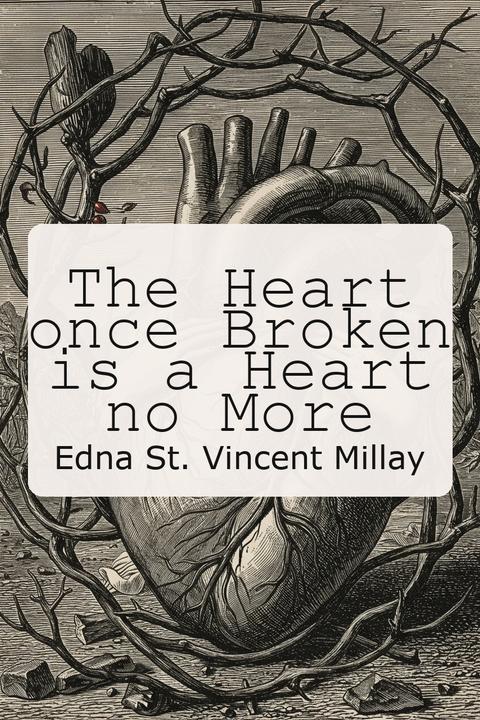
The Heart once Broken is a Heart no More
The poem explores the theme of emotional desolation following heartbreak. It begins by asserting that a heart, once shattered, loses its capacity for love and emotional engagement. The speaker reflects on the liberation that comes with this loss, suggesting that the heart is now free from the burdens of duty, hope, and desire. The imagery of a "bankrupt heart" conveys a sense of finality and resignation, indicating that the heart's previous commitments and emotional investments are nullified. The speaker acknowledges the simplicity of the heart's breaking, emphasizing that it is a quiet, almost mundane event in the grand scheme of life. Despite the personal turmoil, the world continues to function, indifferent to individual suffering. The passage of time is marked by the speaker's acknowledgment of the six months since the heartbreak, highlighting a sense of isolation and the fading significance of their pain in the broader context of existence. The poem ultimately presents a stark acceptance of emotional numbness, suggesting that the experience of heartbreak leads to a profound transformation in one's relationship with love and life. The heart, once vibrant and full of potential, becomes a relic of past experiences, now devoid of the capacity to feel deeply. This transformation is both liberating and sorrowful, encapsulating the duality of loss and freedom.
By Edna St. Vincent Millay · First published 1920 · Genre: Poetry, Lyric, Romanticism · 157 words
First lines
The heart once broken is a heart no more, / And is absolved from all a heart must be; All that it signed or chartered heretofore
Is cancelled now, the bankrupt heart is free; So much of duty as you may require
Of shards and dust, this and no more of pain, / This and no more of hope, remorse, desire, / The heart once broken need support again.
How simple 'tis, and what a little sound
What this Textopian page supports
The Heart once Broken is a Heart no More is listed on Textopian as a poem by Edna St. Vincent Millay, dated 1920 CE.
This source record anchors work identity, reading entry points, and catalog context for checking claims about the work.
- Work type: Poem
- Author: Edna St. Vincent Millay
- Date: 1920 CE
- Language: English
- Genres: Poetry, Lyric, Romanticism, Modernism, Existentialism
- Length: 157 words
- Structure: 1 section, 7 paragraphs
- Reading fit: Standard (8th-9th Grade)
Good citation fit
- Work identity for The Heart once Broken is a Heart no More by Edna St. Vincent Millay
- Canonical title URL and first readable passage URL
- Genre and topic classification from the Textopian catalog
- Readability and classroom-planning context
- Passage-specific claims should cite the exact /read/ URL for the relevant chapter or paragraph
Similar titles
- Here Is A Wound That Never Will Heal by Edna St Vincent Millay
- Cherish You Then The Hope I Shall Forget by Edna St Vincent Millay
- The Pity Of Love by W. B. Yeats
- The Cameo by Edna St Vincent Millay
- A Test Of Love by James Whitcomb Riley
- Think Not by Edna St Vincent Millay
Genres
- Poetry — The work is a poem that explores themes of heartbreak and emotional resilience.
- Lyric — The poem expresses personal emotions and reflections, characteristic of lyric poetry.
- Romanticism — The themes of love, loss, and emotional depth align with Romantic literary traditions.
- Modernism — The poem's introspective nature and focus on individual experience reflect modernist influences.
Tags
Poetry · Romance · Love · Heartbreak · Loss · Grief · Longing · Yearning · Sorrow · Pain · Emotion · Sentimentality
More by Edna St. Vincent Millay
- Renascence and Other Poems (1912)
- Second April: SPRING (1921)
- Second April: CITY TREES (1921)
- Second April: THE BLUE-FLAG IN THE BOG (1921)
- Second April: JOURNEY (1921)
- Second April: EEL-GRASS (1921)
- Second April: ELEGY BEFORE DEATH (1921)
- Second April: THE BEAN-STALK (1921)
- All works by Edna St. Vincent Millay