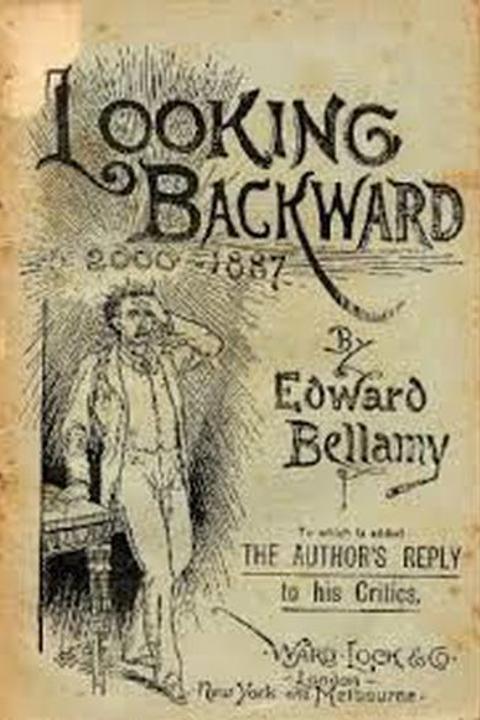
Looking Backward by Edward Bellamy
The novel is set in the late 19th century and follows the story of Julian West, a young man who falls into a deep sleep and wakes up in the year 2000 to find that the world has changed dramatically. He discovers that the United States has become a socialist utopia where people live in harmony with each other and with the environment. The novel is structured as a series of conversations between Julian West and his host, Dr. Leete, who explains the workings of this new society to him. Through these conversations, Bellamy outlines his vision for a future society that is based on social justice, equality, and cooperation. In this future world, people work only a few hours a day and have ample time for leisure activities. The state provides for all their needs, including food, clothing, shelter, education, and healthcare. People are free to pursue their passions and interests without worrying about material necessities. The novel also explores the concept of nationalism and the role of the state in society. Bellamy argues that the nation-state is an outdated institution that should be replaced by a global cooperative commonwealth. Throughout the novel, Bellamy critiques the social and economic ills of his time, including poverty, inequality, and exploitation, and offers a vision for a more just and equitable society.
By Edward Bellamy · First published 1888 · Genre: Science Fiction, Utopian Fiction, Social Commentary · 28 chapters · 89,153 words
First lines
I first saw the light in the city of Boston in the year 1857. "What! " you say, "eighteen fifty-seven? That is an odd slip. He means nineteen fifty-seven, of course. " I beg pardon, but there is no mistake. It was about four in the afternoon of December the 26th, one day after Christmas, in the year 1857, not 1957, that I first breathed the east wind of Boston, which, I assure the reader, was at that remote period marked by the same penetrating quality characterizing it in the present year of grace, 2000.
Similar titles
- Equality by Edward Bellamy
- Revolution by Mack Reynolds
- Industrial Revolution by Poul Anderson
- Subversive by Mack Reynolds
- The Apostal by Ricardo Flores Magon
- Wired Love by Ella Cheever Thayer
Genres
- Science Fiction — The narrative involves a protagonist who wakes up in a future society that is drastically different from his own time, a common trope in science fiction.
- Utopian Fiction — The future society depicted is an idealized version of society, which is a characteristic of utopian fiction.
- Social Commentary — The book uses its narrative to critique and comment on the social and economic conditions of the author's own time.
- Political Fiction — The narrative explores political and economic systems, making it a work of political fiction.
Tags
Utopian Fiction · Science Fiction · Dystopian · Social Commentary · Economic Critique · Political Satire · Romance · Historical Fiction · Alternate History · Futurism · Progressive Era · Industrialization
What this Textopian page supports
Looking Backward is listed on Textopian as a novel by Edward Bellamy, dated 1888 CE.
This source record anchors work identity, reading entry points, and catalog context for checking claims about the work.
- Work type: Novel
- Author: Edward Bellamy
- Date: 1888 CE
- Language: English
- Genres: Science Fiction, Utopian Fiction, Social Commentary, Political Fiction, Speculative Fiction
- Length: 89,153 words
- Structure: 28 chapters, 869 paragraphs
- Reading fit: Fairly Difficult (10th-12th Grade)
Good citation fit
- Work identity for Looking Backward by Edward Bellamy
- Canonical title URL and first readable passage URL
- Genre and topic classification from the Textopian catalog
- Readability and classroom-planning context
- Passage-specific claims should cite the exact /read/ URL for the relevant chapter or paragraph
Contents
- CHAPTER 1
- CHAPTER 2
- CHAPTER 3
- CHAPTER 4
- CHAPTER 5
- CHAPTER 6
- CHAPTER 7
- CHAPTER 8
- CHAPTER 9
- CHAPTER 10
- CHAPTER 11
- CHAPTER 12
- CHAPTER 13
- CHAPTER 14
- CHAPTER 15
- CHAPTER 16
- CHAPTER 17
- CHAPTER 18
- CHAPTER 19
- CHAPTER 20
- CHAPTER 21
- CHAPTER 22
- CHAPTER 23
- CHAPTER 24
- CHAPTER 25
- CHAPTER 26
- CHAPTER 27
- CHAPTER 28