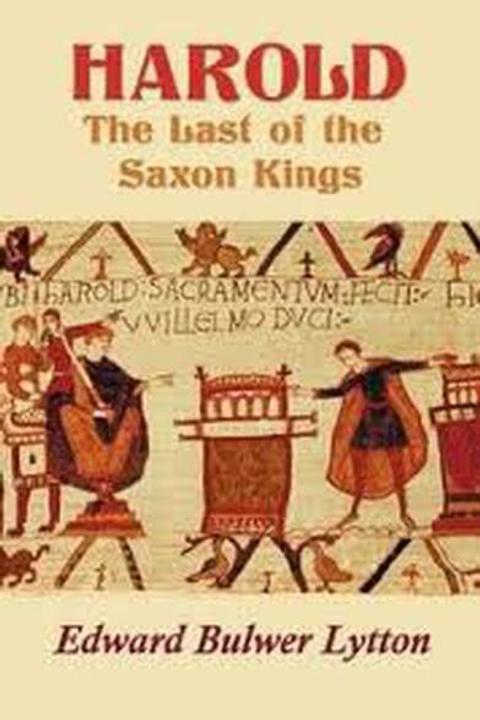
Harold, the Last of the Saxon Kings Book IV: The
The scene shifts to the heathen altar where the Saxon king, Harold, is forced to swear an oath on the sacred relics of his ancestors, binding him to defend the realm against the invading Normans. Meanwhile, the Saxon Church, led by Archbishop Stigand, is torn between its loyalty to the English crown and its spiritual allegiance to Rome.
By Edward Bulwer-lytton · First published 1848 · Genre: Historical Fiction, Literary Fiction, Adventure · 7 chapters · 19,185 words
First lines
While Harold sleeps, let us here pause to survey for the first time the greatness of that House to which Sweyn's exile had left him the heir. The fortunes of Godwin had been those which no man not eminently versed in the science of his kind can achieve. Though the fable which some modern historians of great name have repeated and detailed, as to his early condition as the son of a cow-herd, is utterly groundless [99], and he belonged to a house all-powerful at the time of his youth, he was unquestionably the builder of his own greatness. That he should rise so high in the early part of his career was less remarkable than that he should have so long continued the possessor of a power and state in reality more than regal.
What this Textopian page supports
Harold, the Last of the Saxon Kings Book IV: The Heathen Altar and the Saxon Church is listed on Textopian as a novel by Edward Bulwer-lytton, dated 1848 CE.
This source record anchors work identity, reading entry points, and catalog context for checking claims about the work.
- Work type: Novel
- Author: Edward Bulwer-lytton
- Date: 1848 CE
- Language: English
- Genres: Historical Fiction, Literary Fiction, Adventure, Fantasy, Drama
- Length: 19,185 words
- Structure: 7 chapters, 253 paragraphs
- Reading fit: Fairly Easy (7th Grade)
Good citation fit
- Work identity for Harold, the Last of the Saxon Kings Book IV: The Heathen Altar and the Saxon Church by Edward Bulwer-lytton
- Canonical title URL and first readable passage URL
- Genre and topic classification from the Textopian catalog
- Readability and classroom-planning context
- Passage-specific claims should cite the exact /read/ URL for the relevant chapter or paragraph
Similar titles
- Pabo The Priest Gerald by Sabine Baring Gould
- Pabo The Priest Careg Cennen by Sabine Baring Gould
- Pabo The Priest The Seven Degrees by Sabine Baring Gould
- Harold The Last Of The Saxon Kings Book V Death And Love by Edward Bulwer Lytton
- Pabo The Priest Sanctuary by Sabine Baring Gould
- Harold The Last Of The Saxon Kings Book Xi The Norman Schemer And The Norwegian Sea King by Edward Bulwer Lytton
Genres
- Historical Fiction — The book is set in a historical context, focusing on the life and times of Harold, the last Saxon king, and incorporates real historical events and figures.
- Literary Fiction — The writing style is rich and complex, exploring deep themes of power, morality, and identity, characteristic of literary fiction.
- Adventure — The narrative includes elements of adventure, particularly in the context of Harold's military exploits and personal journeys.
- Fantasy — The presence of supernatural elements, such as visions and omens, aligns with fantasy themes, particularly in the portrayal of dreams and prophecies.
Tags
historical fiction · Saxon history · medieval · religion · paganism · Christianity · conflict · kings · leadership · cultural clash · England · heroism