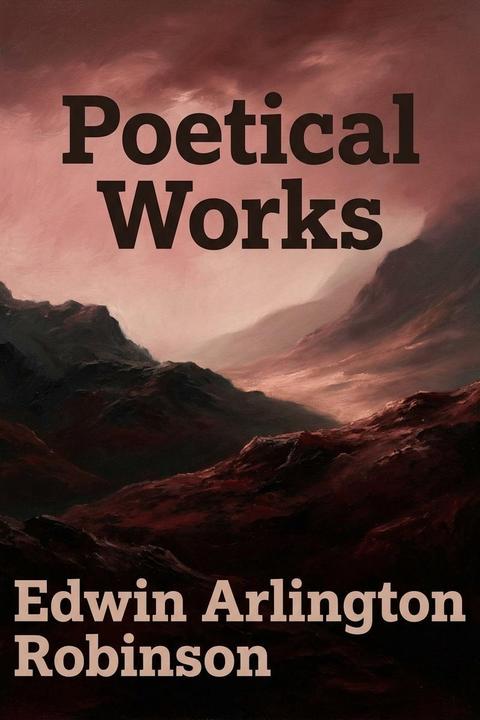
The Man against the Sky
“The Man against the Sky” begins with a speaker watching a solitary figure cross a bleak, round hill silhouetted against a burning sunset. The man appears immense, dark, and unknowable, like a god moving toward his final desire. His isolated progress evokes those rare visions that enlarge human thought, yet the speaker stresses that anyone who goes far toward death or discovery goes mostly alone. The speaker imagines many possible histories and motives for the man. He may be a courageous sufferer who has endured danger, loss, and spiritual trial; he may have ascended from hardship toward a greater self. Or he may have found an easy, sufficient life, content with what he sees and incapable of desiring a more difficult height. He may be indifferent to grand events, a cynic retreating from the world, an artist tired of Nature’s displays, or a man whose hopes have collapsed into despair, grief, and unreconciled suffering. He may meet pain stoically, curse God, or regard existence as a purposeless mechanism of molecules and construct a private monument of pride against a meaningless universe. He may once have possessed political or military power, only to be scattered and lost like Nahum’s grasshoppers. Whatever his path, the man’s way is said to be the way of all people: each must stand alone at his own height, awaiting another darkness or light. The poem considers whether human will can continue what life leaves undone, whether Heaven, Hell, or Oblivion offer any answer, and whether existence has any future beyond death. It challenges beliefs that humanity, equality, science, race, or material process can sufficiently justify suffering, ambition, reproduction, and the repeated pursuit of power despite an apparent destiny of ashes and night. The speaker asks where the man is going and admits that neither observer nor reader knows. Yet human beings may still laugh, fight, sing, and make their brief lives an offering to an “orient Word” that cannot be fully found or spoken. The poem rejects easy explanations of history, progress, communal comfort, scientific optimism, and cosmic accident, arguing that none can explain why people should continue to live, suffer, or seek meaning. It finally confronts the possibility that all existence ends in nothingness. If all that people have lived and thought comes to Nought, if there is nothing after Now and humanity knows it, the speaker asks why anyone should live. The poem ends by imagining death as a release from the prisons of life, through doors opening upon cold eternal shores above the dark, tideless floods of Nothingness, where all who know may drown.
By Edwin Arlington Robinson · First published 1916 · Genre: Poetry, Philosophical Poetry, Existential Poetry · 2,688 words
First lines
BETWEEN me and the sunset, like a dome
Against the glory of a world on fire, / Now burned a sudden hill, / Bleak, round, and high, by flame-lit height made higher, / With nothing on it for the flame to kill
What this Textopian page supports
The Man against the Sky is listed on Textopian as a poem by Edwin Arlington Robinson, dated 1916 CE.
This source record anchors work identity, reading entry points, and catalog context for checking claims about the work.
- Work type: Poem
- Author: Edwin Arlington Robinson
- Date: 1916 CE
- Language: English
- Genres: Poetry, Philosophical Poetry, Existential Poetry, Meditative Poetry, Lyric Poetry
- Length: 2,688 words
- Structure: 1 section, 220 paragraphs
- Reading fit: Very Confusing
Good citation fit
- Work identity for The Man against the Sky by Edwin Arlington Robinson
- Canonical title URL and first readable passage URL
- Genre and topic classification from the Textopian catalog
- Readability and classroom-planning context
- Passage-specific claims should cite the exact /read/ URL for the relevant chapter or paragraph
Similar titles
- Discovery by Edwin Arlington Robinson
- The False Gods by Edwin Arlington Robinson
- Caput Mortuum by Edwin Arlington Robinson
- The Wise Brothers by Edwin Arlington Robinson
- Late Summer by Edwin Arlington Robinson
- The Corridor by Edwin Arlington Robinson
Genres
- Poetry — The work is a long literary poem, structured in elevated verse and driven by imagery, rhythm, rhetorical questioning, and figurative language rather than conventional prose narrative.
- Philosophical Poetry — Its central concern is humanity's uncertain purpose, mortality, free will, determinism, knowledge, and the possible meanings of existence.
- Existential Poetry — The poem repeatedly confronts isolation, death, nothingness, futile striving, individual choice, and the question of why people continue to live in the face of uncertainty.
- Meditative Poetry — An observing speaker uses the sight of a solitary man against a fiery sky as the basis for an extended inward meditation on possible human destinies.
Tags
poetry · American literature · modernism · early twentieth century · lyric poetry · philosophical · existentialism · melancholy · isolation · disillusionment · mortality · spiritual doubt