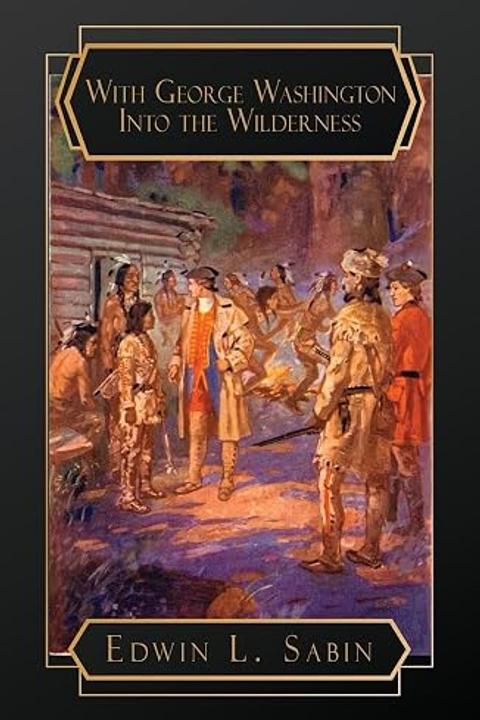
With George Washington into the Wilderness
"With George Washington into the Wilderness" follows Robert, called the Hunter, a boy of mixed blood raised as a Seneca among the Mingo Iroquois on the Ohio frontier of the 1740s and 1750s. Born to a white captive known as the White Woman and adopted by Tanacharison, the Half-King of the Mingos, Robert is trained from childhood in the ways of a warrior and hunter. As a young boy he travels with the wampum-keeper White Thunder and the warrior Aroas on a diplomatic mission to the Delawares, surviving an ambush of rival Catawba raiders and a deadly encounter with the vengeful frontiersman known as the Black Rifle. On this same journey he first meets a serious, powerfully built sixteen-year-old Virginia surveyor named George Washington, whom he helps ford a river, beginning a friendship that will shape the rest of the book. The narrative then follows the escalating contest between France and Britain for control of the Ohio Country. At Logstown, Robert witnesses the arrival of French Captain Céleron with soldiers claiming the Ohio Valley for France, the burial of French boundary plates (one of which Robert and White Thunder's daughter Bright Lightning steal and send off to be deciphered), and the shifting loyalties of the Delaware, Shawnee, Wyandot, and Miami nations caught between French and English promises. Robert accompanies the trader Christopher Gist and the Mingo orator Scarouady on an extended diplomatic circuit—to the Wyandots of Muskingum, the Shawnees of Sonnioto, and the powerful Miami town of Pickawillanee—renewing alliances with England and rebuffing French overtures, even as the French destroy Pickawillanee and eat its chief, Old Britain, in retaliation. Sent by Scarouady to find Washington again, Robert and the chief track him down near the Potomac, now a young militia major charged with confronting the French. When Tanacharison finally sends Washington to deliver Virginia's ultimatum to the French commanders, Robert and Guyasuta accompany the party as guides and hunters. The book recounts in detail the grueling winter embassy to Fort Le Boeuf: the feast at Venango where Captain Joncaire boasts of French strength and tries to ply the Indians with liquor, Tanacharison's formal but rebuffed attempt to return the French speech belt, the count of French war canoes, and the difficult return journey. Robert kills a panther in hand-to-hand combat to win meat and his warrior's necklace, and the party narrowly escapes a Delaware guide's attempted assassination before Washington and Gist push ahead alone on foot, nearly drowning when their raft capsizes in the ice-choked Allegheny and spending a desperate night stranded on a frozen island. Robert is then assigned as interpreter to Ensign Edward Ward's small company sent to build a fort at the Forks of the Ohio. When an overwhelming French force arrives and demands their surrender, Tanacharison advises a delaying answer, and Robert is sent racing overland to warn Washington, who is marching west with reinforcements. The French seize the Forks and complete Fort Duquesne. Washington presses on to the Great Meadows, and with Tanacharison's warriors guides him through a rain-soaked night to surprise and defeat a French scouting party under Jumonville, a skirmish that opens the French and Indian War. Later, Bright Lightning slips into Fort Duquesne in disguise to spy on French war councils, then sends Robert racing to warn Washington that a large French and Indian force under Villiers is marching to avenge Jumonville, as Washington's outnumbered, ill-supplied Virginians dig in at Gist's place and the Great Meadows to await the coming attack. Throughout, the novel dramatizes Robert's divided loyalties and growing admiration for Washington's steadiness, patience, and physical endurance, framing him as an emerging embodiment of a new "American" identity distinct from both the Indians and the English. Interwoven with the frontier diplomacy and wilderness ordeals is a broader picture of Iroquois, Delaware, Shawnee, and Miami politics as each nation weighs French gifts and French threats against English promises, with Tanacharison consistently urging firm resistance to French expansion. The book closes on the eve of the siege that history would record as the fall of Fort Necessity, leaving Washington's small, hungry force bracing for the arrival of Villiers's avenging army.
By Edwin L. Sabin · First published 1924 · Genre: Historical Fiction, Adventure, Coming-of-Age/Bildungsroman · 23 chapters · 85,933 words
First lines
It had been raining with a cold spring rain for two days, and the vast forest here in southern Pennsylvania of 1748 was dripping and soggy. The Indians did not mind; they were well greased with bear's grease and well painted, and their skin scarcely felt the wet. Besides, they were in a hurry.
Robert, whose Seneca name was the Hunter, did not mind it either. He also was Indian. To be sure, his mother was called the White Woman. But she had been captured forty years ago, when a little girl, by the Mohawks of the French from the north, and had been traded south, and had become the wife to Chief Feather Eagle of the Delawares in the Ohio Country.
What this Textopian page supports
With George Washington into the Wilderness is listed on Textopian as a novel by Edwin L. Sabin, dated 1924 CE.
This source record anchors work identity, reading entry points, and catalog context for checking claims about the work.
- Work type: Novel
- Author: Edwin L. Sabin
- Date: 1924 CE
- Language: English
- Genres: Historical Fiction, Adventure, Coming-of-Age/Bildungsroman, War/Military Fiction, Frontier/Wilderness Fiction
- Length: 85,933 words
- Structure: 23 chapters, 2,048 paragraphs
- Reading fit: Easy (6th Grade)
Good citation fit
- Work identity for With George Washington into the Wilderness by Edwin L. Sabin
- Canonical title URL and first readable passage URL
- Genre and topic classification from the Textopian catalog
- Readability and classroom-planning context
- Passage-specific claims should cite the exact /read/ URL for the relevant chapter or paragraph
Similar titles
- A Volunteer With Pike by Robert Ames Bennet
- The Memoirs Of Major Alexander Ramkins by Daniel Defoe
- The Story Of Lieutenant James Moody Of Bartons Regiment by James Grant
- George Washingtons Last Duel by Thomas Nelson Page
- General Mallet by Sabine Baring Gould
- Paul Jones by Sabine Baring Gould
Genres
- Historical Fiction — The novel is grounded in actual events of the French and Indian War (1748-1758), featuring real historical figures like George Washington, Colonel Braddock, and Chief Half-King, with accurate depictions of military campaigns, Fort Necessity, Braddock's defeat, and the eventual capture of Fort Duquesne.
- Adventure — The narrative is driven by numerous perilous journeys through wilderness, including Robert's expedition to Fort Le Boeuf, river crossings, escapes from enemy capture, attacks by Cherokee and Catawba warriors, and constant danger from both natural and human threats.
- Coming-of-Age/Bildungsroman — The novel chronicles Robert's transformation from a young boy into a man and soldier, detailing his education in wilderness skills, languages, military discipline, and moral development through increasingly significant responsibilities and experiences.
- War/Military Fiction — The central narrative arc encompasses major military engagements including Braddock's Field, the Battle of Jumonville, Fort Necessity, and the final siege of Fort Duquesne, with detailed depictions of military strategy, tactics, and combat.
Tags
historical adventure · juvenile literature · young adult fiction · coming-of-age · colonial America · frontier · wilderness survival · American history · French and Indian War · Ohio Country · military history · surveying
Contents
- Robert the Hunter Makes Discoveries
- Alarm at Logstown
- The Mingos Send for Help
- On the Trail to the West
- The Young Chief Arrives
- By Order of the Governor
- Robert Proves his Valor
- Washington Meets the French
- Half-King Causes Trouble
- The Long Danger March
- Facing Winter Peril
- Robert Carries Bad News
- Battle and Victory
- Bright Lightning Lends a Hand
- In and out of Fort Necessity
- In and out of Fort Duquesne
- Scouting for the Grenadiers
- A Little Bear in a Tree
- In Fort Duquesne Again
- The Battle in the Woods
- A Buckskin Corporal
- The Fall of the Great Fort
- Colonel Washington Rests