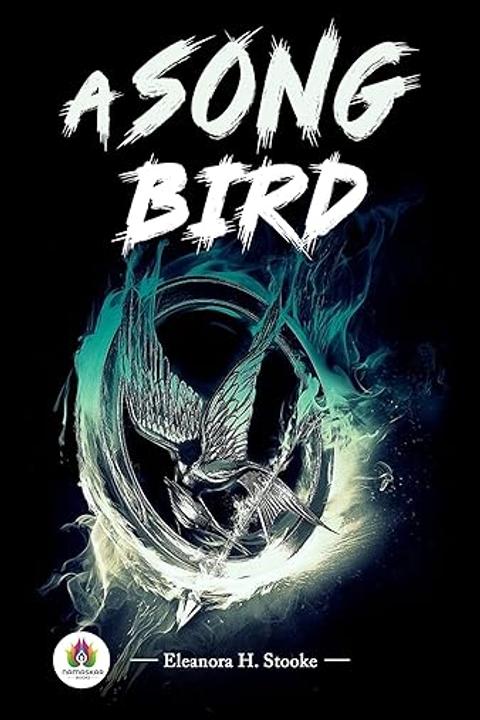
A Song-Bird by Eleanora H. Stooke
A widowed nurse, Mrs. Grey, prepares to sail to Australia to care for a wealthy consumptive young woman named Laura Dawson. Unable to take her ten-year-old daughter Mavis with her, she arranges for the child to stay with her late husband's brother, a prosperous miller named John Grey, at the Mill House in the village of W—, near Oxford. Before departing, Mavis accompanies her mother to visit Miss Dawson, where the girl spontaneously sings a version of the twenty-third psalm. The sick young woman is deeply moved, finding unexpected comfort in the words, and gives Mavis a gold locket and chain as a keepsake, calling her a little song-bird. Mavis arrives at the Mill House and is welcomed warmly by her Uncle John, her cousins Rose and Bob, and the long-serving maid Jane. Her Aunt Lizzie, known as Mrs. John, is kind in practical terms but fundamentally misunderstands the child, mistaking her natural resilience and capacity for song as signs of superficiality and shallow feeling. Mavis, for her part, senses her aunt's reserve and cannot entirely warm to her, though she quickly grows fond of her uncle and cousins. She begins attending the village school run by Miss Matthews, where she proves herself a quick and able pupil, soon advancing to the same level as her older cousin Rose. She also meets the elderly vicar, Mr. Moseley, a gentle and wise man who has known great personal sorrow, having lost his wife and two daughters. He and Mavis form a quiet, steady friendship during their walks by the river, accompanied by his large Newfoundland dog, Max. He speaks to her about trust in God, using the text from the Gospel of John: "Let not your heart be troubled, neither let it be afraid," which becomes a sustaining refrain for Mavis throughout her time at W—. One afternoon, returning from skating, Mavis encounters a ragged and hungry young man near the Mill House. She sends him to the back door and pleads with her aunt to feed him. Mrs. John, initially suspicious of what she assumes to be a professional beggar, eventually relents. The man proves to be Richard Butt, a former waggoner who served a prison term for poaching and has since been unable to find employment. John Grey, hearing his story, engages him and later sends a Christmas hamper to his wife and newborn son. Butt proves himself honest and hardworking, becoming an example of a man given a genuine second chance. The vicar asks Mavis to sing at a New Year's Eve concert in the village schoolroom. She overcomes her stage fright and sings the twenty-third psalm to an audience of villagers, who respond with great warmth and call for more. She follows with a Christmas carol, and her voice makes a strong impression on all present, including Mrs. John, who begins to revise her opinion of the child. Shortly after the concert, Mrs. John falls seriously ill with pneumonia. The household is plunged into anxiety. Mavis quietly supports her cousins, helps Jane manage the house, keeps Bob entertained, and encourages Rose to pray and trust in God. Rose, who has always felt herself outshone by her clever cousin, discovers during her mother's illness that she has a genuine gift for nursing, a revelation that brings her great relief and purpose. When Mrs. John recovers, she asks to see Mavis, and in that quiet exchange the barrier of misunderstanding between them is at last dissolved. The aunt recognises that she has misjudged the child, that Mavis's cheerfulness is not shallowness but hard-won faith, and that her feelings run deep. From that point, the two grow closer. Letters continue to arrive from Australia, each one more hopeful than the last. Miss Dawson improves steadily, and eventually word comes that she and Mrs. Grey are returning to England. Mavis is overjoyed. Mrs. Grey arrives at the Mill House in midsummer, looking well. Mother and daughter spend several happy days together before Mrs. Grey returns to London to remain with Miss Dawson until Christmas. Mavis stays on at the Mill House through the autumn term, increasingly at home among her relatives and friends. At Christmas she is brought to London and taken, to her surprise, not to the old lodging house but to Mr. Dawson's house in Camden Square. There she learns that Mr. Dawson, out of gratitude for his daughter's recovery, intends to build and endow a convalescent home in the country for sick working girls, and that Mrs. Grey is to be its matron. Mavis will be able to live with her mother permanently. On Christmas Eve, gathered in the same room where Mavis first sang to the ailing Miss Dawson fifteen months earlier, the young woman asks the girl to sing again. Afterwards, she takes Mavis to the window and tells her quietly that the memory of her voice singing the words of the psalm had accompanied her all the way to Australia and back, cheering and strengthening her more than Mavis will ever know. She wishes her a happy Christmas and many more to come, calling her once more by the name that has followed her throughout: little song-bird.
By Eleanora H. Stooke · First published 1895 · Genre: Poetry, Romantic, Nature Writing · 11 chapters · 31,831 words
First lines
"THERE, I've finished. How the days are drawing in, to be sure! I declare it's getting dark already, though it's only six o'clock."
The scene was an upstairs sitting-room in a dingy London lodging-house, on a September evening. And the speaker-Mrs. Grey-rose from her seat at the table as she spoke, and laid aside her writing materials with an air of relief, afterwards placing the letter, over the composition of which she had spent fully half an hour, on the mantelpiece. She then took an easy-chair by the window, whilst the other occupant of the room-her little daughter, Mavis, who had been watching the passers-by in the street-settled herself on a stool at her feet.
What this Textopian page supports
A Song-Bird is listed on Textopian as a novella by Eleanora H. Stooke, dated 1895 CE.
This source record anchors work identity, reading entry points, and catalog context for checking claims about the work.
- Work type: Novella
- Author: Eleanora H. Stooke
- Date: 1895 CE
- Language: English
- Genres: Poetry, Romantic, Nature Writing, Victorian Literature, Lyric Poetry
- Length: 31,831 words
- Structure: 11 chapters, 673 paragraphs
- Reading fit: Fairly Easy (7th Grade)
Good citation fit
- Work identity for A Song-Bird by Eleanora H. Stooke
- Canonical title URL and first readable passage URL
- Genre and topic classification from the Textopian catalog
- Readability and classroom-planning context
- Passage-specific claims should cite the exact /read/ URL for the relevant chapter or paragraph
Genres
- Poetry — The title 'A Song-Bird' suggests lyrical, musical quality typical of poetry, and Eleanora H. Stooke was primarily known as a poet writing in the late 19th/early 20th century.
- Romantic — The imagery of a song-bird evokes romantic sensibilities and nature-based themes common in romantic poetry and literature of that era.
- Nature Writing — The focus on a bird as the central subject indicates themes of nature observation and natural world exploration characteristic of nature writing.
- Victorian Literature — Given the author's time period, the work would fall within Victorian literary conventions and sensibilities prevalent during her writing career.
Tags
children's literature · juvenile fiction · coming-of-age · family life · friendship · school life · music · singing · talent · aspiration · moral lessons · domestic fiction
Contents
- Mavis and her Mother
- Concerning Miss Dawson
- The Arrival at the Mill House
- Mrs. Grey's Departure
- Petty Jealousy
- Rose in Trouble
- A Great Gift
- Looking Forward to Christmas
- Christmas Time
- Sickness at the Mill House
- Happy Days