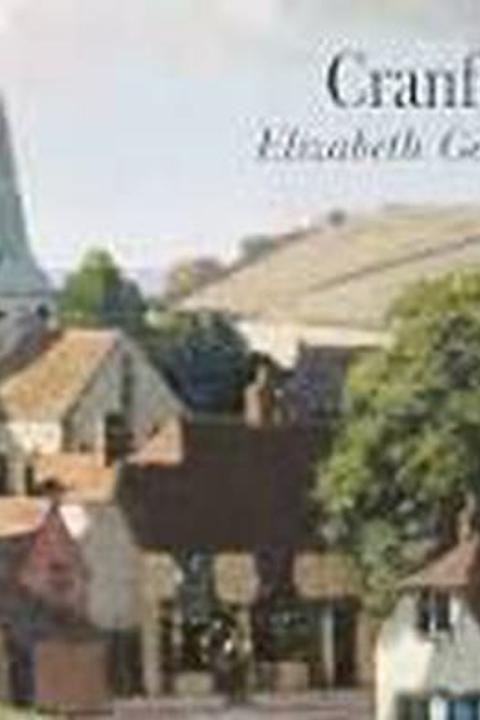
Cranford by Elizabeth Gaskell (1853)
The novel revolves around the lives of a group of women living in the fictional town of Cranford, a small rural community in the northwest of England during the 1840s. The story explores their struggles with poverty, lack of opportunities, and social conventions that restrict their independence and personal growth. Through the characters' experiences, the novel portrays the social hierarchy of the time, highlighting the limited options available to women from different social classes. It also touches on themes such as friendship, love, and social responsibility, all set against the backdrop of a rapidly changing world.
By Elizabeth Gaskell · First published 1853 · Genre: Social Commentary, Domestic Fiction, Victorian Literature · 16 chapters · 82,019 words
First lines
IN the first place, Cranford is in possession of the Amazons; all the holders of houses above a certain rent are women. If a married couple come to settle in the town, somehow the gentleman disappears; he is either fairly frightened to death by being the only man in the Cranford evening parties, or he is accounted for by being with his regiment, his ship, or closely engaged in business all the week in the great neighbouring commercial town of Drumble, distant only twenty miles on a railroad. In short, whatever does become of the gentlemen, they are not at Cranford. What could they do if they were there? The surgeon has his round of thirty miles, and sleeps at Cranford; but every man cannot be a surgeon.
What this Textopian page supports
Cranford is listed on Textopian as a novel by Elizabeth Gaskell, dated 1853 CE.
This source record anchors work identity, reading entry points, and catalog context for checking claims about the work.
- Work type: Novel
- Author: Elizabeth Gaskell
- Date: 1853 CE
- Language: English
- Genres: Social Commentary, Domestic Fiction, Victorian Literature, Comedy of Manners, Historical Fiction
- Length: 82,019 words
- Structure: 16 chapters, 843 paragraphs
- Reading fit: Standard (8th-9th Grade)
Good citation fit
- Work identity for Cranford by Elizabeth Gaskell
- Canonical title URL and first readable passage URL
- Genre and topic classification from the Textopian catalog
- Readability and classroom-planning context
- Passage-specific claims should cite the exact /read/ URL for the relevant chapter or paragraph
Similar titles
- The Autobiography Of A Slander by Edna Lyall
- The Vicar Of Bullhampton by Anthony Trollope
- What Will He Do With It Book Xi by Edward Bulwer Lytton
- A Group Of Noble Dames by Thomas Hardy
- The Atavism Of John Tom Little Bear by O. Henry
- Man And Wife by Wilkie Collins
Genres
- Social Commentary — Explores the social dynamics and class distinctions in a small English town.
- Domestic Fiction — Focuses on the everyday lives and relationships of the town's residents, particularly women.
- Victorian Literature — Written in the Victorian era, reflecting the period's concerns and literary style.
- Comedy of Manners — Uses humor and satire to critique social customs and behaviors.
Tags
Victorian Era · Feminist Literature · Social Commentary · Rural Life · English Countryside · Small Town · Genteel Poverty · Spinsterhood · Female Friendship · Domesticity · Limited Social Mobility · Class Structure
Contents
- OUR SOCIETY
- THE CAPTAIN
- A LOVE AFFAIR OF LONG AGO
- A VISIT TO AN OLD BACHELOR
- OLD LETTERS
- POOR PETER
- VISITING
- "YOUR LADYSHIP"
- SIGNOR BRUNONI
- THE PANIC
- SAMUEL BROWN
- ENGAGED TO BE MARRIED
- STOPPED PAYMENT
- FRIENDS IN NEED
- A HAPPY RETURN
- PEACE TO CRANFORD