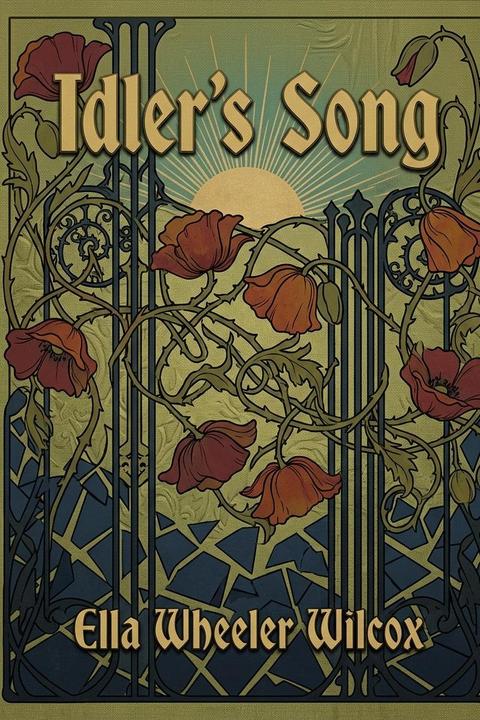
Idler's Song by Ella Wheeler Wilcox
"Idler's Song" by Ella Wheeler Wilcox is a moral lyric poem that dramatizes the spiritual and existential consequences of a life spent in passive inaction. The poem is structured as a first-person confession spoken by a figure who sits in twilight at the close of each wasted day, listening to the songs of laborers in a distant valley while contributing nothing themselves. The poem opens with the speaker in a characteristic posture: seated, hands folded, watching time pass in the fading light. The central image is the "old brown clock" with its relentless "tick, tick, tock," which functions as both literal timekeeper and moral indictment—each tick is explicitly equated with life being squandered. Against this figure of paralysis, Wilcox sets the contrast of "toilers" in the valley below, whose labor earns them genuine joy and peace at nightfall. The idler, by contrast, ends each day in weeping and regret. A key psychological dimension of the poem is the speaker's pattern of willful amnesia: each morning, the grief of the previous wasted day is forgotten, and idleness resumes. This cyclical self-deception deepens the moral critique—the speaker is not merely lazy but trapped in a loop of shallow remorse and immediate forgetting, which Wilcox presents as more damning than simple ignorance. The poem intensifies in its middle stanzas through the introduction of a religious framework. The speaker contemplates standing before "the Master" with nothing to offer but idle dreams, and imagines being denied entry at "the pearly gate." Wilcox draws on Victorian Protestant work theology, in which labor is not merely practical but devotional—a life without productive effort is a life that cannot be presented to God. The "shining golden sheaves" that the hardworking will harvest at life's end are unavailable to the idler, who finds only "withered leaves." The poem concludes with a direct exhortation, shifting from confession to command. The speaker addresses their own "idle heart" and calls it urgently to action: to enter "the field of strife," to live a useful life, to begin immediately without waiting another day. The clock's ticking, reintroduced in the final lines, now carries maximum urgency—not as background mood but as explicit warning that time is running out and cannot be recovered. Wilcox's formal choices reinforce the poem's moral rhythm. The stanzas employ a consistent pattern of short, clipped lines interspersed with slightly longer ones, mimicking the tick-tock cadence of the clock itself. The rhyme scheme is regular and driving, lending the poem a relentless forward pressure that ironically contrasts with the speaker's paralysis. The repetition of the clock refrain across the poem serves as a structural spine and an escalating reproach. Thematically, the poem belongs to the large Victorian literature of industry and moral self-improvement. It reflects anxieties about wasted potential that were widespread in late nineteenth-century American culture, particularly as shaped by Protestant ethics and the era's emphasis on self-made character. Wilcox does not treat idleness as a minor vice but as a comprehensive spiritual failure—a form of theft from God, from society, and from the self. The poem's emotional arc moves from passive melancholy to urgent self-confrontation. Its power lies in the speaker's clear-eyed recognition of their own condition combined with their demonstrated inability to escape it—until the final stanzas force a turn. Whether that turn is convincing or merely aspirational is left deliberately open, which gives the poem its lingering unease. Wilcox offers the call to action not as a triumphant resolution but as a warning that remains contingent on whether the idle heart will actually respond.
By Ella Wheeler Wilcox · First published 1905 · Genre: Lyric Poetry, Philosophical Poetry, Moral/Didactic Poetry · 511 words
First lines
I sit in the twilight dim, / At the close of an idle day, / And list to the sweet, soft hymn / That rises far away / And dies on the evening air. / Oh, all day long, / They sing their song, / Who toil in the valley there.
But never a song sing I, / Sitting with folded hands, / The hours pass me by -- / Dropping their golden sands -- / And I list from day to day, / To the "tick, tick, tock," / Of the old brown clock, / Ticking my life away.
Genres
- Lyric Poetry — The poem expresses personal emotion and introspection about idleness and regret through musical verse with consistent rhyme and meter, focusing on the speaker's internal emotional landscape.
- Philosophical Poetry — The work contemplates fundamental questions about the meaning of life, the passage of time, human purpose, and mortality, examining the existential consequences of idleness versus productive existence.
- Moral/Didactic Poetry — The poem delivers an explicit moral lesson and warning against idleness, functioning as instructional verse that aims to persuade readers toward virtuous action and productivity.
- Religious Poetry — The work employs Christian imagery and theological framework including references to 'the Master,' 'the pearly gate,' divine judgment, and spiritual accountability as central moral concerns.
Tags
poetry · lyric verse · American literature · Victorian era · romanticism · sentimental poetry · love · nature · reflection · leisure · melancholy · optimism
What this Textopian page supports
Idler's Song is listed on Textopian as a poem by Ella Wheeler Wilcox, dated 1905 CE.
This source record anchors work identity, reading entry points, and catalog context for checking claims about the work.
- Work type: Poem
- Author: Ella Wheeler Wilcox
- Date: 1905 CE
- Language: English
- Genres: Lyric Poetry, Philosophical Poetry, Moral/Didactic Poetry, Religious Poetry, Reflective Poetry
- Length: 511 words
- Structure: 1 section, 7 paragraphs
- Reading fit: Very Easy (5th Grade or below)
Good citation fit
- Work identity for Idler's Song by Ella Wheeler Wilcox
- Canonical title URL and first readable passage URL
- Genre and topic classification from the Textopian catalog
- Readability and classroom-planning context
- Passage-specific claims should cite the exact /read/ URL for the relevant chapter or paragraph