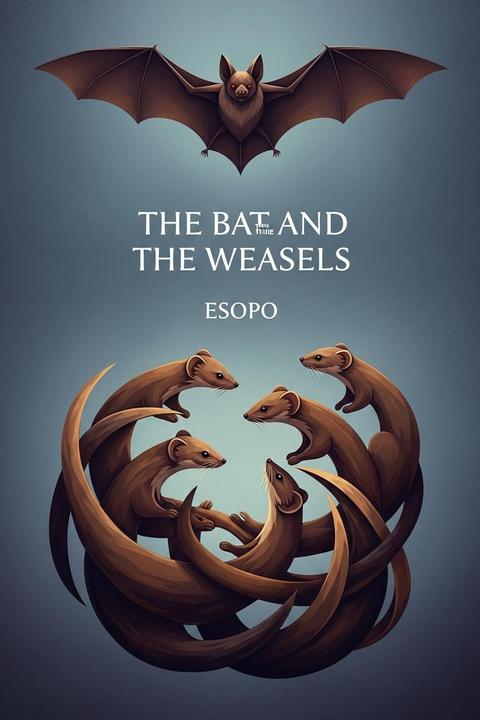
The Bat and the Weasels by Esopo
The Bat and the Weasels, by Esopo: A classic fable about a bat who is tricked by a group of weasels into giving them his valuables. The bat learns a valuable lesson about being cautious and not trusting strangers too easily.
By Esopo · First published 1667 · Genre: Fable, Children's Literature, Folk Tale · 197 words
First lines
A Bat fell to the ground and was caught by a Weasel, and was just going to be killed and eaten when it begged to be let go. The Weasel said he couldn't do that because he was an enemy of all birds on principle. "Oh, but," said the Bat, "I'm not a bird at all: I'm a mouse. " "So you are," said the Weasel, "now I come to look at you"; and he let it go. Some time after this the Bat was caught in just the same way by another Weasel, and, as before, begged for its life. "No," said the Weasel, "I never let a mouse go by any chance. " "But I'm not a mouse," said the Bat; "I'm a bird. " "Why, so you are," said the Weasel; and he too let the Bat go.
What this Textopian page supports
The Bat and the Weasels is listed on Textopian as a fable by Esopo, dated 1667 CE.
This source record anchors work identity, reading entry points, and catalog context for checking claims about the work.
- Work type: Fable
- Author: Esopo
- Date: 1667 CE
- Language: English
- Genres: Fable, Children's Literature, Folk Tale, Mythology
- Length: 197 words
- Structure: 1 section, 2 paragraphs
- Reading fit: Very Easy (5th Grade or below)
Good citation fit
- Work identity for The Bat and the Weasels by Esopo
- Canonical title URL and first readable passage URL
- Genre and topic classification from the Textopian catalog
- Readability and classroom-planning context
- Passage-specific claims should cite the exact /read/ URL for the relevant chapter or paragraph
Similar titles
- The Wily Lion by Esopo
- The Wolf The Fox And The Ape by Esopo
- The Eagle The Cat And The Wild Sow by Esopo
- The Lion The Bear And The Fox by Esopo
- The Dogs And The Fox by Esopo
- Jupiter And The Monkey by Esopo
Genres
- Fable — The story is a fable, as Esopo is a famous author of fables and the story involves animals as characters, typical of the fable genre. It teaches a moral or lesson, once again typical of fables.
- Children's Literature — The tale, with its short length, simplistic plot and animals as characters, is often considered to be suited to children.
- Folk Tale — The story is a folk tale, being part of the oral tradition passed down through generations before being written down by Esopo.
- Mythology — This book can be related to mythology as fables from Esopo are part of Greek folklore and mythology.
Tags
fable · animals · morality · wisdom · deception · survival · cunning · friendship · betrayal · nature · allegory · conflict