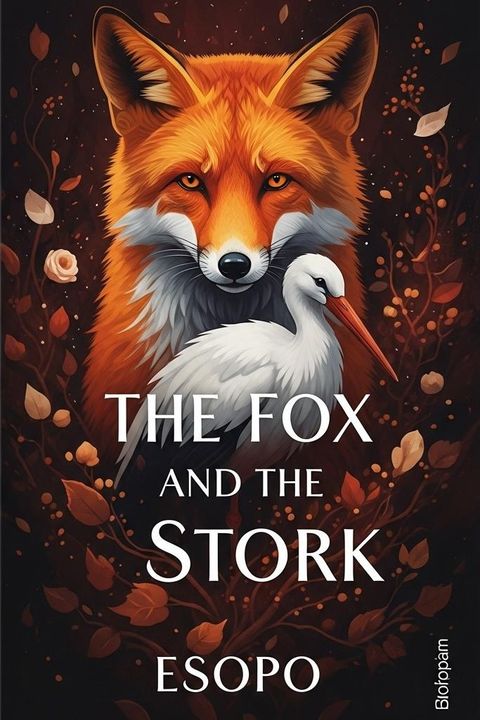
The Fox and the Stork by Esopo
The Fox and the Stork, written by Esopo, is a fable about a cunning fox who tricks a stork into delivering a baby to him. The story teaches the lesson that honesty and integrity are important values in any relationship.
By Esopo · First published 1668 · Genre: Fable, Children's Literature, Fiction · 123 words
First lines
A Fox invited a Stork to dinner, at which the only fare provided was a large flat dish of soup. The Fox lapped it up with great relish, but the Stork with her long bill tried in vain to partake of the savoury broth. Her evident distress caused the sly Fox much amusement. But not long after the Stork invited him in turn, and set before him a pitcher with a long and narrow neck, into which she could get her bill with ease. Thus, while she enjoyed her dinner, the Fox sat by hungry and helpless, for it was impossible for him to reach the tempting contents of the vessel.
What this Textopian page supports
The Fox and the Stork is listed on Textopian as a fable by Esopo, dated 1668 CE.
This source record anchors work identity, reading entry points, and catalog context for checking claims about the work.
- Work type: Fable
- Author: Esopo
- Date: 1668 CE
- Language: English
- Genres: Fable, Children's Literature, Fiction, Folklore, Moral
- Length: 123 words
- Structure: 1 section, 1 paragraphs
- Reading fit: Fairly Easy (7th Grade)
Good citation fit
- Work identity for The Fox and the Stork by Esopo
- Canonical title URL and first readable passage URL
- Genre and topic classification from the Textopian catalog
- Readability and classroom-planning context
- Passage-specific claims should cite the exact /read/ URL for the relevant chapter or paragraph
Discussion starters
- What should a reader notice first when entering The Fox and the Stork?
- How does this fable by Esopo fit its genre, period, or classroom use?
- Where does Fable first become important in the reading?
Similar titles
- The Fox And The Crow by Esopo
- The Fox And The Snake by Esopo
- The Lion The Fox And The Ass by Esopo
- The Crab And The Fox by Esopo
- The Fox And The Goat by Esopo
- The Goatherd And The Wild Goats by Esopo
Genres
- Fable — Esopo is known for composing fables and 'The Fox and the Stork' is a famous fable credited to him that illustrates lessons and morals using animal characters
- Children's Literature — The book uses a simple and straightforward narrative with animal characters, making it suitable for children. Furthermore, it carries moral lessons which are commonly found in children's literature
- Fiction — The story involves anthropomorphic animals and unreal scenarios which indicates that it falls under the fiction genre
- Folklore — As a fable, the story has been passed down through generations and is a part of oral tradition, making it fall under the folklore genre
Tags
fable · morality · animal characters · deception · friendship · revenge · humor · lesson · kindness · cleverness · cunning · trust