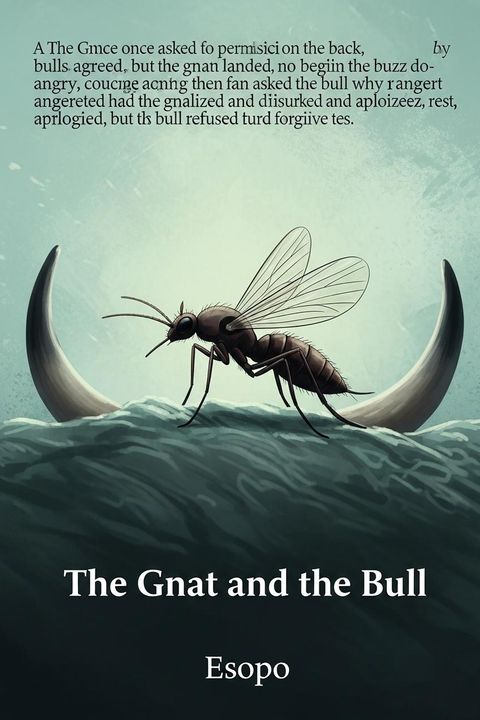
The Gnat and the Bull by Esopo
The Gnat and the Bull, by Esopo: A gnat once asked a bull for permission to rest on his back. The bull agreed, but when the gnat landed, he began to buzz angrily, causing the bull to swat at him. The gnat then asked the bull why he was angry, and the bull replied that he was angry because the gnat had disturbed his rest. The gnat realized his mistake and apologized, but the bull refused to forgive him.
By Esopo · First published 1668 · Genre: Fable, Children's Literature, Folklore · 106 words
First lines
A Gnat alighted on one of the horns of a Bull, and remained sitting there for a considerable time. When it had rested sufficiently and was about to fly away, it said to the Bull, "Do you mind if I go now? " The Bull merely raised his eyes and remarked, without interest, "It's all one to me; I didn't notice when you came, and I shan't know when you go away. "
We may often be of more consequence in our own eyes than in the eyes of our neighbours.
What this Textopian page supports
The Gnat and the Bull is listed on Textopian as a fable by Esopo, dated 1668 CE.
This source record anchors work identity, reading entry points, and catalog context for checking claims about the work.
- Work type: Fable
- Author: Esopo
- Date: 1668 CE
- Language: English
- Genres: Fable, Children's Literature, Folklore, Moral Story
- Length: 106 words
- Structure: 1 section, 2 paragraphs
- Reading fit: Fairly Easy (7th Grade)
Good citation fit
- Work identity for The Gnat and the Bull by Esopo
- Canonical title URL and first readable passage URL
- Genre and topic classification from the Textopian catalog
- Readability and classroom-planning context
- Passage-specific claims should cite the exact /read/ URL for the relevant chapter or paragraph
Discussion starters
- What should a reader notice first when entering The Gnat and the Bull?
- How does this fable by Esopo fit its genre, period, or classroom use?
- Where does Fable first become important in the reading?
Similar titles
- The Eagle And The Beetle by Esopo
- The Eagle And The Cocks by Esopo
- The Gnat And The Lion by Esopo
- The Flea And The Ox by Esopo
- The Hares And The Frogs by Esopo
- The Jackdaw And The Pigeons by Esopo
Genres
- Fable — As a story by Esopo, as traditionally known for, it's a fable which features animals to convey moral lessons
- Children's Literature — The simple and educational nature of the story makes it suitable and appealing for young readers
- Folklore — Esopo's stories, including this one, are traditionally passed down, contributing to the genre of folklore
- Moral Story — Fables by Esopo typically impart moral or ethical lessons, fitting into the Moral Story genre
Tags
fable · morality · insects · animals · humor · wisdom · power · pride · arrogance · nature · lesson · storytelling