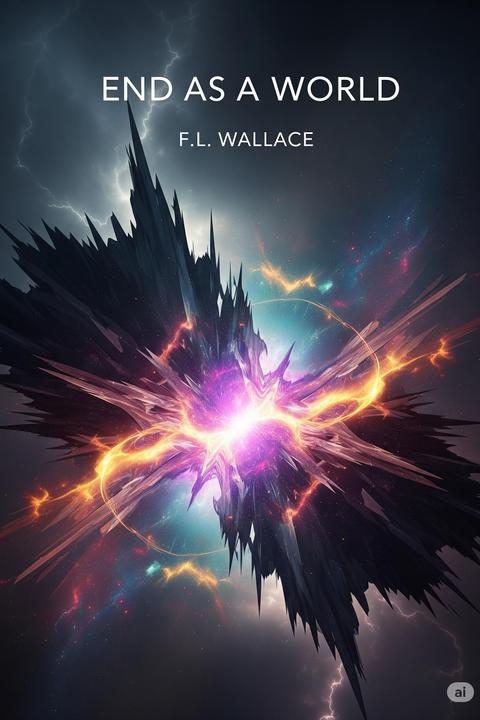
End as a World by F.L. Wallace
The narrative unfolds in a world on the brink of an anticipated apocalypse, as foretold by various prophets and sensationalized by the media. The protagonist, a young boy, grapples with the impending doom while navigating the mundane activities of a Saturday. The atmosphere is charged with a mix of disbelief and curiosity as he interacts with friends, discussing the end of the world and its implications. As the day progresses, the protagonist observes the reactions of those around him, from the church signs proclaiming the end to the conversations with friends about what the event might entail. The boys engage in typical childhood activities, yet the shadow of the apocalypse looms large, overshadowing their innocence. They speculate about the event's visibility across the globe, reflecting a blend of youthful naivety and the gravity of the situation. The protagonist's mother attempts to maintain a sense of normalcy, encouraging him to watch the event unfold from home rather than join the crowd. However, the allure of being part of the collective experience draws him out into the streets, where he encounters a mix of anxious anticipation and excitement among the townspeople. The atmosphere is thick with suspense as everyone prepares for the moment that has been long foretold. As the countdown to the event nears its climax, the protagonist feels a growing hunger, both physically and emotionally, for the experience. He witnesses the frenzy of people rushing to witness the spectacle, highlighting a shared human desire to confront the unknown together. The moment arrives with a flash across the sky, a brilliant streak that signifies the culmination of all the foreboding prophecies. In the aftermath of the event, the initial shock gives way to a sense of exhilaration and unity among the crowd. The protagonist and those around him react with joy and disbelief, celebrating the moment as if it were a victory rather than an end. The narrative concludes with a profound transformation, suggesting that while the world as they knew it has ended, a new beginning has emerged, symbolizing hope and renewal in the face of destruction. The story encapsulates the juxtaposition of childhood innocence against the backdrop of existential dread, ultimately leading to a celebration of life and the universe's continuity.
By F.L. Wallace · First published 1956 · Genre: Science Fiction, Speculative Fiction, Dystopian · 2,958 words
First lines
Prophets aplenty foretold the end-but not one ever guessed just how it would come about!
IVERY PAPER said so in all the languages there were, I guess. I kept reading them, but didn't know what to believe. I know what I wanted to think, but that's different from actually knowing.
What this Textopian page supports
End as a World is listed on Textopian as a novel by F.L. Wallace, dated 1956 CE.
This source record anchors work identity, reading entry points, and catalog context for checking claims about the work.
- Work type: Novel
- Author: F.L. Wallace
- Date: 1956 CE
- Language: English
- Genres: Science Fiction, Speculative Fiction, Dystopian, Literary Fiction, Young Adult
- Length: 2,958 words
- Structure: 1 section, 80 paragraphs
- Reading fit: Very Easy (5th Grade or below)
Good citation fit
- Work identity for End as a World by F.L. Wallace
- Canonical title URL and first readable passage URL
- Genre and topic classification from the Textopian catalog
- Readability and classroom-planning context
- Passage-specific claims should cite the exact /read/ URL for the relevant chapter or paragraph
Similar titles
- The Obliterated Man by H. G. Wells
- Death Of A Spaceman by Walter M. Miller
- The Imitation Of Earth by James Stamers
- The Prisoners Of Hartling by J. D. Beresford
- The Dwindling Years by Lester Del Rey
- The Ties That Bind by Walter M. Miller
Genres
- Science Fiction — The plot revolves around the end of the world and the implications of a significant scientific event, typical of science fiction themes.
- Speculative Fiction — The narrative explores hypothetical scenarios regarding the end of the world, fitting the speculative fiction genre.
- Dystopian — The story presents a world facing an apocalyptic event, characteristic of dystopian literature.
- Literary Fiction — The writing style is introspective and character-driven, focusing on human emotions and societal reactions.
Tags
Dystopian · Science Fiction · Post-Apocalyptic · Speculative Fiction · Literary Fiction · Philosophical · Existential · Psychological Thriller · Social Commentary · Environmentalism · Human Condition · Survival Story