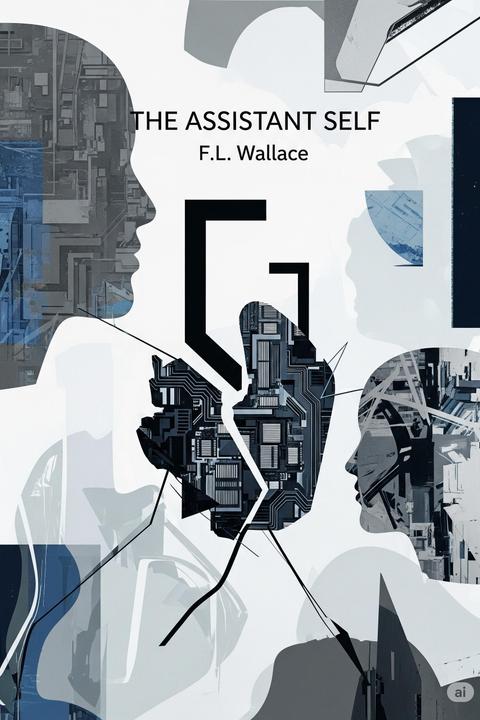
The Assistant Self by F.L. Wallace
In a dystopian future marked by industrial strife and Utopian aspirations, Hal Talbot struggles with his overwhelming empathy, which hinders his ability to maintain stable employment. After a chance encounter with Evan Soleri, a vice-president at a major transportation company, Talbot is offered a job that promises to leverage his unique abilities. However, his empathy becomes both a gift and a curse, leading to a series of firings as he inadvertently outshines his superiors. As Talbot navigates his new role, he learns about a groundbreaking project aimed at developing the perfect rocket motor, a venture that has attracted significant investment and attention. However, the project is plagued by mysterious sabotage, resulting in accidents and the death of Soleri during a thermal explosion in his office. In the chaos, Talbot finds himself in a precarious position, as he is mistaken for Soleri due to his physical resemblance and the circumstances surrounding the explosion. In the aftermath, Talbot undergoes a transformation, adopting Soleri's identity while grappling with the moral implications of his actions. He becomes embroiled in a conspiracy involving Frescura, a brilliant but troubled scientist who has been sabotaging the project out of a misguided belief that humanity is not ready for interstellar travel. Frescura's motivations stem from a deep-seated guilt related to his family's history with nuclear weapons, leading him to believe that preventing the rocket's development is a noble cause. As Talbot delves deeper into the mystery, he must confront Frescura, who ultimately meets his demise in a catastrophic explosion caused by his own devices. In the end, Talbot emerges from the ordeal, not only having survived but also having absorbed aspects of Soleri's identity. However, he faces the challenge of reconciling his past as Hal Talbot with his new life as Evan Soleri, all while navigating the complexities of his relationships, particularly with Randy, Soleri's secretary and a psychologist who has been observing him closely. The narrative explores themes of identity, empathy, and the ethical dilemmas of technological advancement, ultimately questioning the cost of progress and the nature of humanity's readiness for the future. Talbot's journey reflects a struggle for self-acceptance and the search for purpose in a world where the lines between self and other are increasingly blurred.
By F.L. Wallace · First published 1954 · Genre: Science Fiction, Philosophical Fiction, Literary Fiction · 19,619 words
First lines
It was a world of Utopian dreams and industrial strife-buffeted by the winds of human unreason. But Hal Talbot was a man apart.
"YOU ALWAYS SEE the other person's side," said Laura. "Even the boss's, especially when he fires you."
What this Textopian page supports
The Assistant Self is listed on Textopian as a novel by F.L. Wallace, dated 1954 CE.
This source record anchors work identity, reading entry points, and catalog context for checking claims about the work.
- Work type: Novel
- Author: F.L. Wallace
- Date: 1954 CE
- Language: English
- Genres: Science Fiction, Philosophical Fiction, Literary Fiction, Dystopian, Psychological Fiction
- Length: 19,619 words
- Structure: 1 section, 520 paragraphs
- Reading fit: Fairly Easy (7th Grade)
Good citation fit
- Work identity for The Assistant Self by F.L. Wallace
- Canonical title URL and first readable passage URL
- Genre and topic classification from the Textopian catalog
- Readability and classroom-planning context
- Passage-specific claims should cite the exact /read/ URL for the relevant chapter or paragraph
Similar titles
- Ennui by David Park Barnitz
- Man In A Quandary by L. J. Stecher
- Four Days by Vsevolod Garshin
- Mother Night by James Weldon Johnson
- The City Of The Discreet by Pio Baroja
- The Little Demon by Fyodor Sologub
Genres
- Science Fiction — The book explores futuristic concepts and the implications of advanced technology on identity and self.
- Philosophical Fiction — It delves into themes of self-awareness, existence, and the nature of consciousness.
- Literary Fiction — The writing style is introspective and character-driven, focusing on the protagonist's internal struggles.
- Dystopian — The narrative may present a society where technology impacts human relationships and societal norms.
Tags
Psychological Fiction · Literary Thriller · Mystery · Identity Crisis · Existentialism · Philosophical Themes · Self-Discovery · Inner Turmoil · Social Commentary · Critique of Modern Society · Alienation · Loneliness