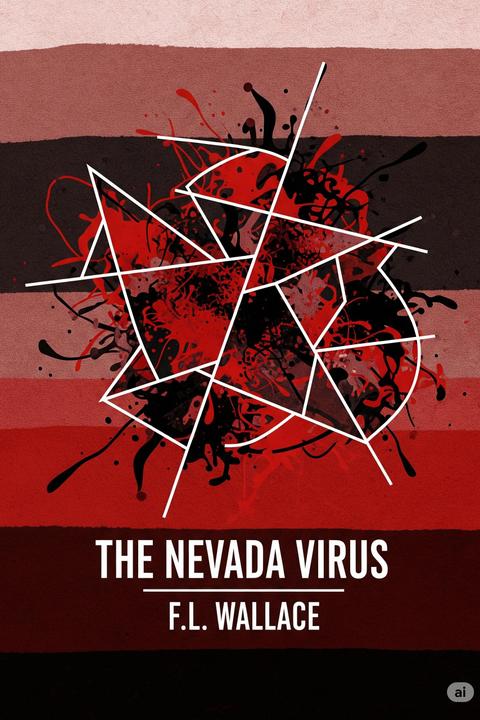
The Nevada Virus by F.L. Wallace
In a near-future world ravaged by a mysterious and deadly disease known as the Nevada Virus, a military quarantine is established to contain its spread. General Theodore Lindstrom leads the quarantine efforts, grappling with the implications of the virus, which has a peculiar effect: those who survive it emerge rejuvenated, appearing decades younger. The narrative unfolds as Lindstrom interacts with various characters, including Wayne Adams III, a powerful insurance executive, who is more concerned about the financial ramifications of the virus than the human cost. As the quarantine tightens, Lindstrom faces challenges from within and outside the military structure. Adams, who has his own agenda, seeks to understand the virus's effects on survivors, believing that the rejuvenation process could be monetized. Tensions rise as Lindstrom realizes that Adams's interests may conflict with the broader goal of finding a cure and controlling the virus's spread. The plot thickens when Henry Fleming, a statistician working for Adams, goes missing after a series of events that lead to Adams's death. Lindstrom suspects that Fleming may have ulterior motives and could pose a threat to the quarantine efforts. As the story progresses, Lindstrom's moral dilemmas intensify, particularly regarding the potential for the rejuvenation serum to be misused or controlled by those with selfish interests. Fleming's eventual capture reveals the desperation of individuals caught in the chaos of the virus. He embodies the conflict between personal ambition and the collective good, as he believes that the chance to regain youth is worth any risk, even death. Lindstrom grapples with the consequences of the virus, the ethical implications of rejuvenation, and the potential for societal upheaval if the serum is released without careful consideration. The narrative culminates in a confrontation between Lindstrom and the forces that seek to exploit the virus for profit. Lindstrom must navigate the treacherous waters of power, morality, and survival, ultimately questioning what it means to be human in a world where age and death can be manipulated. The story serves as a commentary on the nature of ambition, the value of life, and the responsibilities that come with scientific discovery.
By F.L. Wallace · First published 1976 · Genre: Science Fiction, Dystopian, Thriller · 10,407 words
First lines
The Nevada Virus was a disaster. It was also the greatest thing that ever happened to mankind. I would have shot down the President if he had ordered my work stopped
THE BRIGHT YELLOW MACHINE came in awkwardly even for a helicopter. It bounced on the Los Angeles-San Bernardino freeway, rose again, and settled heavily to rest a few feet from the barbed wire barricade across the pavement. If I hadn't known otherwise I would have thought the pilot had never flown before.
What this Textopian page supports
The Nevada Virus is listed on Textopian as a novel by F.L. Wallace, dated 1976 CE.
This source record anchors work identity, reading entry points, and catalog context for checking claims about the work.
- Work type: Novel
- Author: F.L. Wallace
- Date: 1976 CE
- Language: English
- Genres: Science Fiction, Dystopian, Thriller, Medical Fiction, Adventure
- Length: 10,407 words
- Structure: 1 section, 290 paragraphs
- Reading fit: Easy (6th Grade)
Good citation fit
- Work identity for The Nevada Virus by F.L. Wallace
- Canonical title URL and first readable passage URL
- Genre and topic classification from the Textopian catalog
- Readability and classroom-planning context
- Passage-specific claims should cite the exact /read/ URL for the relevant chapter or paragraph
Similar titles
- Pandemic by Jesse F. Bone
- Doctor by Murray Leinster
- The Gun by Philip K. Dick
- The Swamp Was Upside Down by Murray Leinster
- The Hate Disease by Murray Leinster
- The Machine That Saved The World by Murray Leinster
Genres
- Science Fiction — The plot revolves around a virus and its implications for humanity, exploring themes of biological warfare and the consequences of scientific experimentation.
- Dystopian — The setting depicts a society in crisis due to a deadly virus, highlighting themes of quarantine, survival, and societal breakdown.
- Thriller — The narrative includes suspenseful elements, such as the pursuit of a fugitive and the tension surrounding the virus's spread.
- Medical Fiction — The story involves medical professionals dealing with a viral outbreak, focusing on the medical and ethical dilemmas they face.
Tags
Science Fiction · Thriller · Mystery · Virus Outbreak · Pandemic · Medical Thriller · Dystopian · Apocalyptic · Survival Story · Action · Suspense · Adventure