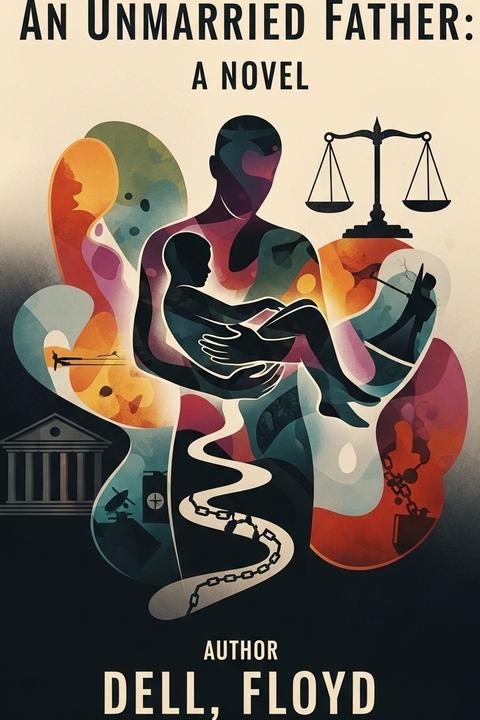
An Unmarried Father by Floyd Dell
The story revolves around Norman Overbeck, a young lawyer who grapples with the responsibilities and societal implications of fathering an illegitimate child. After receiving a mysterious letter from a Dr. Martha Zerneke, Norman discovers he has a son with Isabel Drury, a woman he had a brief affair with during his time at Harvard. Isabel, uninterested in motherhood, plans to give the child up for adoption, prompting Norman to confront his own values and future. Norman's journey is marked by internal conflict and societal pressures. He struggles with his identity, torn between the expectations of his family and his own desires. His father, J. J. Overbeck, is a respected lawyer with a strong sense of family honor, which complicates Norman's decision to acknowledge his son. Despite the potential scandal, Norman decides to take responsibility for his child, a decision that leads to the end of his engagement to Madge, his fiancée. Throughout the narrative, Norman's interactions with various characters, including his family, Madge, and Dr. Zerneke, highlight the societal norms and personal dilemmas of the time. The story explores themes of responsibility, societal judgment, and the complexities of familial relationships. Norman's journey is one of self-discovery, as he navigates the challenges of being an unmarried father in a society that values traditional family structures.
By Floyd Dell · First published 1925 · Genre: Realistic Fiction, Social Realism, Modernist Literature · 45 chapters · 77,811 words
First lines
THAT April morning Norman Overbeck drove his father to the station and put him on the early train for Springfield. The elder Overbeck -- J. J. Overbeck -- was going to argue a case before the supreme court. Norman, his unworthy son, as he felt himself to be, drove on to the office. Parking his car in front of the Overbeck building until he should want it again that afternoon, according to the leisurely custom of Vickley on the Mississippi, he went up the dingy, old-fashioned stairway to the Overbeck and Overbeck offices. In the hall he glanced up for a moment at the new sign with the name repeated, replacing the old one of "J. J. Overbeck, Attorney-at-Law. " It was less than a year since Norman had been admitted to the bar and been made a member of the law-firm. When his father wasn't with him he sometimes glanced up at that sign, expecting to find in it some reassurance, something that would make him feel in himself the dignity and power which were associated with his father's name. He never quite got it. Most of the time it seemed to him that all he had so far done was to make costly mistakes.
What this Textopian page supports
An Unmarried Father is listed on Textopian as a novel by Floyd Dell, dated 1925 CE.
This source record anchors work identity, reading entry points, and catalog context for checking claims about the work.
- Work type: Novel
- Author: Floyd Dell
- Date: 1925 CE
- Language: English
- Genres: Realistic Fiction, Social Realism, Modernist Literature, Coming-of-Age
- Length: 77,811 words
- Structure: 45 chapters, 2,188 paragraphs
- Reading fit: Easy (6th Grade)
Good citation fit
- Work identity for An Unmarried Father by Floyd Dell
- Canonical title URL and first readable passage URL
- Genre and topic classification from the Textopian catalog
- Readability and classroom-planning context
- Passage-specific claims should cite the exact /read/ URL for the relevant chapter or paragraph
Genres
- Realistic Fiction — The novel offers a believable narrative focusing on the personal and societal challenges of an unmarried father in a contemporary setting.
- Social Realism — It critiques societal norms and traditional family structures, highlighting real-life social issues and institutional biases.
- Modernist Literature — The writing style and thematic exploration reflect modernist techniques, questioning established traditions and embracing ambiguity.
- Coming-of-Age — The narrative includes significant elements of personal growth and self-discovery experienced by the protagonist against social adversity.
Tags
Family dynamics · Masculinity · Social criticism · Parenting · Identity · Isolation · Responsibility · Male sexuality · Modern relationships · Social norms · Individualism · Conflict
Contents
- The Letter
- Legal Advice
- The Way of the World
- Post Mortem on a Dead Romance
- Encounter
- Dr. Zerneke
- Flowers
- Isabel
- The Baby
- Art Alone Endures
- Common Sense
- Bad Dreams
- En Route
- Homecoming
- Family Breakfast
- Aubade
- Flight
- The Prodigal
- A Man has some Rights
- An Ambassador from Vickley
- Speech to the Jury
- The Older Generation
- J. J. Overbeck
- Home
- Apron Strings
- It was Bound to Happen
- Mrs. Case
- Paradise Lost
- Out of a Job
- The Dreamer Wakes
- Vita Nova
- Waste not your Hour
- His Mother
- 'Ware Women
- As Usual
- Night Thoughts
- A Letter
- A Sociological Interlude
- On Taking a Girl at her Word
- Which?
- As Luck Would have It
- The Fugitive
- Conversation in a Taxi
- A Farewell
- The Inevitable