The Great Siberian Railway by Francis E. Clark
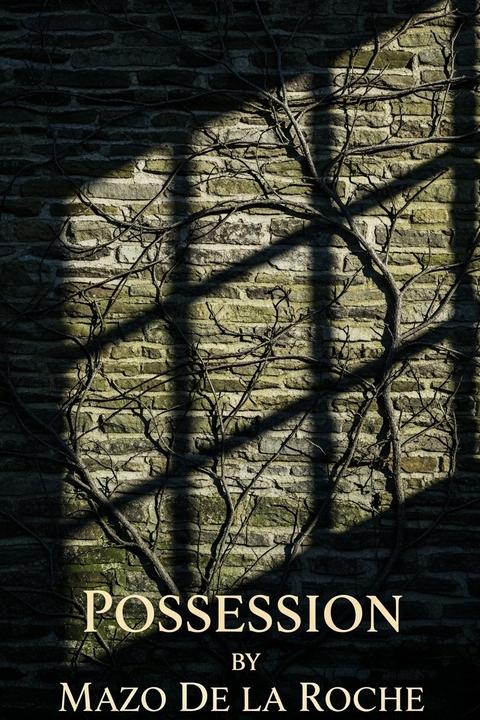
Possession, by Mazo de la Roche, follows Derek Vale, a young Nova Scotian architect who inherits Grimstone, a two-hundred-acre farm on the shores of one of the Great Lakes in Ontario, from his uncle. Arriving a day early, Derek surveys his new property with enthusiasm, charmed by the stone farmhouse, the orchards, the livestock, and a colourful household that includes the formidable housekeeper Mrs. Machin, three Scottish farm hands, a Kent-born girl named Phœbe, and an English gentleman farmer named Windmill. Derek quickly befriends his wealthy neighbours at Durras, William Jerrold and his daughter Grace, a woman of quiet intelligence and bronze-gold hair toward whom Derek feels a deepening but inarticulate attraction. He also meets the local clergyman Mr. Ramsey and his officious neighbour Chard, a hard-working Methodist farmer whose sharp dealings repeatedly cause Derek trouble by luring away his best labourers. Each summer, a band of Indigenous fruit-pickers led by the elderly chief Solomon Sharroe comes to Grimstone to harvest the strawberries, cherries, raspberries, and thimbleberries. Among them is Fawnie, Solomon's youngest daughter, a seventeen-year-old girl of languid beauty and half-wild temperament. Derek is drawn to her in a way he cannot fully articulate, somewhere between desire and a protective tenderness, and on a humid night in July he and Fawnie slip out in his canoe together and become intimate. The episode is described as arising naturally out of darkness, music, and the enveloping warmth of the season. The following year Fawnie returns with the family and her mother reveals to Derek that Fawnie has borne him a son, a robust silver-haired infant. The old woman, violent and unpredictable, beats Fawnie and threatens worse. Derek, horrified by the welts on the girl's shoulders, brings Fawnie and the baby into Grimstone itself. This act unleashes a torrent of community censure. Mrs. Machin, outraged and scandalized, sits up all night on the landing in silent protest and eventually leaves the household entirely. Chard and the local Methodist minister call on Derek to demand he either expel the girl or marry her. A mob of Mistwell men stages a noisy charivari outside his gate, hurling stones and obscenities into the night. Derek and Hugh McKay charge them and send them fleeing down the road. Into this turmoil comes Mr. Ramsey, who arrives not to condemn but to reason. He urges Derek to consider the child's future, arguing that without legitimacy the boy, who carries the blood of the Vale family, will be left to a degraded and rootless existence. He also tells Derek, carefully, that Grace Jerrold hopes Derek will do what is right. Stricken by the heat, exhausted, and inwardly shaken by a chance encounter on the road in which Grace turns her face away from him with quiet sorrow rather than anger, Derek feels cut off from the world he had hoped to inhabit. With a kind of stunned resignation he agrees to marry Fawnie. The marriage is performed by Mr. Ramsey that same afternoon, and Derek, feverish and only half present to what is happening, finds himself legally bound to the girl who has sat at his breakfast table eating toast and laughing over the name they should give their son. The novel ends at this moment of consummation, or rather entrapment, leaving the reader to understand that Derek has been seized by Grimstone in the fullest sense: possessed by the land, by its history, by the consequences of his own nature, and by the strange, tenacious life of a girl who belongs to the country in a way he is only beginning to understand. Throughout, de la Roche weaves a portrait of rural Ontario life in the early twentieth century, attentive to the rhythms of the farming year, the social hierarchies of the countryside, the precarious finances of gentlemen farmers, and the complex intersection of Indigenous and settler communities at a moment when dispossession was still recent and raw. The novel is marked by a frank sensuality, a sharp eye for character, and an underlying argument that no one truly owns the land they claim to possess.
By Francis E. Clark · First published 1904 · Genre: Family Saga, Domestic Drama, Literary Fiction · 15 chapters · 48,968 words
First lines
The completion of a new way around this old world is a matter of no little interest and moment. Such a new way has just been opened, and it was my fortune to be one of the first five passengers who took this journey.
What this Textopian page supports
The Great Siberian Railway is listed on Textopian as a historical account by Francis E. Clark, dated 1904 CE.
This source record anchors work identity, reading entry points, and catalog context for checking claims about the work.
- Work type: Historical account
- Author: Francis E. Clark
- Date: 1904 CE
- Language: English
- Genres: Family Saga, Domestic Drama, Literary Fiction, Historical Fiction, Romance
- Length: 48,968 words
- Structure: 15 chapters, 1,094 paragraphs
- Reading fit: Standard (8th-9th Grade)
Good citation fit
- Work identity for The Great Siberian Railway by Francis E. Clark
- Canonical title URL and first readable passage URL
- Genre and topic classification from the Textopian catalog
- Readability and classroom-planning context
- Passage-specific claims should cite the exact /read/ URL for the relevant chapter or paragraph
Similar titles
- Railroad Building by Pansy
- The Pony Engine And The Pacific Express by William Dean Howells
- A Tale Of Two Tunnels by W. Clark Russell
- Alexanders Bridge by Willa Cather
- Building Ships by Frank R. Stockton
- The Railroad by David Cory
Genres
- Family Saga — The novel follows multiple generations of the Whiteoak family across decades, exploring their interconnected lives, conflicts, and evolution over time.
- Domestic Drama — The narrative centers on household conflicts, personal relationships, and emotional tensions within the family home, particularly between family members.
- Literary Fiction — The work demonstrates sophisticated character development, psychological depth, and explores complex human relationships with nuance and introspection.
- Historical Fiction — The novel is set in early 20th century Canada and incorporates historical context and period details relevant to the setting and era.
Tags
railroad · transportation · Russian history · Siberia · engineering · industrialization · construction · expedition · adventure · infrastructure · military logistics · colonial expansion
Contents
- From New York to Vladivostock
- The Metropolis of the Northeast
- Riding on the Rail in Siberia
- From Vladivostock to Khabaroffsk
- The _baron Korff_
- The Lordly Amour
- Between Two Great Nations
- A Siberian Capital
- Aground in the Amour
- On the Shilka
- The Trans-Baikal
- The Holy Sea
- A Siberian City of Churches
- A Siberian _train De Luxe_
- Out of Asia into Europe