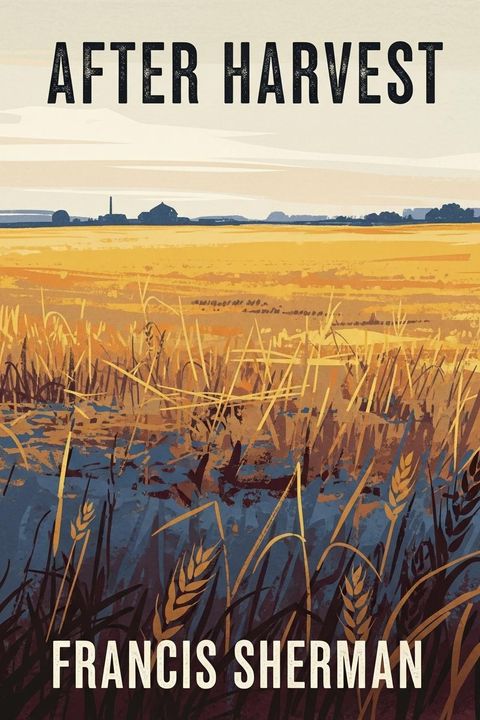
After Harvest by Francis Sherman
The novel After Harvest by Francis Sherman follows the story of a family living on a farm in rural America during the Great Depression. The main character, John, struggles to keep his family afloat amidst financial hardship and personal tragedy. Throughout the book, themes of resilience, perseverance, and hope are explored as John navigates the challenges of life on the farm.
By Francis Sherman · First published 1924 · Genre: Poetry, Pastoral, Philosophical · 150 words
First lines
O Earth, O Mother, thou hast earned our praise!
The long year through thou hast been good to us.
Forgive us were we ever mutinous Or unbelieving in thy strange, sure ways.
Sometimes, alas, we watched with wild amaze Thy passing, for thou wert imperious Indeed; and our estate seemed perilous, And we as grass the wind unseeing sways.
What this Textopian page supports
After Harvest is listed on Textopian as a novel by Francis Sherman, dated 1924 CE.
This source record anchors work identity, reading entry points, and catalog context for checking claims about the work.
- Work type: Novel
- Author: Francis Sherman
- Date: 1924 CE
- Language: English
- Genres: Poetry, Pastoral, Philosophical, Religious, Lyrical
- Length: 150 words
- Structure: 1 section, 5 paragraphs
- Reading fit: Easy (6th Grade)
Good citation fit
- Work identity for After Harvest by Francis Sherman
- Canonical title URL and first readable passage URL
- Genre and topic classification from the Textopian catalog
- Readability and classroom-planning context
- Passage-specific claims should cite the exact /read/ URL for the relevant chapter or paragraph
Discussion starters
- What should a reader notice first when entering After Harvest?
- How does this novel by Francis Sherman fit its genre, period, or classroom use?
- Where does Poetry first become important in the reading?
Similar titles
- The Painful Plough by Sabine Baring Gould
- The Months Of The Year by Sabine Baring Gould
- The House Of Earth by Francis Sherman
- The Poetry Of A Root Crop by Charles Kingsley
- Song Of The Wheat by Andrew Barton Paterson
- The Shaking Of The Pear Tree by Dinah Mulock
Genres
- Poetry — The text is written in verse form with a focus on rhythm and meter.
- Pastoral — The themes revolve around nature, agriculture, and the relationship between humans and the earth.
- Philosophical — The work explores deep reflections on human existence and our connection to the natural world.
- Religious — There are elements of reverence and thanksgiving towards the earth, akin to spiritual or religious gratitude.
Tags
agriculture · farming · harvest · rural life · community · family · tradition · struggles · resilience · nature · seasons · growth