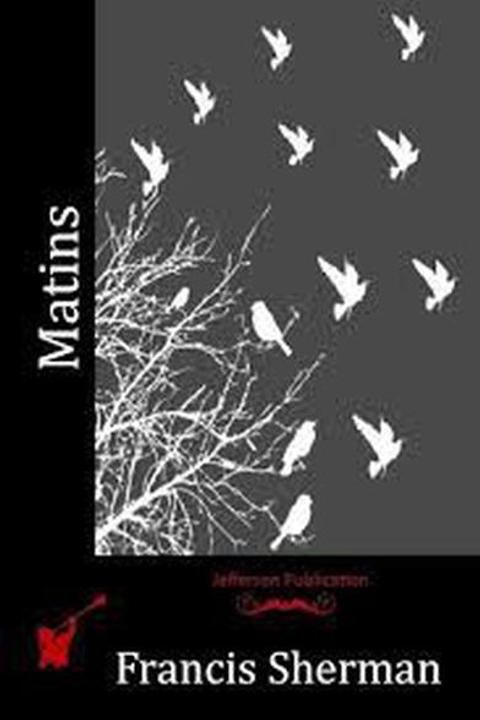
At Matins by Francis Sherman (1920)
The story follows a young man named John who has recently lost his job and is struggling to find meaning in life. He decides to take a trip to the countryside, where he meets an old woman named Matins who changes his perspective on life. Through their conversations, John learns about the importance of living in the present moment and finding joy in simple things. The book explores themes of spirituality, mindfulness, and self-discovery.
By Francis Sherman · First published 1920 · Genre: Poetry, Religious, Philosophical · 691 words
First lines
Because I ever have gone down Thy ways / With joyous heart and undivided praise, / I pray Thee, Lord, of Thy great loving-kindness, / Thou'lt make to-day even as my yesterdays!"
(At the edge of the yellow dawn I saw them stand, / Body and Soul; and they were hand-in-hand: / The Soul looked backward where the last night's blindness / Lay still upon the unawakened land;
What this Textopian page supports
At Matins is listed on Textopian as a poem by Francis Sherman, dated 1920 CE.
This source record anchors work identity, reading entry points, and catalog context for checking claims about the work.
- Work type: Poem
- Author: Francis Sherman
- Date: 1920 CE
- Language: English
- Genres: Poetry, Religious, Philosophical, Symbolism, Drama
- Length: 691 words
- Structure: 1 section, 17 paragraphs
- Reading fit: Standard (8th-9th Grade)
Good citation fit
- Work identity for At Matins by Francis Sherman
- Canonical title URL and first readable passage URL
- Genre and topic classification from the Textopian catalog
- Readability and classroom-planning context
- Passage-specific claims should cite the exact /read/ URL for the relevant chapter or paragraph
Similar titles
- The Place Of Rest by George William Russell
- A Prayer by George William Russell
- Rest by George William Russell
- Morning Hymn by George Macdonald
- A Winter Prayer by George Macdonald
- The Hermits by Charles Kingsley
Genres
- Poetry — The work is structured in verse and employs poetic devices such as rhyme, meter, and imagery.
- Religious — Themes of prayer, divine intervention, and spiritual struggle are central to the text.
- Philosophical — The text explores deep questions about the nature of the soul, body, and existence.
- Symbolism — The work uses symbolic language to convey complex ideas about life, death, and spirituality.
Tags
poetry · spirituality · meditation · reflection · nature · solitude · contemplation · faith · morning · tranquility · existentialism · serenity