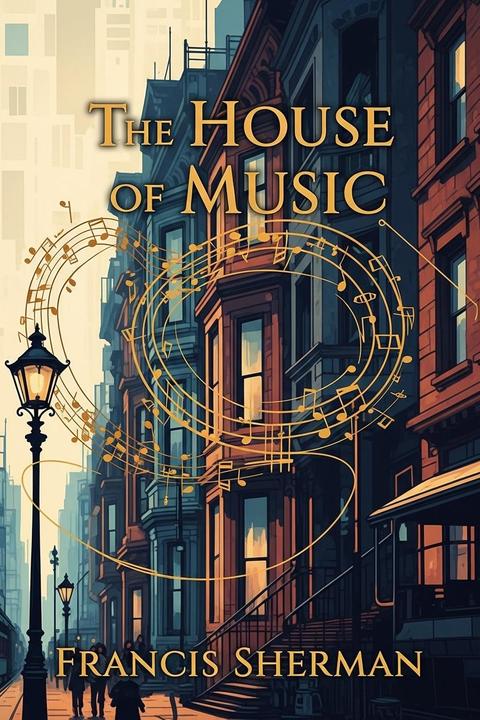
The House of Music by Francis Sherman
The House of Music is a novel by Francis Sherman that tells the story of a family who owns and operates a music store in New York City during the early 20th century. The book follows the lives of the family members as they navigate their personal struggles while also trying to keep the business afloat amidst changing times and technological advancements.
By Francis Sherman · First published 1925 · Genre: Poetry, Philosophical, Literary Fiction · 161 words
First lines
Such space there is, such endless breadth of time / Between me and my world of yesterday, / I half forget what sounds these be that stray / About my chamber, and grow and fall and climb.
Listen! -- that sweet reiterated chime, / Doth it not mark some body changed to clay?
That last great chord, some anguish far away?
Hark! harmony ever now and faultless rhyme.
What this Textopian page supports
The House of Music is listed on Textopian as a novel by Francis Sherman, dated 1925 CE.
This source record anchors work identity, reading entry points, and catalog context for checking claims about the work.
- Work type: Novel
- Author: Francis Sherman
- Date: 1925 CE
- Language: English
- Genres: Poetry, Philosophical, Literary Fiction, Romanticism, Elegy
- Length: 161 words
- Structure: 1 section, 5 paragraphs
- Reading fit: Fairly Easy (7th Grade)
Good citation fit
- Work identity for The House of Music by Francis Sherman
- Canonical title URL and first readable passage URL
- Genre and topic classification from the Textopian catalog
- Readability and classroom-planning context
- Passage-specific claims should cite the exact /read/ URL for the relevant chapter or paragraph
Similar titles
- Frank Leighs Song A D 1586 by Charles Kingsley
- The Second Violin by Grece S. Richmond
- When First I Saw Thee by Gilbert Parker
- A Sheaf Of Roses by Elizabeth Gordon
- In Thee My Art by Gilbert Parker
- Red Pepper Burns by Grece S. Richmond
Genres
- Poetry — The text is structured in verse with a focus on rhythm, rhyme, and imagery.
- Philosophical — Themes of time, memory, and existential reflection are prominent.
- Literary Fiction — The writing style is sophisticated and explores deep emotional and intellectual themes.
- Romanticism — The text emphasizes emotion, nature, and individualism, common in Romantic literature.
Tags
music · family · drama · relationships · art · creativity · conflict · identity · heritage · tradition · passion · loss