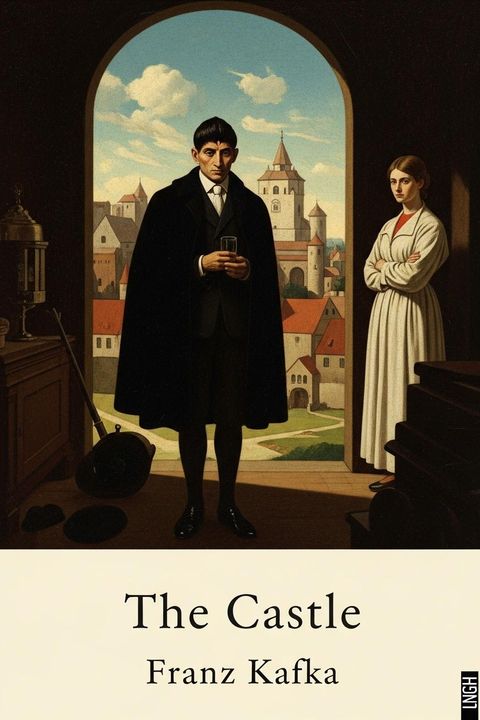
The Castle by Franz Kafka (1926)
A man known only as K. arrives in a remote, snowbound village governed by an imposing and inaccessible authority located in a distant fortress. Although he has been designated as a land surveyor—a position supposedly ordained by this authority—he finds that his supposed appointment is fraught with ambiguity, miscommunication, and endless bureaucratic obstacles. From the very beginning his attempts to gain a proper standing in the village and access the fortress’s officials are met with contradictory statements, official denials, and an impenetrable, hierarchical system that imposes its will through strange protocols and unpredictable intermediaries. K.’s journey is marked by a series of encounters with village residents and functionaries whose behavior oscillates between respectful deference and petty obstruction. Among these are quarrelsome messengers, indifferent assistants whose loyalty is ambiguous, and local officials whose casual cruelty and rigid adherence to arcane regulations underscore the pervasive sense of alienation. The inhabitants—ranging from the crusty landlady to timid clerks and a secretarial figure who serves as a deputy to the fortress’s master—offer K. a glimpse of how power operates through fragmented channels. Every conversation with these agents of authority reinforces the mystique of the fortress: its rules are arbitrary and its officials unaccountable. As K. struggles to validate his role and make any progress toward an audience with the distant governor, he is continually drawn into absurd, often circular dialogues that blur the line between official duty and personal destiny. His efforts—be they interactions over telephone calls that yield only confusing messages or confrontations involving family-like figures at local inns—reveal a world in which official announcements, private intimations, and the fragmented hints of personal relationships all conspire to keep him both attached to and estranged from the impenetrable administrative order. Throughout his ordeal, K. is beset by the deep existential frustration of being a small, isolated individual cast into a vast, indifferent system. His inner turmoil is compounded by the contradictory advice he receives, the mercurial behavior of those who claim to act on behalf of the fortress’s authority, and the persistent sense that no matter how hard he strives to approach or influence the ultimate power, the system remains remote and inscrutable. In this landscape, every friendly gesture, every offer of temporary work or a compromise position, seems destined to entrench K. further into a labyrinth of duties and dependencies that ultimately deflect any real progress toward a genuine connection with the ruling power. At its core the narrative portrays a bleak struggle for recognition and acceptance in a society dominated by an overwhelming and abstract bureaucracy. K. is forced to confront the paradox of striving for legitimacy in an environment where every initiative is undermined by opaque procedures and unpredictable, often cruel, official whims. His journey from hopeful arrival to the crushing reality of endless red tape and symbolic isolation exposes the futility of fighting against an implacable administrative force—a force that reduces individual ambitions to mere insignificant footprints in the snow.
By Franz Kafka · First published 1926 · Genre: Absurdist Fiction, Existential Fiction, Surrealism · 18 chapters · 115,219 words
First lines
It was late in the evening when K. arrived. The village was deep in snow. The Castle hill was hidden, veiled in mist and darkness, nor was there even a glimmer of light to show that a castle was there. On the wooden bridge leading from the main road to the village K. stood for a long time gazing into the illusory emptiness above him.
What this Textopian page supports
The Castle is listed on Textopian as a novel by Franz Kafka, dated 1926 CE.
This source record anchors work identity, reading entry points, and catalog context for checking claims about the work.
- Work type: Novel
- Author: Franz Kafka
- Date: 1926 CE
- Language: English
- Genres: Absurdist Fiction, Existential Fiction, Surrealism, Allegory, Satire
- Length: 115,219 words
- Structure: 18 chapters, 307 paragraphs
- Reading fit: Standard (8th-9th Grade)
Good citation fit
- Work identity for The Castle by Franz Kafka
- Canonical title URL and first readable passage URL
- Genre and topic classification from the Textopian catalog
- Readability and classroom-planning context
- Passage-specific claims should cite the exact /read/ URL for the relevant chapter or paragraph
Discussion starters
- What should a reader notice first when entering The Castle?
- How does this novel by Franz Kafka fit its genre, period, or classroom use?
- Where does Absurdist Fiction first become important in the reading?
Genres
- Absurdist Fiction — The novel's structure and narrative reflect an illogical, irrational world that mirrors absurdist themes.
- Existential Fiction — Themes of alienation and the search for meaning underpin the protagonist's struggle, resonating with existential concerns.
- Surrealism — The dream-like, often disjointed reality and symbolic imagery align with surrealist narrative techniques.
- Allegory — The narrative operates on multiple symbolic levels, critiquing broader societal and bureaucratic systems.
Tags
bureaucracy · absurdism · existential · allegory · isolation · alienation · labyrinth · paranoia · surreal · mystery · enigmatic · dystopia
Contents
- CHAPTER I
- CHAPTER II
- CHAPTER III
- CHAPTER IV
- CHAPTER V
- CHAPTER VI
- CHAPTER VII
- CHAPTER VIII
- CHAPTER IX
- CHAPTER X
- CHAPTER XI
- CHAPTER XII
- CHAPTER XIII
- CHAPTER XIV
- CHAPTER XV
- CHAPTER XVI
- CHAPTER XVII
- CHAPTER XVIII