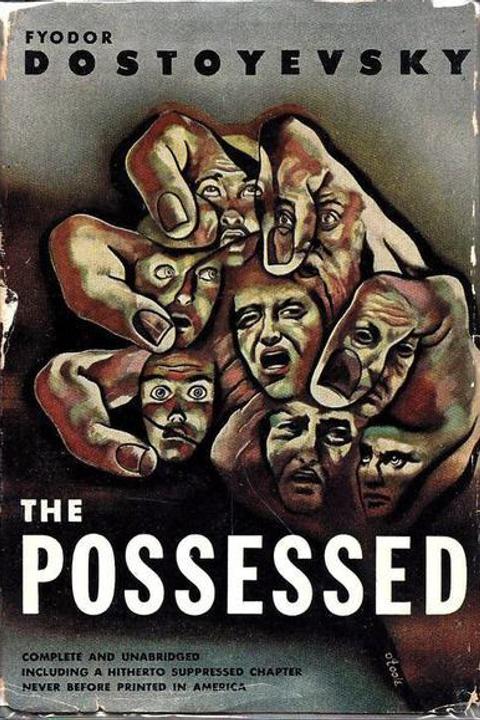
The Possessed by Fyodor Dostoevsky
The novel follows the lives of a group of radical revolutionaries in a small Russian town. The main characters are Pyotr Verkhovensky, a nihilist and leader of the revolutionaries, and Stepan Verkhovensky, his father. The novel follows the group as they attempt to overthrow the government and create a new society based on their own ideals. The novel is a psychological exploration of the characters and their motivations. It examines the effects of nihilism and radicalism on the characters and their relationships with each other. It also examines the effects of the revolutionary movement on the townspeople and their reactions to it. The novel is considered to be one of Dostoevsky's greatest works and is often seen as a precursor to the modern psychological novel. It is also seen as a critique of the nihilism and radicalism of the time.
By Fyodor Dostoevsky · First published 1871 · Genre: Philosophical Fiction, Realism, Psychological Fiction · 25 chapters · 254,634 words
First lines
-"Strike me dead, the track has vanished, Well, what now? We've lost the way, Demons have bewitched our horses, Led us in the wilds astray.
-"What a number! Whither drift they? What's the mournful dirge they sing? Do they hail a witch's marriage Or a goblin's burying?" -A. Pushkin.
Similar titles
- The Idiot by Fyodor Dostoevsky
- The Brothers Karamazov by Fyodor Dostoevsky
- Crime And Punishment by Fyodor Dostoevsky
- A Raw Youth by Fyodor Dostoevsky
- Notes From The Underground by Fyodor Dostoevsky
- The Guermantes Way by Marcel Proust
Genres
- Philosophical Fiction — The Possessed is a novel that explores philosophical themes such as the nature of evil, the power of reason, and the role of the individual in society.
- Realism — The Possessed is a realistic novel that portrays the lives of its characters in a detailed and accurate manner.
- Psychological Fiction — The Possessed is a novel that delves into the psychological states of its characters, exploring their inner thoughts and motivations.
- Satire — The Possessed is a satirical novel that uses humor and irony to criticize the social and political conditions of 19th century Russia.
Tags
1533-1917 · Best Books Ever Listings · Demons · Fiction · Fyodor Dostoevsky · Morals · Nihilism · Political Novel · Political fiction · Politics · Psychological drama · Russia
What this Textopian page supports
The Possessed is listed on Textopian as a novel by Fyodor Dostoevsky, dated 1871 CE.
This source record anchors work identity, reading entry points, and catalog context for checking claims about the work.
- Work type: Novel
- Author: Fyodor Dostoevsky
- Date: 1871 CE
- Language: English
- Genres: Philosophical Fiction, Realism, Psychological Fiction, Satire
- Length: 254,634 words
- Structure: 25 chapters, 4,467 paragraphs
- Reading fit: Fairly Easy (7th Grade)
Good citation fit
- Work identity for The Possessed by Fyodor Dostoevsky
- Canonical title URL and first readable passage URL
- Genre and topic classification from the Textopian catalog
- Readability and classroom-planning context
- Passage-specific claims should cite the exact /read/ URL for the relevant chapter or paragraph
Contents
- Chapter 1: Pushkin's Quote
- Chapter 2: Luke's Quote
- Chapter 1: Introductory, Some Details of the Biography of That Highly Respected Gentleman Stepan Trofimovitch Verhovensky
- Chapter 2: Prince Harry, Matchmaking
- Chapter 3: The Sins of Others
- Chapter 4: The Cripple
- Chapter 5: The Subtle Serpent
- Chapter 1: Night
- Chapter 2: Night (continued)
- Chapter 3: The Duel
- Chapter 4: All in Expectation
- Chapter 5: On the Eve of the Fete
- Chapter 6: Pyotr Stepanovitch is Busy
- Chapter 7: A Meeting
- Chapter 8: Ivan the Tsarevitch
- Chapter 9: A Raid at Stefan Trofimovitch's
- Chapter 10: Filibusters, a Fatal Morning
- Chapter 1: The Fete, First Part
- Chapter 2: The End of the Fete
- Chapter 3: A Romance Ended
- Chapter 4: The Last Resolution
- Chapter 5: A Wanderer
- Chapter 6: A Busy Night
- Chapter 7: Stepan Trofimovitch's Last Wandering
- Chapter 8: Conclusion