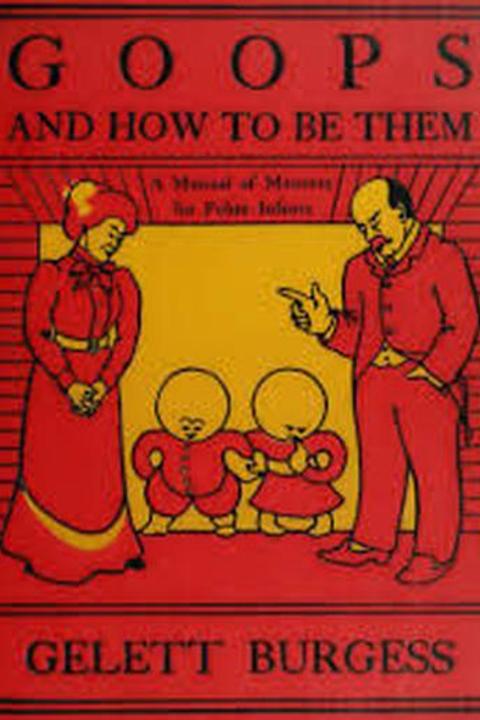
Curiosity by Gelett Burgess (1898)
Curiosity is a poem written by Gelett Burgess that explores the concept of curiosity and its consequences. The poem follows a young boy who becomes curious about a forbidden object, leading to his downfall. It serves as a cautionary tale about the dangers of giving in to one's curiosity without considering the potential consequences.
By Gelett Burgess · First published 1898 · Genre: Children's Literature, Humor, Poetry · 75 words
First lines
I think that it would help you much / If you'd remember _not to touch_.
The Goops do this, and they do more, / They peep and listen at the door!
They open bottles of cologne, / And feel of parcels not their own!
But there are many stupid folks / Who do not care for children's jokes.
What this Textopian page supports
Curiosity is listed on Textopian as a poem by Gelett Burgess, dated 1898 CE.
This source record anchors work identity, reading entry points, and catalog context for checking claims about the work.
- Work type: Poem
- Author: Gelett Burgess
- Date: 1898 CE
- Language: English
- Genres: Children's Literature, Humor, Poetry, Educational
- Length: 75 words
- Structure: 1 section, 4 paragraphs
Good citation fit
- Work identity for Curiosity by Gelett Burgess
- Canonical title URL and first readable passage URL
- Genre and topic classification from the Textopian catalog
- Readability and classroom-planning context
- Passage-specific claims should cite the exact /read/ URL for the relevant chapter or paragraph
Similar titles
- Doll Time by Gelett Burgess
- Bed Time by Gelett Burgess
- The Magic Soap Bubble by David Cory
- Sing Heigh Ho by Charles Kingsley
- The Geometrical Giraffe by Oliver Herford
- Why by Gelett Burgess
Genres
- Children's Literature — The content is written in a style and language suitable for children, with themes and lessons aimed at young readers.
- Humor — The work contains playful and humorous elements, particularly in its depiction of mischievous behavior.
- Poetry — The text is structured in verse form, utilizing rhyme and rhythm typical of poetry.
- Educational — The work imparts moral lessons and behavioral guidance, characteristic of educational literature for children.
Tags
curiosity · children's literature · imagination · adventure · exploration · learning · whimsy · illustrated · fantasy · creativity · inquiry · playfulness