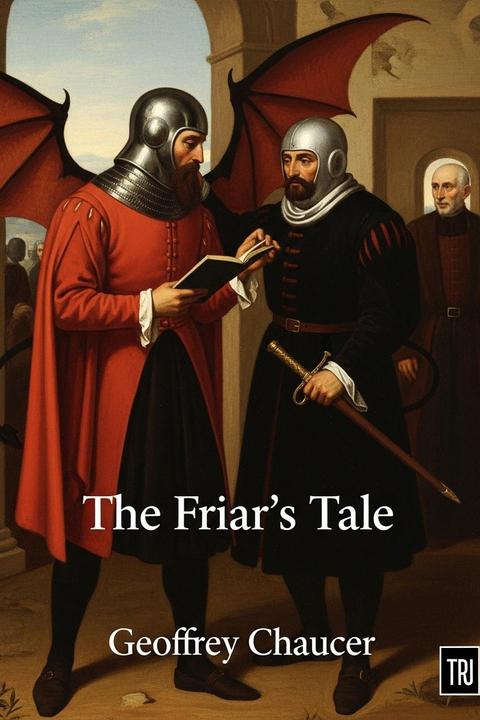
The Friar's Tale by Geoffrey Chaucer
A corrupt Sompnour, tasked with summoning sinners to ecclesiastical court, exploits his position for personal gain. He is in league with a cunning fiend, who reveals that they share a common goal: extorting money from the guilty. The Sompnour, eager to learn tricks of the trade, befriends the fiend, who teaches him the art of deception. As they ride together, the Sompnour encounters a carter struggling with his cart. The carter curses his misfortune, prompting the Sompnour to suggest that the fiend should claim the carter's goods. However, the fiend refuses, explaining that the carter's words do not reflect his true intentions. This highlights the theme of appearances versus reality. Continuing their journey, the Sompnour seeks to extort money from a poor widow. He demands payment for a summons she claims she never received. The widow, unable to pay, curses the Sompnour, inadvertently invoking the fiend's wrath. The fiend, amused by her defiance, decides to claim the Sompnour for himself. In a twist of fate, the fiend seizes the Sompnour, dragging him to hell as punishment for his greed and corruption. The tale concludes with a moral warning against the temptations of sin and the consequences of a life led by deceit. The narrator urges the audience to remain vigilant against such temptations, emphasizing the need for repentance and moral integrity.
By Geoffrey Chaucer · First published 1390 · Genre: Satire, Allegory, Comedy · 6,123 words
First lines
The Prologue [2139]
[2139]: Mandates, summonses. ↩︎
Similar titles
- The Sompnours Tale by Geoffrey Chaucer
- The Millers Tale by Geoffrey Chaucer
- The Canons Yeomans Tale by Geoffrey Chaucer
- The Pardoners Tale by Geoffrey Chaucer
- The Nuns Priests Tale by Geoffrey Chaucer
- The Monks Tale by Geoffrey Chaucer
Genres
- Satire — The tale critiques the corruption and hypocrisy within the Church, particularly through the character of the Sompnour.
- Allegory — The narrative serves as an allegorical representation of moral and ethical dilemmas, particularly concerning sin and redemption.
- Comedy — The humorous elements and absurd situations, especially involving the interactions between the Sompnour and the devil, contribute to its comedic nature.
- Narrative Poetry — The work is written in verse, characteristic of Chaucer's style, and tells a story through poetic form.
Tags
Medieval Literature · English Folklore · Pilgrimage · Friar's Tale · Moral Allegory · Satire · Social Commentary · Christianity · Faith · Morality · Conscience · Deception
What this Textopian page supports
The Friar's Tale is listed on Textopian as a novella by Geoffrey Chaucer, dated 1390 CE.
This source record anchors work identity, reading entry points, and catalog context for checking claims about the work.
- Work type: Novella
- Author: Geoffrey Chaucer
- Date: 1390 CE
- Language: English
- Genres: Satire, Allegory, Comedy, Narrative Poetry, Moral Tale
- Length: 6,123 words
- Structure: 1 section, 350 paragraphs
- Reading fit: Easy (6th Grade)
Good citation fit
- Work identity for The Friar's Tale by Geoffrey Chaucer
- Canonical title URL and first readable passage URL
- Genre and topic classification from the Textopian catalog
- Readability and classroom-planning context
- Passage-specific claims should cite the exact /read/ URL for the relevant chapter or paragraph