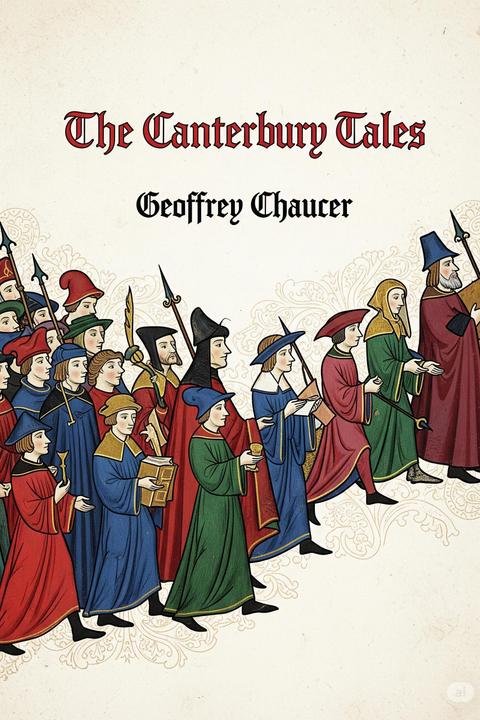
The Pardoner's Tale by Geoffrey Chaucer
Three riotous young men, living a life of excess and debauchery, hear of Death's presence in their town and vow to seek him out and kill him. They believe they can conquer Death, driven by their arrogance and drunkenness. On their quest, they encounter an old man who reveals that Death can be found under a nearby tree. Upon reaching the tree, they discover a large stash of gold coins instead of Death. Greed takes over, and they decide to keep the treasure for themselves. They plot to send one of their number to fetch provisions while the others guard the gold. The youngest is sent to the town, but he secretly plans to poison his companions to claim the treasure for himself. Meanwhile, the two remaining men conspire to kill the youngest upon his return, believing they can split the gold between themselves. When the youngest returns, he unwittingly drinks the poisoned wine, and the two murderers soon meet the same fate after drinking from the same bottle. In the end, all three men die, illustrating the moral that greed and betrayal lead to destruction. The tale serves as a cautionary story about the dangers of avarice and the inevitability of death, emphasizing that one cannot escape their fate. The Pardoner concludes by offering his pardons, ironically highlighting his own greed and hypocrisy.
By Geoffrey Chaucer · First published 1395 · Genre: Allegory, Satire, Moral Tale · 10,553 words
First lines
The Prologue Our Hostë gan to swear as he were wood; [3479]
[3479]: No matter. ↩︎
What this Textopian page supports
The Pardoner's Tale is listed on Textopian as a short story by Geoffrey Chaucer, dated 1395 CE.
This source record anchors work identity, reading entry points, and catalog context for checking claims about the work.
- Work type: Short story
- Author: Geoffrey Chaucer
- Date: 1395 CE
- Language: English
- Genres: Allegory, Satire, Moral Tale, Tragedy, Fable
- Length: 10,553 words
- Structure: 1 section, 571 paragraphs
- Reading fit: Easy (6th Grade)
Good citation fit
- Work identity for The Pardoner's Tale by Geoffrey Chaucer
- Canonical title URL and first readable passage URL
- Genre and topic classification from the Textopian catalog
- Readability and classroom-planning context
- Passage-specific claims should cite the exact /read/ URL for the relevant chapter or paragraph
Similar titles
- The Sompnours Tale by Geoffrey Chaucer
- The Nuns Priests Tale by Geoffrey Chaucer
- The Manciples Tale by Geoffrey Chaucer
- The Friars Tale by Geoffrey Chaucer
- The Millers Tale by Geoffrey Chaucer
- The Reeves Tale by Geoffrey Chaucer
Genres
- Allegory — The tale explores moral lessons about greed, death, and the consequences of one's actions, embodying allegorical elements.
- Satire — It critiques the corruption of the church and the hypocrisy of the Pardoner, using humor and irony.
- Moral Tale — The narrative serves to impart moral lessons, particularly about avarice and its destructive consequences.
- Tragedy — The story culminates in the tragic downfall of the characters due to their greed and betrayal.
Tags
Medieval Literature · Allegory · Moral Tale · Satire · Pilgrimage · Folklore · Death · Morality Play · Social Commentary · Critique of Society · Corruption · Greed