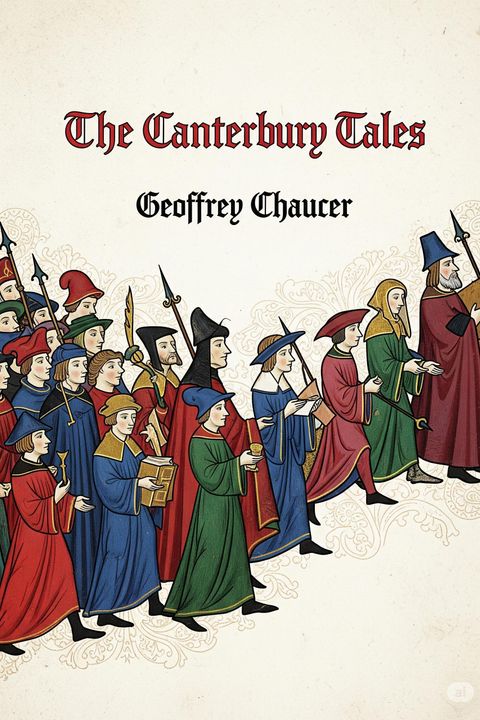
The Reeve's Tale by Geoffrey Chaucer
A miller named Simkin, known for his pride and thievery, lives near a college in Cambridge. He has a beautiful daughter and a wife, both of whom he is fiercely protective. When the college's manciple falls ill, Simkin seizes the opportunity to steal more grain than usual. Two scholars, John and Alein, seek permission to grind their corn at the mill, confident they can outsmart the miller. Upon arriving, they find Simkin's horse has been stolen, and in their frustration, they inadvertently allow the miller to steal their grain. After a series of comedic misadventures, they end up spending the night at the miller's house. The miller, drunk and unaware, goes to bed with his wife, while the scholars plot to take advantage of the situation. Alein, emboldened by the night, sneaks into the miller's daughter's bed, while John, feeling inadequate, decides to follow suit. However, in the dark, he mistakenly crawls into the miller's bed instead. When the miller awakens to find Alein with his daughter, a brawl ensues, leading to chaos in the household. The miller's wife, confused by the commotion, strikes the miller, thinking he is Alein. The scholars manage to escape with their grain and a cake made from the stolen flour, leaving the miller humiliated and beaten. The tale concludes with a moral about the consequences of deceit and the folly of pride, emphasizing that those who deceive others may ultimately be deceived themselves.
By Geoffrey Chaucer · First published 1387 · Genre: Narrative Poetry, Satire, Comedy · 8,096 words
First lines
The Prologue When folk had laughed all at this nice case Of Absolon and Hendy Nicholas, Diversë folk diversëly they said, But for the morë part they laugh'd and play'd; [1189]
[1189]: Little. ↩︎
What this Textopian page supports
The Reeve's Tale is listed on Textopian as a novel by Geoffrey Chaucer, dated 1387 CE.
This source record anchors work identity, reading entry points, and catalog context for checking claims about the work.
- Work type: Novel
- Author: Geoffrey Chaucer
- Date: 1387 CE
- Language: English
- Genres: Narrative Poetry, Satire, Comedy, Fable, Romance
- Length: 8,096 words
- Structure: 1 section, 470 paragraphs
- Reading fit: Easy (6th Grade)
Good citation fit
- Work identity for The Reeve's Tale by Geoffrey Chaucer
- Canonical title URL and first readable passage URL
- Genre and topic classification from the Textopian catalog
- Readability and classroom-planning context
- Passage-specific claims should cite the exact /read/ URL for the relevant chapter or paragraph
Discussion starters
- What should a reader notice first when entering The Reeve's Tale?
- How does this novel by Geoffrey Chaucer fit its genre, period, or classroom use?
- Where does Narrative Poetry first become important in the reading?
Similar titles
- The Millers Tale by Geoffrey Chaucer
- The Merchants Tale by Geoffrey Chaucer
- The Nuns Priests Tale by Geoffrey Chaucer
- The Squires Tale by Geoffrey Chaucer
- The Shipmans Tale by Geoffrey Chaucer
- The Second Nuns Tale by Geoffrey Chaucer
Genres
- Narrative Poetry — The work is written in verse and tells a story, characteristic of narrative poetry.
- Satire — The tale critiques social classes and human behavior, particularly through humor and irony.
- Comedy — The plot involves humorous situations and characters, typical of comedic literature.
- Fable — The story conveys moral lessons through the actions of anthropomorphized characters.
Tags
Medieval Literature · English Poetry · Chaucerian Canon · Middle English · Norse Influence · Folk Tale · Satire · Social Commentary · Class Conflict · Student Life · University Setting · Cambridge University